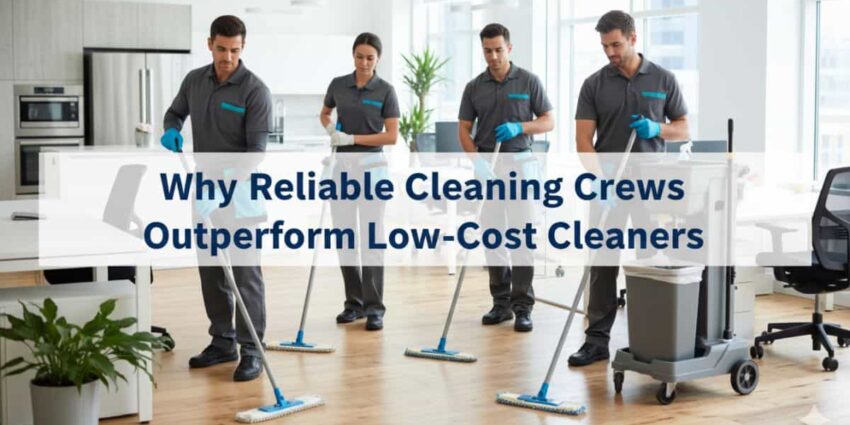
When facility managers and business owners across North Idaho, Spokane, and the Inland Northwest evaluate commercial cleaning options, the temptation to choose the lowest bid can be strong. However, decades of industry experience prove that reliable cleaning crews consistently outperform cheap cleaning alternatives—delivering superior quality, safety compliance, and long-term value that budget providers simply cannot match.
Rich Greco, owner of ProTex Janitorial Services, has witnessed this pattern repeatedly throughout his career serving Coeur d’Alene, Sandpoint, Hayden, Post Falls, Spokane Valley, and surrounding communities. “I’ve seen countless facility managers regret choosing low-cost cleaners,” Greco explains. “What initially seems like savings quickly turns into headaches—from no-shows and inconsistent quality to liability issues and damaged client relationships. A reliable cleaning crew is an investment in your facility’s reputation and your peace of mind.”
Key Takeaways
- Crew consistency and stability directly impact cleaning quality—companies with low turnover rates deliver more dependable results than independent cleaners or low-bid contractors
- Hidden costs of cheap cleaning include liability risks, poor quality work, frequent staff turnover, lack of supervision, and potential damage to your facility’s reputation
- Professional cleaning companies provide comprehensive background checks, insurance coverage, workers’ compensation, ongoing training, and standardized operating procedures that individual cleaners typically cannot offer
- Long-term cleaning partnerships with reputable companies yield better value through consistent service delivery, accountability, performance tracking, and continuous improvement
- Quality assurance systems—including cleaning quality audits, performance metrics, and supervision—ensure workplace cleanliness standards are maintained every single visit
- Investing in reliable janitorial services protects employee health, enhances customer satisfaction, reduces facility management stress, and saves money in the long run by preventing costly problems
Understanding the True Cost of Commercial Cleaning Services
The Price vs. Value Equation in Janitorial Services
Many Northwest businesses approach commercial cleaning decisions by comparing hourly rates or monthly contract prices. While this seems logical, it overlooks the fundamental difference between cost and value. Cleaning service costs represent what you pay, but quality of service determines what you actually receive.
Budget cleaning risks emerge quickly when facility managers prioritize low bids over crew reliability. A cleaning company that charges 20-30% less than competitors often cuts corners in critical areas:
- Limited or no background checks on cleaning staff
- Minimal training programs that result in inconsistent cleaning methods
- High crew turnover rates that disrupt service continuity
- Inadequate insurance coverage leaving clients exposed to liability
- Poor supervision and lack of quality control systems
- Substandard cleaning products and outdated equipment
The U.S. janitorial services market reached $78.17 billion in 2023, with commercial cleaning accounting for approximately 60% of industry revenue. Within this competitive landscape, price variation often reflects genuine differences in service quality, employee retention programs, safety compliance, and operational standards rather than simple profit margins.
Hidden Costs That Come With Low-Bid Contracts
Cheap cleaning pitfalls extend far beyond the obvious quality issues. Facility managers who select low-bid janitorial contracts frequently encounter:
Inconsistent cleaning staff creates multiple problems. When different cleaners appear each week, they lack familiarity with your facility’s specific needs, security procedures, and quality expectations. This crew turnover impact means you constantly re-explain requirements, increasing your workload rather than reducing it.
Liability insurance gaps pose serious financial risks. Many independent cleaners and budget providers carry minimal coverage or operate without proper insurance and workers’ compensation protection. If an accident occurs—a slip and fall, property damage, or employee injury—your business may face substantial legal and financial exposure.
Poor communication channels leave facility managers frustrated. When the cleaner is unavailable or hard to reach, addressing issues becomes difficult. Reputable companies maintain clear communication protocols, dedicated account managers, and rapid response systems that budget operators rarely provide.
Quality inconsistency damages first impressions. According to research on facility manager pain points, aesthetic concerns and continuous maintenance challenges rank among top stressors. When cleaning quality fluctuates dramatically, it undermines your facility’s professional image and may impact client relationships or employee morale.
“The true cost of poor cleaning extends well beyond the monthly invoice,” emphasizes Rich Greco. “I’ve helped numerous Pacific Northwest facilities transition from budget providers to our professional service. The relief facility managers express when they no longer worry about no-shows, quality problems, or liability issues is remarkable. That peace of mind has tangible business value.”
The Critical Importance of Crew Reliability and Consistency
How Cleaning Crew Stability Impacts Service Quality
Cleaning crew consistency serves as the foundation for exceptional janitorial service. When the same trained cleaning technicians service your facility regularly, they develop deep familiarity with your space, understand specific requirements, and build efficient cleaning routines that maintain consistently high standards.
Employee retention in janitorial services directly correlates with cleaning outcomes. Companies that invest in competitive wages, comprehensive benefits, ongoing training, and positive workplace culture experience lower crew turnover rates—translating directly into better results for clients.
Consider the learning curve inherent in commercial cleaning. New cleaners need time to understand:
- Your facility’s layout and high-traffic areas requiring extra attention
- Location of cleaning supplies and equipment storage
- Security protocols and access procedures
- Special requirements for sensitive areas
- Your organization’s specific quality standards
- Proper use of specialized equipment for carpet cleaning, floor maintenance, or industrial cleaning applications
Janitorial staffing stability eliminates this constant retraining cycle. Established cleaning teams work more efficiently, spot potential issues before they escalate, and deliver the consistent cleaning results that facility managers depend upon for regular maintenance success.
The Problem With High Turnover in Budget Cleaning Companies
The cleaning industry workforce faces significant turnover challenges—particularly among low-cost providers who struggle to attract and retain quality employees. Crew reliability issues stem from several interconnected factors:
Inadequate compensation drives employees toward better opportunities. When cleaning companies pay minimum wage or below-market rates, they attract workers with limited experience and lose them rapidly to competitors offering better pay and benefits.
Insufficient training leaves employees unprepared for job demands. Professional cleaning teams require extensive training covering cleaning techniques, chemical safety, equipment operation, customer service, and workplace safety protocols. Budget providers often skip this investment, resulting in poor performance and low job satisfaction.
Lack of career development causes ambitious workers to seek opportunities elsewhere. Reputable cleaning companies create advancement pathways—from entry-level cleaners to team leads, quality control specialists, or operations managers. This employee retention strategy builds loyalty while developing highly skilled professionals.
The impact on clients proves substantial. Facility managers report that inconsistent attendance and no-shows rank among the top reasons for switching janitorial companies. Each staffing disruption creates work for facility managers, who must either clean spaces themselves or explain quality gaps to executives and employees.
Background screening cleaning staff becomes inconsistent with rapid turnover. Even when budget providers conduct initial background checks, high turnover means frequent exposure to inadequately vetted workers who may pose security or reliability risks.
Why Supervised Teams Outperform Independent Cleaners
The debate between hiring a cleaning company versus hiring an individual cleaner centers on several critical factors where professional cleaning companies demonstrate clear advantages.
Site supervision in cleaning ensures quality standards are maintained consistently. While an individual cleaner works independently without oversight, professional cleaning teams benefit from regular inspections, quality audits, and real-time coaching from experienced supervisors.
ProTex Janitorial Services implements a comprehensive quality control system featuring:
- Pre-service planning that identifies facility-specific requirements
- Standard operating procedures ensuring consistent methodology across all properties
- Regular quality inspections using detailed janitorial quality control checklists
- Performance tracking through customer feedback and objective metrics
- Corrective action protocols addressing issues immediately
- Continuous training keeping crews updated on best practices
Cleaners versus cleaning companies differs fundamentally in accountability structures. When you hire an independent cleaner who becomes sick, goes on vacation, or leaves the profession, service stops entirely. Professional cleaning companies maintain backup systems ensuring continuity of service regardless of individual circumstances.
Team-based approaches offer additional benefits. Cleaning teams complete work more efficiently than individual cleaners, particularly in larger facilities or time-sensitive situations like post-construction cleaning projects. Team members cross-train on various tasks, creating operational flexibility that single cleaners cannot provide.
Insurance and liability protection represents another crucial distinction. Cleaning companies carry comprehensive general liability insurance, workers’ compensation coverage, and bonding that protects clients from accidents or damages. Most independent cleaners lack adequate coverage, leaving homeowners and business owners exposed to significant financial risk.
Professional Training and Quality Standards Matter
What Separates Trained Technicians From Untrained Staff
Well-trained cleaning professionals demonstrate proficiency in areas where untrained staff struggle. The difference becomes apparent in cleaning quality, efficiency, safety compliance, and client satisfaction.
Comprehensive employee onboarding processes at professional companies include:
Chemical safety training covering proper dilution ratios, appropriate cleaning products for different surfaces, hazard communication requirements, and personal protective equipment use. Improper chemical handling causes surface damage, health hazards, and regulatory violations—issues that trained cleaning technicians avoid through proper education.
Equipment operation training ensures cleaners use professional tools effectively. Modern commercial cleaning employs sophisticated equipment—from HEPA-filtered vacuums and automatic floor scrubbers to electrostatic sprayers and UV-C disinfection systems. Professional cleaners trained on proper operation deliver superior results while protecting expensive equipment from misuse.
Technique instruction in effective cleaning methods dramatically improves outcomes. Proper microfiber cloth folding, systematic room cleaning patterns, appropriate dwell times for disinfectants, and specialized techniques for carpet cleaning or upholstery cleaning separate professionals from amateurs.
Safety protocols protect both cleaning staff and facility occupants. Training covers OSHA cleaning requirements, slip-and-fall prevention, bloodborne pathogen procedures, and emergency response protocols that untrained individuals typically don’t understand.
“Our staff training programs require new hires to complete over 40 hours of instruction before servicing client facilities independently,” notes Rich Greco. “This investment costs money upfront, but it ensures every ProTex team member delivers the consistent, high-quality cleaning that Kootenai County, Bonner County, and Spokane County businesses deserve. Cutting corners on training ultimately cuts corners on quality.”
The Role of Quality Control Systems and Accountability
Cleaning company accountability depends on robust quality assurance frameworks that measure, monitor, and improve performance continuously.
Commercial cleaning standards at professional organizations include detailed specifications for every cleaning task. Rather than vague instructions to “clean the office,” standardized cleaning methods define exactly how each area should be addressed:
- Office areas: Dusting surfaces, sanitizing desktops, emptying trash, vacuuming carpets with specific overlap patterns
- Restrooms: Complete sanitation following protocols detailed in our office restroom cleanliness guide
- Break rooms: Food surface sanitization, appliance cleaning, floor care
- Entryways: Mat maintenance, glass cleaning, floor care for first-impression areas
Cleaning quality audits verify adherence to these standards. Supervised janitorial crews undergo regular inspections using objective cleaning quality benchmarks that assess thoroughness, consistency, and attention to detail.
Performance tracking janitorial systems document results over time. Leading companies maintain records of:
- Quality inspection scores tracking performance trends
- Client feedback from satisfaction surveys and direct communication
- Issue resolution measuring response times and corrective action effectiveness
- Schedule adherence ensuring dependable cleaning schedules
- Safety incidents to identify training needs and prevent recurrences
Cleaning inspection reports provide transparency that builds client trust in cleaning providers. Facility managers receive documentation proving services were completed to specification—valuable evidence when executives question cleaning costs or consider budget alternatives.
Contract cleaning companies formalize these accountability measures through performance-based cleaning contracts that define service levels, quality standards, remediation procedures, and consequences for non-performance. This structured approach contrasts sharply with informal arrangements with individual cleaners that lack enforcement mechanisms.
How Background Checks and Insurance Protect Your Business
Background checks cleaning staff serve as the first line of defense in facility security and occupant safety. Professional cleaning companies implement comprehensive employee background verification protocols that budget providers and independent cleaners often skip.
Thorough screening processes typically include:
- Criminal background checks identifying serious offenses
- Employment verification confirming work history accuracy
- Reference checks revealing past performance and reliability
- Identity verification preventing fraud
- Drug screening where appropriate for safety-sensitive positions
- Driving record checks for employees operating company vehicles
These procedures protect clients from potential theft, property damage, or workplace safety concerns. Given that cleaning staff typically work after hours with access to offices, equipment, and confidential information, background screening becomes essential for risk management.
Insurance coverage cleaning companies provide critical financial protection. Licensed and insured professional firms carry multiple policy types:
General liability insurance covers property damage and bodily injury claims. If a cleaner accidentally damages office equipment, scratches expensive flooring, or causes any property harm, insurance covers repair or replacement costs—protecting you in case of accidents without requiring out-of-pocket expenses.
Workers’ compensation insurance protects clients from employee injury claims. When cleaning staff suffer workplace injuries, workers’ comp covers their medical expenses and lost wages. Without this coverage, businesses hiring individual cleaners face potential liability for injury costs and legal expenses.
Bonding protects against employee theft or dishonesty. Bonded companies provide financial recourse if cleaning staff steal property or commit fraudulent acts, offering additional peace of mind for security-conscious facility managers.
Professional liability insurance addresses errors and omissions. If cleaning mistakes cause business losses—for example, using wrong chemicals that damage sensitive equipment in medical facilities—professional liability coverage responds.
Many independent cleaners operate without adequate insurance, if any. When accidents occur, facility owners discover too late that they bear full financial responsibility. This liability protection gap represents one of the most significant hidden costs of choosing uninsured budget providers.
Long-Term Value and Return on Investment
Why Relationships With Reliable Vendors Pay Dividends
Long-term cleaning partnerships deliver compounding benefits that short-term, price-focused relationships cannot match. Trusted cleaning partners invest in understanding your facility, culture, and expectations—improving performance continuously over time.
Established vendor relationships enable:
Customized cleaning plans tailored to your specific needs. As cleaning companies learn your facility’s unique requirements, they refine cleaning schedules, allocate resources efficiently, and develop specialized approaches for challenging areas. This cleaning plan that fits your budget and meets your needs evolves based on experience and feedback.
Proactive problem identification before issues escalate. Experienced crews familiar with your space notice subtle changes—early signs of water damage, developing HVAC problems, or pest activity—alerting facility managers to address concerns promptly. This preventive maintenance approach saves money by catching problems early.
Streamlined communication reduces administrative burden. Long-term vendor relationships establish efficient communication patterns, trusted contacts, and mutual understanding that eliminate time wasted explaining basic requirements to new providers.
Preferential treatment during peak demand periods. When reliable cleaning crews value your partnership, they prioritize your needs during busy seasons, accommodate special requests, and provide flexible scheduling that price-shopping clients don’t receive.
Cost stability protects budget planning. Contract cleaning companies reward loyal clients with predictable pricing and gradual increases that reflect actual cost changes rather than aggressive rate hikes imposed on new customers.
“We’ve served some Idaho Panhandle offices for over a decade,” shares Rich Greco. “That longevity creates tremendous value. Our teams know every inch of these facilities. We understand seasonal patterns, special event requirements, and specific preferences. This institutional knowledge simply cannot be replicated by constantly switching providers based on whoever submits the lowest bid this quarter.”
Calculating the True ROI of Professional Cleaning Services
Cost-effective cleaning strategies require analyzing total ownership costs rather than focusing exclusively on monthly invoices. The benefits of outsourcing janitorial services extend across multiple business dimensions.
Direct cost considerations include:
- Base service fees for routine cleaning or specialized services
- Product and equipment costs (typically included with professional services)
- Management time required for vendor oversight
Indirect cost factors often exceed direct expenses:
Employee productivity improves in clean and healthy work environments. Research consistently demonstrates that workplace cleanliness standards impact employee performance, attendance, and job satisfaction. The importance of regular office cleaning for employee health and productivity translates directly into business outcomes.
Reduced sick days lower healthcare costs and productivity losses. Professional sanitation and regular disinfecting reduce disease transmission, particularly important in high-density office and commercial buildings, educational facilities, and healthcare settings.
Extended asset life protects capital investments. Proper carpet and floor maintenance prevents premature replacement of expensive flooring. Regular upholstery cleaning maintains furniture condition. Appropriate care of exterior windows and glass prevents permanent damage from contaminant buildup.
Enhanced brand reputation drives business growth. How facility cleanliness builds trust and brand reputation explains the connection between building cleanliness reputation and market perception. First impressions formed in clean, well-maintained facilities influence client decisions and employee recruitment success.
Risk mitigation avoids costly incidents. Professional services reduce workplace safety hazards through proper housekeeping practices that prevent slips, trips, and falls. Compliance with health regulations avoids fines and legal expenses.
Facility management efficiency frees leadership to focus on core business. When cleaning services operate reliably without constant oversight, facility managers redirect energy toward strategic priorities rather than firefighting janitorial problems.
A comprehensive ROI calculation demonstrates that investing in professional cleaning services typically saves you money compared to managing cheap cleaning alternatives that create hidden costs through quality problems, liability exposure, and management time consumption.
Customer Satisfaction and Client Retention Benefits
Customer satisfaction cleaning extends beyond simply meeting contracted requirements. High-quality cleaning services create positive experiences that build loyal clients and generate referrals—crucial factors in service business success.
Client retention cleaning companies focus on several satisfaction drivers:
Consistency and reliability rank highest in customer priorities. Facility managers overwhelmingly prefer dependable cleaning schedules with predictable results over erratic service, even if the latter occasionally achieves superior quality. Consistent service delivery builds trust and reduces stress.
Responsive communication resolves concerns quickly. Cleaning team communication systems that enable rapid issue reporting, transparent problem-solving, and proactive updates create positive relationships. Professional cleaning companies maintain multiple contact channels and guarantee response times.
Flexibility and adaptability accommodate changing needs. Business circumstances evolve—special events, construction projects, organizational changes, or seasonal demands. Cleaning service providers that offer flexible scheduling and adapt to client requirements earn lasting loyalty.
Value-added services exceed basic expectations. Proactive recommendations for deep cleaning opportunities, seasonal maintenance, or efficiency improvements demonstrate partnership mentality rather than transactional relationships.
Satisfaction guarantees reduce perceived risk. Commitment to customer satisfaction backed by concrete remediation policies gives clients confidence that investments in professional cleaning will deliver promised results.
Client feedback integration drives continuous improvement. Companies that solicit input through surveys, reviews, and direct conversations—then act on suggestions—build strong relationships. This performance-driven cleaning culture aligns provider success with client outcomes.
According to facility manager research, poor communication ranks among the top reasons for switching janitorial services. Conversely, professional cleaning companies that prioritize communication, responsiveness, and customer satisfaction enjoy high retention rates, stable revenue, and positive recommendations from friends and business associates that fuel organic growth.
Commercial Cleaning vs. Residential Cleaning Considerations
Key Differences in Service Expectations and Standards
While both commercial and residential cleaning serve important purposes, significant differences in scope, standards, and requirements distinguish these market segments.
Commercial cleaning in office buildings, retail stores, manufacturing facilities, and food service establishments demands:
Larger-scale operations serving square footage far exceeding typical homes. Commercial spaces often span thousands or tens of thousands of square feet, requiring team of cleaners rather than individual cleaners to complete work within available timeframes.
Specialized equipment and methods handle diverse surfaces and challenges. Commercial environments contain materials rarely found in residential settings—specialized flooring, industrial equipment, food preparation surfaces, sensitive electronics, and varied architectural features requiring appropriate cleaning solutions and techniques.
Strict regulatory compliance governs commercial spaces. Health and safety regulations, OSHA requirements, industry-specific sanitation standards (particularly in medical and food service sectors), and environmental rules create legal obligations that commercial cleaning must address.
Higher traffic volumes accelerate wear and soil accumulation. Commercial spaces experience constant use by employees, customers, and visitors, demanding more frequent attention and more durable cleaning products than residential applications.
After-hours scheduling minimizes business disruption. Most commercial cleaning occurs evenings, nights, or weekends when facilities are unoccupied—requiring flexible staffing and reliable crew availability that differs from residential house cleaning typically performed during daytime hours.
Formal contracts and SLAs define expectations precisely. Commercial cleaning contracts specify service frequencies, quality standards, communication protocols, and performance metrics in legally binding agreements—contrasting with informal arrangements common in house cleaning services.
When Commercial Expertise Matters Most for Your Facility
Commercial cleaning expertise becomes crucial in specific scenarios where residential cleaning approaches prove inadequate.
High-traffic public areas require aggressive maintenance programs. Retail stores serving hundreds of daily customers, busy office buildings housing large workforces, or hospitality venues need professional cleaning teams experienced in maintaining appearance standards despite constant use.
Regulated environments demand specialized knowledge. Medical facilities must follow strict disinfection protocols to prevent healthcare-associated infections. Food service facilities face rigorous sanitation requirements from health departments. Commercial cleaning professionals trained in these regulations ensure compliance.
Industrial settings present unique challenges. Manufacturing and production facilities contain heavy machinery, chemical processes, and specialized cleaning needs that house cleaners lack experience addressing. Industrial cleaning requires understanding of manufacturing processes, safety protocols, and contamination control.
Specialty services exceed residential capabilities. Post-construction cleanup following renovations, floor stripping and refinishing, commercial carpet extraction, and exterior window cleaning for multi-story buildings require commercial-grade equipment and expertise.
Consistent multi-site service supports organizations with multiple locations. Commercial cleaning companies maintain quality standards across different facilities, provide centralized billing and reporting, and ensure brand consistency that individual residential cleaners cannot replicate.
Emergency response capabilities address urgent situations. Water damage, biohazard cleanup, or urgent preparation for important events require rapid deployment of trained crews with specialized equipment—services that commercial cleaning providers maintain but residential services typically don’t offer.
Making an Informed Decision About Your Cleaning Service
Questions to Ask When Evaluating Cleaning Providers
Choosing a commercial cleaning service to trust requires thorough evaluation. Facility managers should investigate several critical areas before awarding commercial cleaning contracts.
Company background and stability:
- How long has the company served the Inland Northwest or your specific region?
- Can they provide local references from similar facilities?
- What is their employee retention rate and average crew tenure?
- Do they maintain proper licensing, bonding, and insurance?
Training and quality assurance:
- What staff training programs do they implement?
- How do they ensure quality control and monitor performance?
- What standardized cleaning routines and checklists guide their work?
- How do they handle quality complaints or service failures?
Staffing and reliability:
- What background checks do they conduct on employees?
- How do they ensure crew assignment consistency?
- What backup systems prevent service interruptions?
- How do they communicate schedule changes or issues?
Safety and compliance:
- What insurance coverage do they carry (general liability, workers’ comp)?
- How do they comply with OSHA and other regulatory requirements?
- What safety training do cleaning crews receive?
- Do they follow green cleaning standards using environmentally responsible products?
Service customization:
- Can they accommodate your specific cleaning needs and preferences?
- How do they handle special requests or changing requirements?
- What range of services do they offer beyond basic cleaning?
- Do they provide specialty cleaning for unique situations?
Communication and reporting:
- Who serves as your primary contact for questions or concerns?
- What communication channels and response times do they guarantee?
- Do they provide cleaning inspection reports or documentation?
- How do they gather and act on client feedback?
Contract terms and pricing:
- What exactly is included in the base service package?
- Are cleaning supplies, equipment, and products included?
- What are terms for contract modifications or termination?
- How do they handle pricing adjustments over time?
Thorough evaluation across these dimensions helps facility managers identify trusted cleaning crews that deliver reliable, high-quality service.
Red Flags That Signal Potential Problems
Certain warning signs during the evaluation process should raise concerns about cleaning provider suitability.
Unusually low pricing often indicates problematic cost-cutting. When bids fall significantly below market rates, providers likely sacrifice quality through inadequate staffing, minimal training, cheap cleaning products, or lack of proper insurance. These cheap cleaning approaches create hidden costs that far exceed initial savings.
Reluctance to provide references suggests poor performance history. Reputable cleaning companies proudly share client testimonials and facilitate reference conversations. Evasiveness about past work indicates potential quality or reliability issues.
Unclear service specifications create accountability gaps. Vague contracts that don’t detail specific cleaning tasks, frequencies, or quality standards make it impossible to evaluate performance or enforce expectations.
No written contract exposes clients to risk. Verbal agreements offer no protection when disputes arise about service scope, pricing, or liability. Professional cleaning companies always formalize arrangements through detailed written agreements.
Lack of insurance verification leaves clients vulnerable. Accepting verbal assurances about coverage without reviewing actual insurance certificates risks discovering inadequate protection only after incidents occur.
High-pressure sales tactics suggest provider desperation. Trusted cleaning partners present information, answer questions, and allow decision-makers appropriate time for evaluation rather than demanding immediate commitments.
Poor communication during sales process predicts operational issues. Providers who respond slowly, miss scheduled meetings, or fail to address questions thoroughly will likely exhibit similar problems during service delivery.
No quality assurance system indicates inconsistent results. Companies without formal inspection programs, performance metrics, or accountability mechanisms cannot reliably maintain standards over time.
Frequent crew changes during trial periods signal staffing instability. If different cleaners appear constantly even during initial service, expect this crew turnover pattern to continue indefinitely.
Resistance to trial periods suggests provider lacks confidence. Reputable companies often offer trial services or satisfaction guarantees because they trust their quality. Refusal to demonstrate capabilities before long-term commitments raises concerns.
How to Transition to a More Reliable Cleaning Partner
Switching from inadequate janitorial services to reliable cleaning crews requires planning to ensure smooth transitions without service disruptions.
Document current issues thoroughly before making changes. Record specific quality problems, communication failures, no-show incidents, and other concerns. This documentation helps explain the transition to stakeholders and guides conversations with potential replacements about priorities.
Research qualified alternatives through multiple channels. Seek recommendations from facility management peers, industry associations, and local business networks. Research online reviews while recognizing that a few negative comments don’t necessarily indicate poor service if overall patterns are positive.
Conduct thorough evaluations as outlined above. Request estimates from multiple cleaning companies, verify credentials, check references, and assess cultural fit beyond just price comparisons.
Schedule facility walk-throughs with finalists. On-site visits allow providers to understand your space, identify challenges, and propose appropriate solutions. This process reveals professionalism levels and attention to detail.
Review existing contracts to understand termination requirements. Most janitorial contracts specify notice periods and termination procedures. Ensure compliance with these terms to avoid unnecessary disputes or fees.
Communicate with stakeholders about the transition. Inform employees, security personnel, and others affected by cleaning schedule or process changes. Clear communication prevents confusion and facilitates cooperation during the transition.
Plan overlap periods if possible. Brief overlaps between old and new providers enable knowledge transfer, allow new crews to learn your facility, and ensure continuity during the transition.
Establish clear expectations from day one with new providers. Working effectively with your janitorial team requires open communication about requirements, preferences, and quality standards from the beginning.
Monitor initial performance closely during early weeks. Provide feedback promptly to reinforce good practices and correct issues before they become habits. Most professional cleaning companies welcome this input as they learn your facility.
Build long-term partnership mindset rather than adversarial relationships. Trusted cleaning partners succeed when clients view them as extensions of their own teams, working collaboratively toward shared goals of maintaining exceptional facilities.
Regional Considerations for North Idaho and Spokane Businesses
Understanding Local Cleaning Service Markets
Northwest businesses in Coeur d’Alene, Sandpoint, Hayden, Post Falls, Spokane, and Spokane Valley face unique considerations when selecting commercial cleaning services. The Inland Northwest market differs from major metropolitan areas in several important ways.
Local market dynamics in Kootenai County, Bonner County, and Spokane County include a mix of small regional providers and national franchise operations. While larger cities may have dozens of commercial cleaning options, the Idaho Panhandle and eastern Washington markets offer fewer choices—making selection of reliable cleaning crews even more critical since alternatives are limited.
Seasonal considerations affect cleaning needs throughout the year. The region’s distinct seasons create specific challenges:
- Winter months bring snow, salt, and mud tracked into facilities, requiring aggressive floor maintenance programs and frequent entrance area attention
- Spring cleaning addresses accumulated winter grime and prepares facilities for increased visitor activity
- Summer demands attention to air quality as wildfire smoke and pollen affect indoor environments
- Fall preparations ready facilities for winter weather with comprehensive seasonal checklists
Regional expertise matters significantly. Cleaning companies unfamiliar with Pacific Northwest weather patterns, local construction styles, or regional facility types may struggle to provide optimal service. Local commercial cleaning companies understand these factors intuitively.
Community reputation carries extra weight in smaller markets. While metropolitan businesses can remain relatively anonymous, Inland Northwest companies operate in tight-knit communities where reputation spreads quickly. Trusted cleaning crews in North Idaho and Spokane janitorial experts build reputations over years of consistent performance.
Accessibility and responsiveness benefit from local presence. When cleaning providers maintain offices and staff locally rather than managing remotely from distant cities, they respond faster to issues, accommodate last-minute requests, and demonstrate genuine investment in community success.
Why Local Expertise Benefits Your Facility
Regional cleaning professionals bring advantages that distant or inexperienced providers cannot match.
Familiarity with local building types improves service quality. The Inland Northwest features unique construction—from historic downtown buildings in Spokane and Coeur d’Alene to modern tech facilities, industrial warehouses serving manufacturing sectors, and specialized automotive facilities. Local providers understand these structures and their specific cleaning requirements.
Understanding seasonal challenges enables proactive preparation. Regional cleaning professionals anticipate weather-related needs, schedule appropriate seasonal maintenance, and stock suitable products for local conditions without requiring education about regional patterns.
Established supply chains ensure product availability. Local commercial cleaning companies maintain relationships with regional suppliers, ensuring reliable access to necessary cleaning supplies, equipment, and replacement parts even during disruptions that affect national chains.
Community investment motivates exceptional service. Regional providers live and work in the communities they serve. Their children attend local schools, they shop at client businesses, and their reputations directly impact their lives beyond simple business metrics. This personal investment drives performance.
Flexible, personalized service characterizes smaller regional companies. While national franchises often impose standardized approaches regardless of specific needs, local providers customize services to match each client’s unique requirements and adapt quickly to changing circumstances.
“Serving the Inland Northwest for years has taught us exactly what North Idaho and Spokane area facilities need,” explains Rich Greco. “We understand the dust that blows in during dry summers, the tremendous amount of dirt tracked in during wet springs, and how winter weather affects entrances and parking areas. This regional knowledge—combined with our commitment to the community we call home—drives us to deliver exceptional service every single time.”
The Green Cleaning Advantage in Modern Facilities
Environmental Responsibility and Health Benefits
Green cleaning practices represent more than environmental responsibility—they deliver tangible health and business benefits that facility managers increasingly recognize as essential.
Eco-friendly products reduce harmful chemical exposure for cleaning staff and building occupants. Traditional cleaning products often contain volatile organic compounds (VOCs), harsh solvents, and irritants that cause respiratory problems, skin reactions, and other health issues. Green cleaning standards specify low-VOC, biodegradable alternatives that clean effectively without these risks.
Indoor air quality improvement results from reducing chemical off-gassing. Poor air quality contributes to headaches, fatigue, and reduced cognitive function—issues that directly impact employee productivity. Facilities using green cleaning report fewer air quality complaints and better occupational health outcomes.
Allergen reduction benefits sensitive individuals. Modern green cleaning protocols emphasize HEPA-filtered vacuums and microfiber cloths that capture allergens rather than dispersing them into the air like traditional methods. This approach proves particularly important in educational facilities, medical settings, and offices with diverse populations.
Environmental health considerations align with corporate sustainability initiatives. Many organizations now set ambitious environmental goals covering energy use, waste reduction, and chemical management. Partnering with cleaning companies committed to green cleaning standards supports these objectives while improving public perception.
Regulatory compliance becomes easier with green products. Increasingly stringent environmental regulations restrict certain chemicals. Professional cleaning companies that proactively adopt green alternatives stay ahead of regulatory changes rather than scrambling to comply when requirements take effect.
According to facility manager research, approximately 60% now prioritize eco-friendly practices when selecting janitorial services. This trend reflects growing awareness that green cleaning delivers health benefits, regulatory compliance, and sustainability credentials alongside excellent cleaning outcomes.
How Professional Companies Implement Sustainable Practices
Professional cleaning companies implement green cleaning through comprehensive, systematic approaches rather than superficial gestures.
Product selection prioritizes certified green alternatives. Reputable providers use cleaning products certified by recognized organizations like Green Seal, EPA Safer Choice, or similar programs verifying environmental and health claims. This ensures genuinely safer products rather than “greenwashed” marketing.
Equipment choices emphasize efficiency and environmental performance. Modern professional equipment including high-efficiency particulate air (HEPA) vacuums, microfiber cleaning systems, and water-conserving floor machines reduce environmental impact while improving cleaning effectiveness.
Chemical dilution systems prevent waste and overuse. Professional use of professional equipment includes automated dilution systems that dispense precisely measured product amounts, eliminating guesswork, reducing chemical consumption, and ensuring consistent dilution ratios for optimal performance and safety.
Training programs educate staff on sustainable practices. Well-trained cleaning professionals understand proper product use, waste reduction strategies, energy conservation, and sustainable cleaning methods that minimize environmental impact throughout operations.
Waste management incorporates recycling and reduction strategies. Green cleaning programs address not just chemical use but comprehensive waste streams—increasing recycling, reducing disposable product consumption, and implementing sustainable waste handling practices.
Continuous improvement drives advancing sustainability. Leading cleaning companies regularly evaluate new products, update procedures based on emerging research, and pursue third-party green certifications that verify commitment to environmental responsibility.
Transparency and communication ensure clients understand green initiatives. Professional providers educate facility managers about product choices, explain environmental benefits, and document sustainability metrics that support client reporting requirements.
ProTex Janitorial Services integrates green cleaning throughout our operations, recognizing that environmental responsibility and exceptional cleaning quality go hand-in-hand rather than competing priorities.
Technology and Innovation in Modern Cleaning Services
How Professional Companies Leverage Technology
Modern cleaning management systems transform service delivery, quality assurance, and client communication through technology adoption that individual cleaners and budget providers typically cannot implement.
Scheduling software optimizes crew assignments and ensures consistent coverage. Advanced systems account for facility requirements, employee skills, equipment needs, and schedule preferences—creating efficient routing that reduces travel time and ensures appropriate staffing for each location.
Quality tracking platforms document inspection results, client feedback, and performance metrics in real time. Supervisors conduct cleaning quality audits using mobile apps that capture photos, record checklist compliance, and immediately flag issues requiring attention. This data-driven approach replaces subjective assessments with objective cleaning quality benchmarks.
Communication tools enable instant connectivity between clients, crews, and management. Modern platforms provide multiple channels—text, email, app notifications, or calls—ensuring cleaning team communication happens quickly regardless of time or location. Facility managers report issues immediately, and providers respond with documented action plans.
Work order management streamlines special requests and non-routine tasks. Rather than relying on phone calls or emails that may be missed, digital work order systems capture requests, assign responsibility, track completion, and maintain records accessible to all stakeholders.
Training platforms deliver consistent education across the workforce. E-learning systems ensure all cleaning technicians receive identical training content, track completion, and verify comprehension through assessments—creating standardized knowledge that improves cleaning performance.
Inventory management prevents supply shortages and controls costs. Automated systems monitor cleaning supplies usage, trigger reordering at appropriate thresholds, and track consumption patterns that identify inefficiencies or training needs.
Client portals provide transparency and documentation. Facility managers access cleaning inspection reports, service schedules, billing information, and communication history through secure online portals—eliminating requests for information and providing audit trails for compliance purposes.
Performance analytics drive continuous improvement. Data collected across these systems reveals trends, identifies training opportunities, measures customer satisfaction, and guides strategic decisions about service enhancements.
Emerging Tools That Improve Cleaning Quality
Cleaning industry innovation continues advancing capabilities beyond traditional approaches. Professional cleaning teams adopt new technologies that enhance effectiveness, efficiency, and safety.
Electrostatic sprayers and UV-C disinfection systems represent significant advances in sanitation. Electrostatic technology charges disinfectant particles so they adhere to surfaces comprehensively—reaching areas that traditional applications miss. UV-C light provides chemical-free disinfection suitable for sensitive environments or supplementing chemical treatments.
Robotic vacuums and floor scrubbers handle repetitive tasks efficiently. While not replacing human cleaners, these tools manage routine maintenance in large open areas, freeing staff to focus on detailed work requiring human judgment and dexterity. Industrial cleaning applications particularly benefit from robotic equipment.
Air quality monitors verify environmental health improvements. Real-time sensors measure particulate matter, VOCs, humidity, and other factors—providing objective evidence that cleaning processes improve indoor air quality rather than relying on subjective perceptions.
Imaging technology reveals contamination invisible to the naked eye. ATP (adenosine triphosphate) testing measures biological contamination on surfaces, while specialized lights reveal residues requiring additional attention—providing quality verification that supports sanitation and disinfection protocols.
Data analytics and AI predict maintenance needs. Machine learning algorithms analyze historical data to forecast when areas will require deep cleaning, identify optimal service frequencies, and allocate resources efficiently—creating preventive maintenance cleaning programs that address issues before they become problems.
Smart dispensing systems ensure proper chemical use. IoT-enabled dispensers monitor dilution ratios, track consumption, verify expiration dates, and alert staff to refill needs—preventing the improper chemical use that causes safety hazards or poor cleaning outcomes.
Wearable technology enhances worker safety and efficiency. Devices monitor environmental conditions, track time spent on tasks, provide real-time communication, and alert supervisors to potential safety hazards—protecting employees while improving operational consistency.
Professional cleaning companies invest in these technologies because they deliver measurable improvements in quality, efficiency, and client satisfaction—investments that individual cleaners or budget providers cannot afford or implement effectively.
Industry-Specific Cleaning Requirements and Expertise
Specialized Knowledge for Different Facility Types
Different industries demand specialized cleaning expertise that generalist providers may lack. Understanding these requirements helps facility managers evaluate whether prospective cleaning companies possess the necessary capabilities.
Medical facilities require strict sanitation protocols that prevent healthcare-associated infections. Cleaning staff must understand bloodborne pathogen procedures, proper disinfection techniques, contaminated waste handling, and specialized protocols for operating rooms, patient rooms, and high-traffic areas. Medical cleaning represents one of the most demanding specializations.
Food service facilities face rigorous health department requirements. Restaurant and commercial kitchen cleaning involves grease management, food contact surface sanitation, proper chemical use in food preparation areas, and compliance with local health codes. Improper cleaning can cause health violations, temporary closures, or foodborne illness incidents.
Manufacturing and industrial sites present unique challenges requiring industrial cleaning expertise. Facilities may contain specialized equipment, chemical processes, contamination control requirements, or production-critical cleanliness standards. Cleaning crews must understand manufacturing processes sufficiently to clean effectively without disrupting operations or damaging equipment.
Educational facilities serve vulnerable populations requiring careful attention to health and safety. School cleaning emphasizes disease prevention, appropriate chemical use around children, playground safety, and handling varied spaces from classrooms and cafeterias to gymnasiums and laboratories.
Retail stores prioritize first impressions and customer experience. Retail cleaning requires maintaining spotless conditions during operating hours, addressing spills immediately, managing high-traffic entrances, and maintaining consistent brand image across multiple locations.
Automotive facilities involve specialized contaminants and safety considerations. Automotive industry cleaning addresses oil, grease, chemical residues, and heavy soiling while maintaining safety standards in service bays, showrooms, and customer areas.
Office and commercial buildings vary widely in specific requirements but generally emphasize professional appearance, employee health, and productivity support. Office cleaning must accommodate diverse work environments—from traditional offices to modern collaborative spaces and hybrid work arrangements.
Why Industry Experience Matters for Quality Outcomes
Industry-specific expertise significantly impacts cleaning quality and regulatory compliance. Professional cleaning companies with relevant experience deliver superior results compared to generalists attempting to serve all sectors.
Regulatory knowledge prevents violations. Cleaning staff trained in industry requirements understand which chemicals, procedures, and documentation are necessary for compliance. This expertise proves invaluable in heavily regulated sectors like healthcare, food service, and certain manufacturing environments.
Specialized techniques address unique challenges effectively. The methods appropriate for cleaning medical facilities differ substantially from those used in retail stores or automotive service centers. Experience teaches which approaches work best for specific contaminants, surfaces, and usage patterns.
Safety awareness protects everyone involved. Industry-experienced cleaners recognize potential hazards—from bloodborne pathogens in medical settings to chemical exposures in manufacturing facilities to slip-and-fall risks in retail environments. This awareness prevents accidents and liability incidents.
Efficiency improvements come from experience. Cleaning professionals who regularly service particular facility types develop efficient workflows, understand where problems typically occur, and know how to maximize limited time windows—particularly important when cleaning must occur while operations continue.
Communication effectiveness improves with shared vocabulary. Cleaners who understand industry terminology, operational concerns, and business priorities communicate more effectively with facility managers—facilitating the collaboration essential to working effectively with janitorial teams.
Equipment and product knowledge ensures appropriate selections. Different industries benefit from specific cleaning products, equipment, and techniques. Experienced providers stock appropriate supplies and train staff on proper use rather than applying one-size-fits-all approaches.
ProTex Janitorial Services maintains expertise across multiple industries, ensuring our teams understand specific requirements whether serving medical offices, manufacturing facilities, retail establishments, or professional office environments throughout the Inland Northwest.
Frequently Asked Questions
Is hiring a cleaning company better than an individual cleaner?
Hiring a cleaning company typically provides better value than hiring an individual cleaner for most commercial applications. Companies offer backup coverage, supervision, insurance protection, quality assurance systems, and specialized expertise that individual cleaners cannot match. While independent cleaners may charge lower hourly rates, the total cost including risk exposure and management time often exceeds professional company costs.
What are the hidden costs of choosing cheap cleaning services?
Hidden costs of cheap cleaning include liability exposure from inadequate insurance, property damage from poor training, employee health impacts from inconsistent sanitation, brand reputation harm from poor facility appearance, and substantial facility manager time addressing quality problems and reliability issues. These indirect costs typically exceed any savings from low-bid janitorial contracts.
How important are background checks for commercial cleaning staff?
Background checks cleaning staff are critical for facility security and occupant safety. Since cleaners work after hours with building access, unscreened individuals pose theft, vandalism, and safety risks. Professional cleaning companies conducting comprehensive employee background verification protect clients from preventable security incidents that independent cleaners without screening cannot guarantee.
What should I look for in a reliable cleaning crew?
Reliable cleaning crews demonstrate consistent attendance, thorough training, low turnover, proper supervision, clear communication, appropriate insurance coverage, and systematic quality assurance. Look for companies with established employee retention programs, documented standard operating procedures, regular quality audits, and strong local reputations verified through references and reviews.
How does crew consistency improve cleaning quality?
Crew consistency improves quality because familiar cleaners understand your facility’s layout, specific requirements, quality expectations, and potential problem areas. They work more efficiently and notice subtle changes indicating maintenance needs. Frequent crew turnover forces constant retraining and results in inconsistent work quality from cleaners unfamiliar with your space.
Are green cleaning products as effective as traditional chemicals?
Modern green cleaning products perform comparably to traditional chemicals while reducing health risks and environmental impact. Third-party certifications ensure eco-friendly alternatives meet performance standards. Professional cleaning companies using green cleaning standards prove through results that sustainability and effectiveness are complementary rather than competing goals in commercial cleaning applications.
What insurance should commercial cleaning companies carry?
Commercial cleaning companies should carry comprehensive general liability insurance, workers’ compensation coverage, and bonding. General liability covers property damage and injury claims. Workers’ comp protects clients from employee injury liability. Bonding addresses theft or dishonesty concerns. Verify current certificates before awarding contracts rather than accepting verbal assurances about coverage.
How do I know if I’m paying a fair price for cleaning?
Fair cleaning service costs reflect local market rates for quality work delivered by trained, insured professionals. Obtain multiple estimates for comparison, but avoid automatically selecting the lowest bid. Consider total value including reliability, quality, insurance protection, and communication rather than price alone. Cost-effective cleaning strategies optimize value rather than minimizing immediate expense.
What’s the difference between routine and deep cleaning?
Routine cleaning maintains everyday cleanliness through regular tasks like trash removal, surface wiping, vacuuming, and restroom sanitation performed on scheduled frequencies. Deep cleaning addresses accumulated grime in less-frequently serviced areas, intensive floor care, detailed fixture cleaning, and comprehensive sanitation. Most facilities need routine maintenance supplemented with periodic deep cleaning.
How can I transition from an unreliable cleaning service?
Transitioning from unreliable providers starts with documenting current problems, researching qualified alternatives, conducting thorough evaluations including reference checks, reviewing contract termination requirements, and planning appropriate notice periods. Communicate clearly with new providers about priorities from the beginning and monitor initial performance closely to reinforce expectations and address issues quickly.
Taking Action: Choosing Quality Over Price
The Long-Term Benefits of Investing in Reliability
The choice between cheap cleaning and reliable cleaning crews ultimately determines facility appearance, operational efficiency, liability exposure, and long-term costs. While budget options seem attractive initially, the better value consistently comes from professional cleaning companies that invest in training, retention, quality systems, and client relationships.
Facility managers who prioritize reliability over rock-bottom pricing report:
- Reduced stress from dependable service delivery without constant firefighting
- Improved facility appearance from consistent quality and attention to detail
- Better employee satisfaction in clean, healthy work environments
- Enhanced brand reputation from well-maintained facilities that impress visitors
- Lower total costs through prevented problems and eliminated hidden expenses
- Stronger partnerships with responsive providers invested in client success
The U.S. janitorial services market continues growing at approximately 2.8% annually—evidence that businesses increasingly recognize that professional cleaning delivers essential value rather than representing discretionary expense. Forward-thinking organizations view quality cleaning services as strategic investments in employee health, customer experience, and operational excellence.
“After decades serving Kootenai County, Bonner County, and Spokane County businesses, I’ve learned that clients who choose based on value rather than price alone build the strongest, most satisfying partnerships,” reflects Rich Greco. “They understand that reliable cleaning crews don’t cost more in the long run—they save money by preventing problems, protecting assets, and delivering consistent results that support business success. That’s the foundation we’ve built ProTex upon, and it’s why our clients stay with us year after year.”
How ProTex Janitorial Services Delivers Reliable Excellence
ProTex Janitorial Services embodies the principles of reliable, high-quality commercial cleaning throughout the Inland Northwest. Our approach combines experienced regional cleaning professionals, comprehensive training programs, systematic quality assurance, and genuine commitment to client success.
Our reliability promise includes:
- Consistent, trained crews who know your facility and maintain low turnover
- Comprehensive background screening of all cleaning staff for your security
- Full insurance coverage including liability and workers’ compensation protection
- Systematic quality control through regular inspections and performance tracking
- Responsive communication with guaranteed reply times and dedicated contacts
- Green cleaning standards using environmentally responsible products and methods
- Industry-specific expertise across multiple sectors and facility types
- Advanced technology including scheduling systems, quality tracking, and client portals
- Local presence with deep roots in the communities we serve
- Flexible service options customized to your specific needs and schedule
We’ve built our reputation serving Coeur d’Alene, Sandpoint, Hayden, Post Falls, Spokane, Spokane Valley, and surrounding North Idaho and eastern Washington communities through consistent delivery of professional cleaning services that facility managers depend upon.
Our comprehensive service offerings include routine cleaning, specialty cleaning, commercial carpet cleaning, floor cleaning and refinishing, exterior window and glass cleaning, post-construction cleaning, and industrial cleaning—all delivered by the same trusted cleaning crews committed to your facility’s excellence.
Ready to Experience the ProTex Difference?
If you’re tired of unreliable cleaning services, frustrated by poor quality work, concerned about liability exposure, or simply ready to partner with trusted cleaning professionals who deliver consistent excellence, we invite you to contact ProTex Janitorial Services today.
We’ll schedule a free cleaning audit of your facility, discuss your specific requirements, and provide a detailed proposal showing exactly how our reliable cleaning crews deliver better value than low-cost alternatives. There’s no obligation—just an opportunity to see how professional janitorial services transform facility management from constant concern to confident peace of mind.
Request your free estimate or call us at (208) 263-6202 to speak with Rich Greco personally about your commercial cleaning needs.
We reply within 1 business day and look forward to earning your trust as your reliable cleaning partner serving the Inland Northwest with pride and professionalism.
ProTex Janitorial Services has been delivering dependable commercial cleaning to North Idaho, Spokane, and surrounding communities for years. Our commitment to crew consistency, quality assurance, and customer satisfaction makes us the trusted choice for facility managers who demand reliability and excellence in every visit.