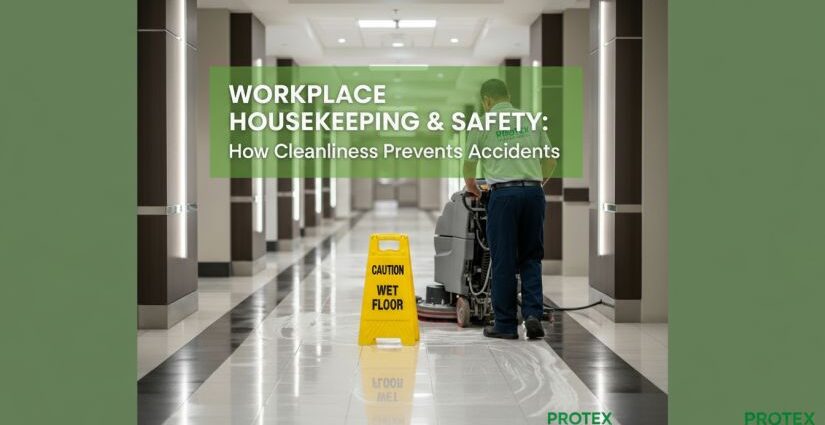
Every year, over 400,000 workplace injuries stem from poor housekeeping practices—slips, trips, and falls that account for roughly 35% of all lost workdays across American businesses. These aren’t minor inconveniences; they’re serious incidents that disrupt operations, drain resources, and sometimes permanently alter lives. Yet many facility managers and business owners still view housekeeping as purely cosmetic, missing the critical connection between cleanliness and safety.
“After three decades in the janitorial industry, I’ve walked through countless North Idaho and Spokane facilities where management was genuinely shocked to learn their cleaning protocols were creating liability,” says Rich Greco, owner of ProTex Janitorial Services. “Good housekeeping isn’t about making spaces look pretty—it’s about eliminating hazards before someone gets hurt.”
The reality is stark: a clean workspace directly correlates with accident prevention, employee morale, and overall productivity. Whether you operate a manufacturing plant in Post Falls, a medical facility in Coeur d’Alene, or an office building in Spokane, understanding how proper housekeeping reduces accidents isn’t optional—it’s essential to your business continuity and legal compliance.
Workplace Housekeeping Crisis in America
Poor housekeeping practices create a hidden epidemic of workplace injuries, lost productivity, and preventable costs. Understanding the scope is the first step toward safer facilities.
🚨 Critical Reality: Most housekeeping-related accidents are 100% preventable with proper protocols, training, and professional cleaning programs. The question isn’t whether you can afford to invest in safety—it’s whether you can afford not to.
Sources: National Safety Council, OSHA, Bureau of Labor Statistics, National Association of Professional Organizers
Key Takeaways
- Poor housekeeping causes 35% of workplace accidents: Over 400,000 annual injuries in the U.S. result from slips, trips, and falls linked directly to inadequate cleaning and maintenance practices.
- Effective housekeeping programs significantly reduce accidents: Facilities implementing structured cleaning protocols, zone ownership systems, and regular safety audits see measurable decreases in incident rates and OSHA citations.
- Clean environments boost productivity and morale: Workers in well-maintained spaces report higher job satisfaction, fewer sick days, and improved focus—directly impacting your bottom line.
- Compliance protects your business: Following OSHA standards like 1910.22 (walking-working surfaces) and Washington State Department of Labor and Industries requirements shields you from violations, fines, and costly litigation.
- Professional janitorial partnerships deliver consistency: Partnering with qualified cleaning services ensures adherence to safety protocols, proper training, and documentation that internal teams often struggle to maintain.
Understanding the Connection Between Workplace Cleanliness and Safety
Why Good Housekeeping Is a Safety Issue, Not Just Aesthetics
The term “housekeeping” often conjures images of tidy desks and polished floors, but in workplace safety contexts, it represents something far more fundamental: hazard elimination. Poor housekeeping creates an environment where accidents aren’t possibilities—they’re probabilities.
Workplace hazards multiply when basic cleanliness standards slip. Spilled liquids become slip risks within seconds. Improperly stored materials transform into trip hazards or falling object dangers. Clutter blocks emergency exits, turning potential evacuations into disasters. Combustible dust accumulations near ignition sources create fire hazards that can devastate entire facilities.
Consider the domino effect: when cleaning schedules falter, debris accumulates in walkways and aisles. Workers navigating these areas face elevated risk of slips, trips, and falls—the leading cause of general industry accidents according to the National Safety Council. These incidents cascade into workers’ compensation claims, potential OSHA citations under standards like 1910.22 (walking-working surfaces), lost productivity during investigations, and increased insurance premiums.
“We’ve seen facilities where management invested heavily in PPE and safety equipment but ignored basic housekeeping,” Rich Greco explains. “Then they’re baffled when their DART rate (Days Away, Restricted, or Transferred) climbs. The reality is simple: you can’t engineer safety into a dirty, disorganized workspace.”
The Real Cost of Workplace Injuries From Poor Housekeeping
Beyond the human toll—pain, recovery time, and potential permanent disability—workplace injuries from inadequate housekeeping exact staggering financial consequences. The National Safety Council estimates the average workplace slip, trip, or fall injury costs exceed $50,000 when factoring direct and indirect expenses.
Direct costs include:
- Medical treatment and hospitalization
- Workers’ compensation claims and premiums
- Legal fees if litigation follows
- OSHA fines for violations (penalties reaching $15,625 per serious violation)
Indirect costs often dwarf direct expenses:
- Lost productivity from injured workers and witnesses providing statements
- Training and onboarding replacement staff
- Overtime for colleagues covering absent employees
- Decreased morale impacting team-wide productivity
- Damage to equipment or materials during incidents
- Administrative time investigating and documenting accidents
- Potential reputation damage affecting client relationships and recruitment
For Pacific Northwest businesses, Washington State OSHA requirements and Idaho workplace safety programs mandate specific housekeeping standards. Facilities failing inspections face corrective action orders, follow-up visits, and potential criminal charges if negligence is egregious. The Spokane Regional Health District guidelines further specify sanitation requirements for certain industries, adding another compliance layer.
Smart facility managers recognize that investing in effective housekeeping programs delivers measurable ROI. Every dollar spent on preventive cleaning and organization saves an estimated $4 to $6 in avoided incident costs, according to industry safety consultants.
Common Workplace Hazards Created by Poor Housekeeping Practices
Slips, Trips, and Falls: The Leading Preventable Workplace Accidents
Slips, trips, and falls prevention should be priority one in any workplace housekeeping program. These incidents represent the most common—and most preventable—workplace accidents across all industries. Understanding the distinction helps target prevention efforts:
4 Major Housekeeping Hazard Categories
Slips, Trips & Falls
- Wet or oily floors
- Clutter in walkways
- Electrical cords
- Poor lighting
- Uneven surfaces
Fire Hazards
- Combustible dust
- Oily rags
- Blocked exits
- Flammable liquids
- Covered fire equipment
Chemical Hazards
- Leaking containers
- Unlabeled chemicals
- Improper storage
- Missing SDS sheets
- Spill contamination
Ergonomic Hazards
- Obstructed pathways
- Improper storage heights
- Disorganized tools
- Repetitive reaching
- Awkward postures
Slips occur when insufficient friction exists between footwear and walking surfaces. Common causes include:
- Spilled liquids left unattended (water, oils, cleaning solutions)
- Wet floors after mopping without adequate drying time
- Ice melt residue tracked indoors during winter months
- Grease accumulation near food service or manufacturing equipment
- Freshly waxed floors without proper wet floor signage protocol
Trips happen when feet strike objects during walking, often due to:
- Clutter in walkways and aisles
- Electrical cords and cables creating trip hazards
- Uneven flooring, damaged tile, or carpet edges
- Protruding nails and fasteners in construction or warehouse areas
- Poor lighting making obstacles difficult to spot
- Threshold and transition strips between floor surfaces
Falls represent the culmination—the injury event itself—and can occur at ground level or from elevation (ladders, stairs, platforms).
For North Idaho workplaces and Spokane commercial facilities, seasonal challenges amplify these risks. Winter brings snow, ice, and salt tracked through entrances, creating persistent moisture issues. The entrance matting 3-2-1 system (three feet of outdoor scraping, two feet of moisture absorption, one foot of drying) becomes essential during wet weather months. Umbrella bag stands and extended wet weather walk-off length help control moisture at entrance points.
“I always tell clients: if you’re not checking your entrance mats hourly during rain or snow, you’re gambling with someone’s safety,” Rich Greco notes. “We’ve implemented moisture control at entrances protocols for dozens of Spokane Valley and Coeur d’Alene businesses, and the difference is immediate—fewer near-misses, cleaner interiors, and significantly reduced slip incidents.”
Fire Hazards and Combustible Materials
Fire hazards from poor housekeeping practices kill workers and destroy businesses with alarming regularity. The connection between cleanliness and fire safety is direct: combustible materials plus ignition sources plus oxygen equals disaster potential.
Combustible dust housekeeping deserves special attention in manufacturing, food processing, and woodworking facilities. Materials like grain, sugar, metal shavings, and wood particles seem harmless individually, but accumulations create explosive conditions. The NFPA 654 combustible dust standard mandates regular cleaning to prevent layer buildup—even 1/32 inch of dust coating surfaces in 5% of a room’s area can create explosion hazards.
Dust collection at source through proper ventilation and using HEPA filtered vacuums (never compressed air, which disperses particles) prevents accumulations. Scheduling high dusting for rafters, ledges, and equipment tops eliminates hidden reservoirs.
Other housekeeping-related fire risks include:
Flammable liquid storage: The NFPA 30 flammable liquids storage standard requires approved containers kept in flammable cabinets with proper grounding. Gasoline, solvents, and cleaning chemicals stored improperly or in damaged containers create ignition risks.
Oily rags: Materials saturated with oils, stains, or finishing products can spontaneously combust through oxidation. Oily rag disposal cans with self-closing lids isolate these materials. “We’ve seen manufacturing clients in Rathdrum and Sandpoint transition to self-closing waste containers after near-miss incidents,” Greco shares. “It’s a simple change that eliminates a serious threat.”
Blocked exits and equipment: Clutter blocking emergency exits, fire extinguishers, or electrical panels violates multiple OSHA standards. The fire extinguisher 36-inch clearance and electrical panel 36-inch clearance requirements exist for emergency access. Do not block signage should be posted, but effective housekeeping makes violations impossible.
Stairway and exit obstruction: Keeping stairways clear of storage, tools, and debris ensures safe evacuation. During facility walkthroughs, identify items stored “temporarily” in exit routes—temporary becomes permanent until an emergency occurs.
Chemical Hazards and Improper Storage
Chemical safety intersects with housekeeping through storage, handling, and spill response. The OSHA 1910.1200 Hazard Communication Standard (HazCom) mandates that employees know what chemicals they’re working with and how to handle them safely, but housekeeping failures undermine these protections.
Improperly stored materials create multiple hazards:
- Leaking containers contaminate surfaces and release fumes
- Incompatible chemicals stored together risk dangerous reactions
- Unlabeled containers pose identification challenges during spills
- Overcrowded storage prevents proper secondary containment for liquids
A comprehensive spill response plan should include:
- Spill kits and absorbents stationed near chemical storage areas
- Absorbent socks and pads sized for different spill volumes
- Drain covers and spill berms to prevent environmental contamination
- Clear protocols for when to attempt cleanup versus evacuating and calling hazmat teams
Chemical dilution control systems reduce concentrated chemical exposure while cutting costs. Dispensing equipment automatically mixes cleaning solutions to proper ratios, eliminating guesswork and reducing waste.
Understanding the difference between neutral pH cleaner versus degreaser helps match products to tasks safely. Neutral cleaners work for routine maintenance; degreasers contain alkaline compounds requiring gloves and ventilation. Similarly, knowing disinfectant dwell time—how long solutions must remain wet on surfaces to kill pathogens—ensures effectiveness without overuse.
Ergonomic Hazards From Clutter and Disorganization
Poor housekeeping can lead to ergonomic injuries that develop slowly but disable workers just as effectively as acute trauma. Cluttered workspaces force awkward postures, repetitive reaching, and improvised lifting techniques that strain bodies over time.
Common ergonomic housekeeping issues include:
Obstructed pathways: Workers navigating around stored materials or equipment take longer routes, increasing walking distances and fatigue. Clear, marked aisles following aisle marking tape standards provide direct paths.
Storage at improper heights: Document and box storage height limits prevent overhead reaching and stooping. The ergonomic “power zone” between mid-thigh and shoulder height should contain frequently accessed items. First-in-first-out storage (FIFO) with older items at front reduces searching and reaching.
Disorganized tools and equipment: Time wasted searching for misplaced items frustrates workers and reduces efficiency. Shadow boards for tools create visual management—tool outlines on pegboards make missing items immediately obvious. Point-of-use storage for tools places equipment where it’s needed, eliminating carrying.
Cable and cord hazards: Beyond tripping risks, cable management and cord covers prevent posture problems from workers stepping over or around obstacles repeatedly throughout shifts.
For industrial facilities and warehouse operations, implementing 5S (Sort, Set in Order, Shine, Standardize, Sustain) creates organized, efficient environments. The red tag area process identifies unnecessary items for removal, while visual management boards communicate standards.
Essential Components of an Effective Housekeeping Program
Developing Standard Operating Procedures for Workplace Cleanliness
Good housekeeping practices don’t happen accidentally—they require structured programs with clear expectations, assigned responsibilities, and consistent execution. The foundation is documented standard work for cleaning that removes ambiguity from “clean enough.”
Creating SOPs (Standard Operating Procedures) for housekeeping should address:
Task specifications: Define exactly what “clean” means for each area. Instead of “clean the breakroom,” specify: empty and wipe trash cans, sanitize countertops and tables with approved disinfectant allowing proper dwell time, refill paper products and soap, sweep and mop floors using color-coded cleaning tools to prevent cross-contamination, check and restock restroom supplies, perform restroom leak checks.
Frequency standards: Different areas require different cleaning cadences. Production floors may need end-of-shift cleanup standards daily, while high dusting schedules might run monthly. Administrative areas benefit from morning reset routines before employees arrive.
Quality benchmarks: Measurable criteria determine success. For example: floors must pass floor traction coefficient of friction testing above 0.5, or no visible dust on horizontal surfaces when checked with white cloth wipes, or lighting lux level checks confirming adequate visibility.
Zone ownership cleaning maps assign specific areas to individuals or teams, creating accountability. When everyone owns a space, no one does—discrete assignments prevent gaps.
“One of the biggest mistakes I see in self-managed cleaning programs is vague expectations,” Rich Greco observes. “Telling someone to ‘keep it clean’ guarantees disappointment. We develop detailed day porter task lists and night crew quality checks with our clients, so everyone knows exactly what success looks like.”
Implementing the 5S Methodology for Workplace Organization
The 5S methodology—Sort, Set in Order, Shine, Standardize, Sustain—originated in Japanese manufacturing but applies universally to workplace housekeeping. This systematic approach creates orderly, efficient, safe environments.
The 5S Methodology for Workplace Safety
SORT (Seiri)
Separate necessary from unnecessary items. Remove clutter and eliminate trip hazards.
SET IN ORDER (Seiton)
Organize items logically. Everything has a designated place for easy access and return.
SHINE (Seiso)
Clean thoroughly while inspecting. Identify maintenance issues and safety hazards early.
STANDARDIZE (Seiketsu)
Create procedures and visual aids. Document best practices for consistent maintenance.
SUSTAIN (Shitsuke)
Build discipline through audits and training. Make housekeeping a continuous habit.
💡 Success Factor: Organizations implementing 5S methodology report 20-30% productivity improvements and 40-60% reductions in workplace accidents within the first year.
Sort (Seiri): Separate necessary items from unnecessary ones. During sorting sessions, team members review every tool, material, and piece of equipment in their work areas. Items used daily stay; rarely-used items move to centralized storage; never-used items are discarded or sold. The red tag area process marks questionable items with dated tags—if not used within 30 days, they’re removed.
Set in Order (Seiton): Organize remaining items for easy access and return. Everything needs a designated home, preferably labeled and visible. Clear bins and labeled shelves make contents obvious without opening. Shadow line parking for carts and equipment creates designated parking zones, preventing aisles and doorways from becoming dumping grounds.
Shine (Seiso): Clean thoroughly, inspecting equipment during cleaning. This step isn’t just custodial—it’s predictive maintenance. Workers cleaning their machines notice leaks, loose fasteners, and wear before failures occur. The clean-as-you-go policy prevents accumulations by addressing messes immediately.
Standardize (Seiketsu): Create procedures maintaining the first three S’s. Document best practices, establish cleaning schedules, and develop visual aids. Standard work documents with photos show exactly how areas should appear.
Sustain (Shitsuke): Build discipline to maintain standards through audits, training, and management commitment. The Plan-Do-Check-Act cycle continually improves processes. Gemba walk observations (leadership visiting work areas to observe and engage) demonstrate management visible commitment to housekeeping.
For Spokane manufacturing facilities and Coeur d’alene industrial sites, 5S transforms chaotic spaces into models of efficiency. ProTex has supported dozens of Northwest businesses implementing these systems, providing the consistent cleaning foundation that makes organization sustainable.
Regular Inspections and Housekeeping Audits
What gets measured gets managed. Housekeeping audit checklists transform subjective assessments into objective data that drives continuous improvement and prevents accidents.
Effective inspection programs include:
Comprehensive checklists: Tailor assessments to your specific facility and hazards. Include items like:
- Floors clear of spilled liquids, debris, and trip hazards
- Walkways and aisles maintained at designated widths, marked with aisle marking tape
- Emergency exits and routes unobstructed, with illuminated signage
- Flammable materials properly contained in approved cabinets
- Waste disposal containers provided, emptied before overflow
- Electrical cords managed with cord covers, not creating trip hazards
- Stairways with functioning handrails, adequate lighting, and no stored materials
- Chemical safety data sheets (SDS) accessible, with SDS access points clearly marked
- Fire extinguishers visible with 36-inch clearance, monthly inspection tags current
- Ladder inspection checklists completed, defective ladders tagged out
- Machine guarding keep-clear zones free of stored materials
Regular scheduling: Weekly facility walkthrough cadences catch developing problems before they become hazards. Monthly deep reviews with management participation reinforce importance. Annual third-party audits provide fresh perspectives.
Scoring and trending: Assign point values to checklist items based on safety criticality. Graph scores over time to identify improving or declining trends. Housekeeping metrics dashboards communicate performance visibly. Establish audit score targets and thresholds—for example, minimum 85% compliance with escalation triggers for repeat findings in the same location.
Digital tools: Modern inspection platforms using tablets or smartphones streamline data collection. Digital inspections with timestamps and photo verification of completed tasks create documentation valuable during OSHA visits or litigation. QR code area checklists allow workers to scan and complete location-specific assessments immediately.
Accountability workflows: Audits without corrective actions waste time. Implement issue escalation workflows that route findings to responsible parties with deadlines. Track corrective and preventive actions (CAPA) through resolution. Escalation triggers notify management when issues remain unaddressed beyond deadlines.
“I always recommend clients conduct their own monthly inspections even when using our routine cleaning services,” Greco advises. “It keeps everyone honest, catches unique site issues, and builds that culture of safety where housekeeping is everyone’s job, not just the cleaning crew’s.”
Training Employees on Housekeeping Best Practices
Even the best-designed housekeeping programs fail without proper training. Every employee—from executives to front-line workers—needs to understand their role in maintaining clean and safe environments.
Comprehensive safety training should cover:
New hire orientation: Include housekeeping in new hire safety orientation alongside PPE and emergency procedures. Explain the connection between cleanliness and safety, share incident statistics, and clarify expectations. Show them the housekeeping audit checklist so they know how areas are evaluated.
Role-specific training: Custodial staff need deep technical training on cleaning methods, chemical safety (OSHA 1910.1200 HazCom compliance), equipment operation (floor auto scrubber maintenance), and color-coded cleaning systems preventing cross-contamination. Supervisors need training on audit techniques and root cause analysis using 5 Whys to address recurring issues.
Toolbox talks: Short, focused toolbox talks on housekeeping during shift meetings reinforce concepts. Topics might include seasonal challenges (seasonal sand and grit removal procedures), specific hazards (combustible dust in your industry), or recent near-misses.
Refresh training cadence: Annual refresher courses prevent skill and knowledge decay. After incidents or OSHA citations, conduct immediate retraining addressing specific deficiencies. Document all training with attendance records and competency verification.
Job Hazard Analysis (JHA): Involve workers in analyzing their tasks’ hazards and developing controls. When employees participate in creating solutions, they’re more likely to follow procedures. JHA sessions build safety culture by demonstrating that worker input matters.
Near-miss reporting systems: Encourage reporting incidents that almost caused injuries. Analyze near-misses during safety meetings, discussing how housekeeping failures contributed and what prevented actual injuries. Celebrate reports—they’re opportunities to fix problems before someone gets hurt.
Establishing Clear Responsibility and Accountability
Ambiguous ownership guarantees housekeeping failures. Someone must be responsible for every square foot of your facility, with clear authority to address deficiencies.
Zone assignment systems: Divide facilities into discrete zones, each assigned to specific individuals or departments. Zone ownership cleaning maps posted visibly show who maintains which areas. Zones should align with work areas—production teams own their floor space, maintenance owns shops and storage, administration owns offices.
Management accountability: Leadership must visibly support housekeeping initiatives. Management visible commitment means executives participate in Gemba walks, include housekeeping metrics in performance reviews, allocate adequate budgets, and praise compliance while addressing deficiencies promptly.
Employee housekeeping pledges: Some organizations have workers sign commitments to maintain standards, review them during hiring, and reference them during coaching. While symbolic, pledges reinforce that housekeeping is part of job duties, not optional.
Contractor expectations: External vendors must meet your standards. Contractor housekeeping expectations should be written into service agreements, with vendor performance reviews on housekeeping conducted regularly. For janitorial contractors, specify service level targets for cleanliness with penalties for consistent failures.
Performance metrics: Track leading safety indicators (proactive measures like audit scores, training completion) alongside lagging indicators (reactive measures like incident rates, lost time cases). Linking compensation or recognition to housekeeping performance drives sustained attention.
OSHA Standards and Legal Requirements for Workplace Housekeeping
Understanding Walking-Working Surfaces Standards (OSHA 1910.22)
The OSHA 1910.22 standard establishes requirements for keeping walking-working surfaces clean, dry, and free from hazards. While seeming straightforward, violations under this standard rank among the most frequently cited by OSHA inspectors, particularly in Pacific Northwest states where Washington State Department of Labor and Industries compliance and Idaho Department of Labor safety training programs emphasize workplace housekeeping.
OSHA Housekeeping Compliance Checklist
Essential standards for workplace safety and regulatory compliance
Walking-Working Surfaces
- Floors kept clean, dry & debris-free
- Adequate lighting (OSHA 1910.22)
- No protruding nails or splinters
- Damaged surfaces repaired promptly
- Wet floor signage deployed
Material Storage
- Materials stacked securely (1910.176)
- Aisles & passageways clear
- Height limits observed
- Storage away from exits
- Proper racking load labels
Fire Safety
- Emergency exits unobstructed
- 36″ clearance for fire extinguishers
- Combustible dust controlled
- Flammables properly stored (NFPA 30)
- Oily rags in self-closing cans
Chemical Safety
- All containers labeled (HazCom)
- SDS sheets readily accessible
- Spill kits available & stocked
- Incompatible chemicals separated
- Secondary containment for liquids
Sanitation Standards
- Restrooms clean & well-supplied
- Waste containers provided
- Regular trash removal schedule
- Pest control measures active
- Food areas sanitized daily
Electrical Safety
- 36″ clearance for electrical panels
- Cords managed with covers
- No extension cord daisy-chaining
- Damaged cords removed from service
- Equipment grounded properly
⚠️ Penalty Alert: OSHA serious violations carry fines up to $15,625 per citation. Repeat violations can reach $156,259. Regular housekeeping audits help avoid costly penalties while protecting your workforce.
Key provisions of 1910.22 include:
General requirements (1910.22(a)): All places of employment, passageways, storerooms, service rooms, and walking-working surfaces must be kept in clean and orderly condition and in a sanitary state. This isn’t advisory—it’s mandatory.
Housekeeping specificity (1910.22(a)(1)): Floors must be kept clean and dry where practicable. Where wet processes are used, drainage must be maintained and false floors, platforms, mats, or other dry standing places provided. For food service facilities and certain manufacturing operations, this mandates aggressive moisture management.
Hazard elimination (1910.22(a)(3)): Floors must be kept free from protruding nails, splinters, holes, and loose boards. This applies particularly to older facilities, loading docks, and construction areas. Regular damaged tile or carpet repair prevents deterioration from minor issues into serious trip hazards.
Contamination control (1910.22(a)(2)): Where mechanical handling equipment is used, sufficient safe clearances must be maintained. This addresses forklift aisle keep-clear markings and material handling housekeeping to prevent both impact and pedestrian hazards.
Lighting requirements (1910.22(b)): Walking-working surfaces must be illuminated adequately. Specific lux levels vary by location, but consistent burned-out bulb replacement logs ensure compliance. Poor lighting makes hazards harder to spot, multiplying slip and trip risks.
OSHA citation avoidance through housekeeping requires consistent adherence to these standards. Inspectors conducting walkthroughs specifically evaluate surface conditions, lighting, and overall orderliness. Documented inspection programs demonstrating regular checks provide evidence of good-faith compliance efforts.
“When OSHA arrives at a facility, housekeeping is the first thing they notice,” Greco explains. “You can have perfect lockout/tagout programs and immaculate recordkeeping, but if they see cluttered aisles and slippery floors walking in, you’re starting with a credibility deficit. First impressions matter, especially during enforcement visits.”
Storage Requirements and Material Handling (OSHA 1910.176)
OSHA 1910.176 material storage standards prevent the all-too-common practice of haphazard stacking that creates avalanche hazards, blocks exits, and reduces clearances. These requirements intersect directly with housekeeping practices.
Critical elements include:
Secure stacking (1910.176(b)): Storage of materials must not create hazards. Bags, containers, and bundles must be stacked, blocked, interlocked, and secured to prevent sliding or collapse. Warehouse pallet stacking limits should be posted and enforced—exceeding height ratings invites disaster. Safe racking load capacity labels must be visible and current.
Housekeeping in storage areas: Aisles and passageways must be kept clear. The aisle width required varies by equipment used—facilities with forklift traffic need wider clearances than hand-cart operations. Material handling housekeeping extends to keeping stored items back from aisle edges where passing equipment might snag them.
Clearance maintenance: Storage cannot obstruct exits, fire equipment, electrical panels, or other emergency equipment. Regular audits should verify that designated areas for storage remain compliant, and “temporary” items haven’t become permanent obstructions.
Drainage and surface stability: Storage areas with potential liquid spills need floor drain maintenance and squeegee and water recovery equipment accessible. Drainage prevents standing water that creates slip hazards and structural damage.
For Spokane Valley warehouse operations and Post Falls manufacturing sites, implementing rigorous material storage protocols pays dividends. Beyond regulatory compliance, organized storage accelerates order picking, reduces damage, and improves inventory accuracy—operational benefits that fund housekeeping investments many times over.
Chemical Hazard Communication and Storage
The Hazard Communication Standard (HazCom) 1910.1200 requires that chemical manufacturers and importers evaluate hazards, and that employers communicate information to workers through labels, safety data sheets, and training. Housekeeping failures undermine these protections.
Labeling requirements: All chemical containers must have labels identifying contents, hazard warnings, and supplier information. Unlabeled containers from decanting cleaning solutions into spray bottles create confusion during emergencies. Use chemical dilution control systems with labeled dispensers, or ensure secondary containers receive proper labels immediately.
SDS accessibility: Safety Data Sheets (SDS) must be readily accessible to employees during work shifts. Whether maintained as binders in central locations or accessed electronically, SDS access points must be known to all employees. During housekeeping audits, verify that SDSs match chemicals actually in use—discontinued products’ sheets can be archived.
Storage compliance: Beyond OSHA, fire codes (like NFPA 30) dictate flammable liquid quantities and container types. Flammable cabinet grounding prevents static ignition during dispensing. Segregate incompatibles—acids from bases, oxidizers from organics—using separate cabinets or significant separation.
Spill preparedness: Spill kits positioned near chemical storage enable rapid response. Contents should match hazards present: absorbent pads for oils, neutralizing agents for corrosives, drain covers to prevent environmental releases. Train employees on when they can handle spills versus evacuating and calling professionals.
For medical facilities using disinfectants and sterilants, or automotive shops with solvents and lubricants, chemical housekeeping directly impacts both worker safety and regulatory compliance. ProTex’s staff receives OSHA HazCom training ensuring they understand products used in client facilities and can respond appropriately to exposures.
Regional Requirements: Washington State and Idaho Workplace Safety
While federal OSHA sets baseline standards, Washington State OSHA requirements (administered by the Department of Labor & Industries) and Idaho workplace safety programs add state-specific provisions that North Idaho and Eastern Washington businesses must follow.
Washington State distinctions:
Washington operates under an OSHA-approved state plan, meaning its Division of Occupational Safety and Health (DOSH) has jurisdiction. Washington’s standards often mirror federal OSHA but may be more stringent. For instance, Washington’s ergonomics rules and specific requirements for certain industries exceed federal minimums.
Slip, trip, and fall focus: DOSH has emphasized Washington State slip trip fall prevention through outreach campaigns targeting common hazards. Their “Safety Starts Here” initiative provides free resources for small businesses, including housekeeping checklists tailored to hospitality, retail, and office environments.
Consultation programs: Washington’s consultation program offers free, confidential safety assessments for small businesses. These visits identify hazards without citation risk (unless imminent danger exists) and can help facilities develop Pacific Northwest workplace accident prevention strategies aligned with regional conditions.
Idaho framework:
Idaho follows federal OSHA standards directly without a state plan, so enforcement comes from federal OSHA’s Region 10 office in Boise. However, Idaho offers resources through the Idaho Department of Labor safety training programs and partnerships with groups like the Idaho Safety Council.
Idaho Safety Council: This nonprofit provides training, consultation, and recognition programs for Idaho businesses. Their Idaho safety recognition awards celebrate companies achieving exceptional safety records—often those with exemplary housekeeping programs.
Regional resources: Both states offer training through regional OSHA training centers. The Idaho Safety Management Society and Spokane Safety Managers Forum provide peer networking where facility managers share regional housekeeping best practices and discuss seasonal challenges unique to the Inland Northwest.
Climate-specific considerations: Both Idaho and Washington require attention to seasonal hazards foreign to warmer climates. Ice melt residue cleanup, winter weather tracking, and entrance matting systems sized for extended wet seasons represent region-specific housekeeping priorities. Northwest environmental health and safety professionals emphasize that entrance matting appropriate for Arizona fails miserably in Spokane winters.
Understanding these regional nuances helps Spokane, Coeur d’Alene, and Boise-area facility managers achieve compliance while protecting employees from hazards common to OSHA Region 10 housekeeping standards.
Industry-Specific Housekeeping Challenges and Solutions
Industry-Specific Housekeeping Challenges
Tailored solutions for diverse facility types across the Inland Northwest
Manufacturing
- Combustible dust management
- Metal shavings & filings removal
- Industrial oil spill protocols
- Heavy machinery housekeeping
- OSHA compliance documentation
Office Buildings
- High-traffic entrance management
- Breakroom & kitchen sanitation
- Shared workspace protocols
- Cable & cord trip hazard control
- Professional brand impression
Healthcare
- Infection control protocols
- Color-coded cleaning systems
- Bloodborne pathogen response
- Medical waste segregation
- Joint Commission standards
Retail Stores
- Immediate spill response systems
- Customer-facing restroom excellence
- Entrance/storefront maintenance
- Sales floor hazard elimination
- Brand reputation management
Food Service
- FDA/USDA compliance standards
- Kitchen hood & filter cleaning
- Grease fire prevention
- Floor drainage management
- Pest-proofing protocols
Educational
- High-volume cafeteria sanitation
- Restroom monitoring systems
- Classroom disinfection protocols
- Playground & exterior safety
- Green cleaning for student health
🎯 ProTex Specialization: Our teams receive industry-specific training matching your facility type. From manufacturing combustible dust protocols to healthcare infection control, we deliver expertise that generic cleaning companies can’t match.
Manufacturing and Industrial Facilities
Manufacturing housekeeping presents unique challenges combining heavy machinery, diverse materials, and production pressures that can deprioritize cleanliness—a dangerous mistake.
Metal fabrication hazards: Cutting, grinding, and machining operations generate metal shavings, filings, and combustible dust (especially aluminum, magnesium, and titanium). These materials accumulate on equipment, floors, and overhead surfaces, creating fire and explosion risks. Dust collection at source through proper ventilation captures most particles, but escaped dust requires regular removal with HEPA-filtered vacuums—never compressed air, which disperses particles into explosive clouds.
Woodworking operations: Sawdust and wood particles similarly create combustible dust hazards, compounded by finishing operations introducing flammable vapors. The NFPA 654 standard mandates preventing accumulations—facilities should schedule high dusting shifts dedicated to cleaning rafters, beams, and equipment tops where dust settles invisibly.
Food processing unique needs: Beyond standard cleanliness, food manufacturers face FDA and USDA inspection focusing on sanitation. Sanitary design principles mean equipment must be cleanable without harboring bacteria. Food service facility housekeeping includes kitchen hood and filter cleaning schedules preventing grease fires, floor drain maintenance for drainage, and pest-proofing through eliminating food residues and entry points.
Chemical manufacturing: These facilities handle reactive substances requiring specialized cleaning. Neutral pH cleaners work for general areas, but production zones may need specific cleaning agents compatible with process chemicals. Secondary containment systems for liquid storage require periodic cleaning to remove sediment without introducing incompatible substances.
Practical solutions:
- Implement end-of-shift cleanup standards making housekeeping part of production cycles, not an afterthought
- Use floor auto scrubbers with appropriate pad types for industrial soils—aggressive scrubbing for heavy grease, softer for sealed concrete
- Establish machine guarding keep-clear zones with floor marking tape so operators know storage boundaries
- Install oily rag disposal cans throughout metalworking areas with signage explaining spontaneous combustion risks
- Schedule specialized services like post-construction cleaning after equipment installations or renovations
“Manufacturing clients initially resist production downtime for cleaning, but we’ve demonstrated that integrating housekeeping into workflows actually improves efficiency,” Rich Greco notes. “Clean machines run better, workers find tools faster, and quality improves when contamination decreases. It’s not a cost—it’s an investment.”
Office and Commercial Buildings
Office environments face different housekeeping challenges than industrial settings, but the safety stakes remain high. Slip-and-fall incidents in offices generate massive liability claims, while poor cleanliness impacts employee health, productivity, and company reputation.
High-traffic entrance areas: Office lobbies and entrance vestibules experience concentrated foot traffic depositing moisture, dirt, and debris. During Pacific Northwest rainy seasons (essentially October through May), moisture control at entrances becomes critical. The entrance matting 3-2-1 system provides staged moisture removal: three feet of outdoor scraping mat removes heavy debris, two feet of moisture-absorbing interior mat captures water, and one additional foot of drying mat prevents tracking deeper into buildings.
Umbrella bag stands and coat racks near entrances reduce water migration. Implement wet weather walk-off length extensions during storms—standard matting may need doubling during heavy rain or snow. Entry mat maintenance schedules should include vacuuming multiple times daily during precipitation and professional laundering weekly to restore absorption capacity.
Restroom sanitation: Office restrooms experience heavy use and require frequent attention. Restroom sanitation standards should mandate hourly checks during peak occupancy, addressing spills immediately, restocking supplies, and verifying functionality. Restroom leak checks prevent small drips from becoming slip hazards. Color-coded restroom supplies (red tools for restrooms only) prevent cross-contamination with kitchen or office cleaning equipment.
Breakroom and kitchen areas: Shared eating spaces accumulate spills, crumbs, and bacteria. Breakroom sanitation standards require daily deep cleaning with appropriate disinfectant dwell time on high-touch surfaces like refrigerator handles, microwave keypads, and coffee makers. Many offices now implement no open drink policies in production areas (cubicles, meeting rooms) to prevent keyboard and equipment damage alongside slip risks.
Cord and cable management: Modern offices have more electronic devices than ever, creating trip hazards from charging cables, computer cords, and peripheral connections. Cable management and cord covers channel wiring safely. Under-desk cable trays organize cords vertically, removing them from floor level. Wireless charging pads and cable-length minimization reduce clutter.
Shared workspace policies: Hot-desking and collaborative spaces require enhanced housekeeping. Shared workspace clean desk policies mandate that users wipe surfaces after use and clear personal items daily. Providing disinfectant wipes at workstations enables quick cleanup between users.
Paper and document management: Despite digitization promises, offices still accumulate paper. Document and box storage height limits prevent overhead storage hazards while ensuring accessibility. Archive boxes should be stored in designated areas with clearance limits, not stacked floor-to-ceiling in corners. Paper dust accumulation control matters for equipment longevity—printer and copier areas need regular cleaning to prevent dust from jamming mechanisms.
For office buildings throughout Spokane’s business districts, Liberty Lake business parks, and Coeur d’Alene commercial centers, maintaining professional appearances while ensuring safety requires balancing aesthetics with function. ProTex’s routine cleaning services address both, delivering consistently clean spaces that protect occupants and project professionalism.
Healthcare and Medical Facilities
Medical facility housekeeping carries life-and-death stakes. Infections acquired in healthcare settings affect roughly one in 31 hospital patients daily, and poor environmental hygiene contributes significantly. Beyond infection control, medical facilities face slip hazards from body fluids, chemical exposures from disinfectants, and regulatory scrutiny from multiple agencies.
Infection prevention protocols: Healthcare-associated infections (HAIs) result from pathogen transmission—often via inadequately cleaned surfaces. High-touch areas like bedrails, call buttons, door handles, and medical equipment require frequent disinfection using EPA-registered hospital-grade disinfectants with proven efficacy against relevant pathogens (MRSA, C. difficile, norovirus).
Disinfectant dwell time compliance ensures effectiveness—most hospital disinfectants require 1-10 minutes of wet contact time to kill pathogens. Staff must apply enough product to keep surfaces visibly wet throughout the specified duration. Rushed cleaning that wipes surfaces immediately after application wastes product and leaves pathogens viable.
Color-coded cleaning systems: Medical facilities universally implement color-coded cleaning tools preventing cross-contamination. Typical schemas designate: red for restrooms/toilets, blue for general areas, yellow for isolation/infectious patients, green for food service areas. Microfiber mops and cloths in designated colors remain segregated through use, laundering, and storage.
Spill response readiness: Body fluid spills (blood, vomit, urine) require immediate response with appropriate PPE and bloodborne pathogen precautions. Spill kits stocked with absorbent powder, disinfectant, PPE, and sharps containers enable safe cleanup. Staff must receive bloodborne pathogen training per OSHA 1910.1030 before handling these materials.
Regulated medical waste: Hazardous waste streams in healthcare settings require proper segregation. Red bags for biohazardous waste, yellow for trace chemotherapy, black for regular trash—mixing streams violates regulations and endangers waste handlers. Waste segregation and labeling must be clear at every disposal point.
Pharmaceutical housekeeping: Drug preparation and storage areas demand meticulous cleanliness. Spilled medications, particularly hazardous drugs (chemotherapy, hormones), require specialized cleanup. Some facilities designate low-lint wipes for sensitive areas like compounding pharmacies where particulates could contaminate sterile preparations.
Operating room adjacent areas: While surgical suites themselves exceed typical housekeeping scope, adjacent corridors, prep areas, and supply rooms require rigorous protocols. Some facilities maintain cleanroom adjacent support area housekeeping standards, using HEPA filtration and restricted traffic to minimize particulate introduction.
Patient safety considerations: Beyond infection, patient falls represent major risks in hospitals and clinics. Wet floor signage protocol must be conspicuous and consistently deployed. Anti-slip floor mats in showers, restrooms, and therapy areas provide traction. Regular floor traction coefficient of friction testing on patient corridors ensures surfaces meet safety thresholds, especially after refinishing or applying new treatments.
ProTex serves multiple healthcare facilities across Northern Idaho, implementing infection-control protocols that satisfy Joint Commission standards while maintaining the calm, healing environments patients need. “Healthcare cleaning is specialized work,” Greco emphasizes. “Our staff receives bloodborne pathogen training, understands isolation precautions, and knows that thoroughness can literally save lives.”
Retail Stores and Customer-Facing Spaces
Retail environments present unique housekeeping demands balancing operational efficiency with customer experience. Brand impression from cleanliness directly impacts sales—studies show 95% of customers form opinions about businesses based on restroom cleanliness alone, extrapolating those impressions to overall quality and trustworthiness.
Entrance and storefront maintenance: First impressions form within seconds of arrival. Exterior window cleaning removes smudges, handprints, and environmental film that dims natural light and signals neglect. Window and glass cleaning services should occur weekly for most retail locations, more frequently for high-visibility storefronts.
Entryways require constant vigilance. Entrance matting systems sized for customer traffic capture dirt before it spreads throughout stores. During inclement weather, assign staff to monitor entrances, placing additional wet floor signage and using squeegees to remove standing water. Some retailers deploy umbrella bag dispensers and covered umbrella stands, turning potential hazards into customer conveniences.
Sales floor cleanliness: Spills on sales floors demand immediate response—the average slip-and-fall lawsuit settles for $50,000, far exceeding any cleanup cost. Train all staff in basic spill response: secure the area with barriers or signage, notify management and custodial staff, and remain present until cleanup completes if possible. Spill response plans should include easily accessible spill kits with absorbents and wet floor signs at strategic locations.
Fitting room sanitation: Retail fitting rooms concentrate germs and odors. Daily cleaning prevents buildup, but high-volume stores benefit from mid-day maintenance. Remove trash, wipe surfaces and mirrors with appropriate cleaners (avoid harsh chemicals that damage finishes), vacuum or sweep floors, and inspect for damage or graffiti. Some retailers implement restroom-style monitoring logs tracking fitting room checks.
Restroom excellence: As mentioned, customer restroom cleanliness profoundly shapes brand perception. Beyond basic sanitation, consider experience factors: ambient scent (subtle, not overpowering), adequate lighting, full supply stocking, functional fixtures, and quick spill response. Restroom leak checks should occur during every cleaning pass—small drips escalate quickly under heavy use.
Back-of-house organization: Stockrooms, receiving areas, and break rooms hidden from customers still matter. Disorganized back areas waste employee time searching for inventory, while trip hazards from boxes and pallets cause injuries. Apply 5S methodology to organize stockrooms: sort inventory, designate locations, maintain cleanliness, standardize procedures, and sustain discipline. Warehouse pallet stacking limits and safe racking prevent injuries and inventory damage.
Checkout and food service areas: Retail stores with checkout lanes accumulate clutter quickly—impulse items, returned merchandise, abandoned products. Clear of clutter standards should guide cashiers to remove items regularly. Stores with food service components (coffee bars, delis, bakeries) face hybrid challenges combining retail presentation with food safety sanitation. Kitchen hood and filter cleaning, grease spill prevention, and food service sanitation become critical.
Seasonal challenges: Retail housekeeping demands shift seasonally. Winter brings tracked snow, salt residue, and mud requiring aggressive entrance matting and frequent mopping. Summer might bring grass clippings and dust. Seasonal sand and grit removal prevents abrasive particles from damaging floors and creating slip hazards. Ice melt residue cleanup addresses the white salt film that accumulates on floors and fixtures.
Spokane-area retailers and Coeur d’Alene merchants partner with ProTex to maintain inviting, safe shopping environments year-round, understanding that cleanliness isn’t overhead—it’s a sales driver and liability shield.
Educational Facilities
Educational institutions serve vulnerable populations—children and young adults—making housekeeping both a safety imperative and a health necessity. Schools face unique challenges including large populations in confined spaces, high-touch surfaces, and budget constraints.
Infection control in schools: Children transmit illnesses efficiently through close contact and inadequate hygiene. School housekeeping programs focusing on disinfection of high-touch surfaces—door handles, desks, cafeteria tables, restroom fixtures—demonstrably reduce absenteeism. Studies show proper cleaning protocols can decrease student sick days by 20-50%, improving both learning outcomes and district funding (often based on attendance).
Cafeteria sanitation: School lunchrooms combine food service safety requirements with high-volume, rapid-turnover demands. Between lunch periods (often 20-30 minutes), custodial staff must clear tables, sweep floors, and sanitize surfaces—challenging under time pressure. Breakroom sanitation standards adapted for schools might include spray-and-wipe protocols for tables using food-safe disinfectants, followed by floor sweeping and spot mopping. Daily deep cleaning addresses accumulated spills and debris.
Classroom housekeeping: Teacher and student responsibilities merge with custodial duties. Clean-as-you-go policies taught to students build good habits while reducing custodial burdens. Simple routines—pushing in chairs, clearing desk surfaces, disposing of trash properly—maintain baseline order. Custodians then handle floor care, surface disinfection, and restroom sanitation.
Restroom challenges: School restrooms experience intense use and unfortunately sometimes intentional vandalism or misuse. Increasing restroom check frequencies during school hours (hourly minimum) addresses issues quickly. Restroom leak checks prevent flooding, while adequate supply stocking (toilet paper, soap, paper towels) promotes hygiene. Some districts implement monitoring logs signed by staff, demonstrating consistent attention.
Playground and exterior areas: Outdoor spaces accumulate litter, leaves, and hazards like broken glass or protruding nails. Parking lot sweeping and debris control maintains safe pickup/dropoff zones. Playground inspections should identify trip hazards, damaged equipment, and standing water breeding mosquitos.
Allergy and asthma management: Many students have respiratory sensitivities requiring careful cleaning product selection. Green cleaning programs using third-party certified products (Green Seal, EcoLogo) reduce chemical exposures while maintaining effectiveness. HEPA-filtered vacuums capture fine particulates that conventional vacuums exhaust back into air, triggering asthma attacks.
Emergency preparedness: Schools conduct regular evacuation drills, making emergency exits and stairways housekeeping critical. Exit routes must remain completely clear—no stored supplies, equipment, or furniture. Do not block signage near exits reminds staff, while regular inspections verify compliance.
For school districts in Kootenai County, Spokane Public Schools, and smaller communities throughout the region, housekeeping shapes learning environments daily. Clean, safe schools correlate with better academic performance, lower teacher turnover, and stronger community support.
How Professional Janitorial Services Support Workplace Safety
The Role of Trained Cleaning Professionals
Professional staff training separates competent janitorial services from amateur operations. Trained cleaners understand not just how to mop floors, but why certain techniques prevent resoiling, which chemicals work for specific soils, and how housekeeping connects to overall safety.
Professional Training & Quality Assurance
How ProTex delivers consistent, safety-focused cleaning excellence
Initial Training
- 40-hour comprehensive program
- OSHA safety standards certification
- Chemical handling & HazCom compliance
- Equipment operation & maintenance
- Industry-specific protocols
- Customer service excellence
Ongoing Development
- Quarterly refresher courses
- New product & technology training
- Updated regulatory requirements
- Client-specific procedure reviews
- Performance coaching sessions
- Skill advancement opportunities
Quality Control
- Multi-tier inspection system
- Self-audits by cleaning staff
- Daily supervisor spot-checks
- Weekly management walkthroughs
- Monthly client review meetings
- Digital photo documentation
Quality Metrics We Track
🏆 The ProTex Difference: We don’t just clean—we create safer workplaces through systematic training, rigorous quality control, and unwavering commitment to excellence. Our clients experience fewer accidents, higher employee satisfaction, and complete peace of mind.
Comprehensive training programs cover:
Technical cleaning methods: Proper equipment operation (floor scrubbers, carpet extractors, pressure washers), chemical dilution and application, surface-appropriate techniques, and quality standards. For instance, mopping technique affects results dramatically—microfiber mops using figure-eight patterns cover surfaces more effectively than cotton mops pushed in straight lines.
Safety protocols: Personal protective equipment selection and use, ladder safety (three-point contact, inspection requirements), slip hazard awareness, electrical safety near water, and emergency response. Cleaning staff encounter hazards constantly—wet floors, chemicals, heights—requiring constant safety vigilance.
Chemical knowledge: OSHA 1910.1200 HazCom training ensures staff understand Safety Data Sheets, recognize hazard pictograms, know exposure symptoms, and respond appropriately to spills or exposures. Understanding the difference between products—neutral pH cleaners for routine maintenance versus degreasers requiring ventilation and PPE versus disinfectants needing specific dwell times—prevents misuse.
Cross-contamination prevention: Color-coded cleaning tools systems only work when staff understands and follows protocols. Training must emphasize that red-handled tools never leave restrooms, yellow tools stay in infectious areas, and green tools remain in food service. Laundering must maintain separation to avoid contaminating entire inventories.
Customer interaction: Professional cleaners in occupied buildings must balance efficiency with discretion, security awareness (challenging unknown visitors), and communication (reporting maintenance issues observed during cleaning).
“Our hiring and training process is rigorous because we’re not just cleaning—we’re protecting our clients’ employees and assets,” Rich Greco states. “Every ProTex team member completes 40 hours of initial training covering safety, techniques, and customer service before working independently. Ongoing training addresses new products, equipment, and client-specific protocols.”
Quality Control and Accountability Systems
Even well-trained staff require oversight ensuring consistent performance. Janitorial quality control systems provide that structure through inspections, feedback, and continuous improvement.
Multi-tier inspection programs include:
Self-inspection: Cleaners review their work using checklists before leaving areas, catching obvious deficiencies immediately. This first level catches the majority of issues.
Supervisor inspection: Team leads or supervisors conduct randomized checks across assigned areas, typically covering 10-20% of work daily. They use detailed housekeeping audit checklists scoring specific elements. Deficiencies trigger immediate corrective action and retraining if patterns emerge.
Client walkthrough: Scheduled facility walkthroughs with clients (weekly, bi-weekly, or monthly depending on agreements) review overall performance, address concerns, and adjust services as needs evolve. These sessions build partnerships and demonstrate management visible commitment to quality.
Photo documentation: Photo verification of completed tasks creates accountability while protecting against false claims. Before/after images of problem areas, timestamped photos of completion, and digital inspection uploads provide evidence that work occurred to standard.
Digital tools: Modern quality control leverages technology. Inspectors using tablets or smartphones access digital inspection platforms with area-specific checklists. QR code area checklists attached to walls allow scanning and immediate assessment. GPS check-ins verify that staff visited assigned locations on schedule. Some systems enable continuous monitoring via moisture sensors alerting supervisors to wet floors requiring attention or indicating cleaning occurred.
Performance metrics: Track service level targets through objective measures:
- Audit scores (percentage of passed inspection items)
- Response times (minutes from issue report to resolution)
- Customer satisfaction (surveys or feedback scores)
- Safety incidents (near-misses or accidents attributable to housekeeping)
Corrective action processes: When deficiencies occur, structured CAPA (Corrective and Preventive Actions) protocols address root causes. Root cause analysis using 5 Whys digs beneath surface symptoms to underlying problems. For example: spill not cleaned → cleaner didn’t see it → poor lighting in that area → maintenance hasn’t replaced burned-out bulb → no burned-out bulb replacement log tracking needs → implement log and inspection system.
Continuous improvement: The Plan-Do-Check-Act cycle drives ongoing enhancement. Regular reviews of metrics, customer feedback, and staff input identify opportunities. Kaizen for housekeeping—small, incremental improvements continuously implemented—compounds into significant performance gains.
Clients of ProTex’s facility management services benefit from these systematic quality controls, receiving reliable service that consistently meets or exceeds expectations. “We treat quality control as seriously as the cleaning itself,” Greco notes. “Our clients aren’t paying for activity—they’re paying for results. Our inspection systems ensure they get them.”
Specialized Equipment and Green Cleaning Solutions
Technology reshapes janitorial services, improving effectiveness while reducing environmental impact. Modern equipment and green cleaning products deliver superior results compared to traditional methods.
Advanced cleaning equipment:
Floor auto scrubbers: These machines combine scrubbing, solution application, and water recovery in single passes. Compared to mopping (which often spreads dirty water), auto scrubbers genuinely clean surfaces. Different pad types (red for aggressive scrubbing, white for polishing) and brush options (nylon, polypropylene, abrasive) tackle varied flooring and soil conditions. Regular floor auto scrubber maintenance—emptying recovery tanks, cleaning filters, charging batteries properly—ensures longevity.
HEPA-filtered vacuums: High-Efficiency Particulate Air filters capture 99.97% of particles 0.3 microns or larger, preventing allergens and respirable dust from re-entering air. Critical for medical facilities, schools, and environments with respiratory sensitivities. Standard vacuums exhaust fine particles, actually worsening air quality during cleaning.
Microfiber technology: Microfiber mops and cloths clean more effectively with less chemical than cotton equivalents. The split-fiber structure mechanically lifts and traps dirt, removing up to 99% of bacteria with just water. Microfiber remains effective through hundreds of launderings when properly maintained (avoid fabric softeners and high heat that damage fibers).
Electrostatic sprayers: These devices charge disinfectant droplets, causing them to wrap around and adhere to surfaces electrostatically. This technology, profiled in ProTex’s article on next-generation disinfection tools, applies disinfectants more efficiently and uniformly than manual spraying.
UV-C light systems: Ultraviolet-C light at specific wavelengths kills pathogens without chemicals. Portable UV-C devices disinfect hospital rooms, though they supplement rather than replace chemical disinfection due to requiring line-of-sight exposure.
Green cleaning products:
The green cleaning movement addresses the reality that traditional cleaning chemicals, while effective, carry health and environmental costs. Third-party certified products (Green Seal, EcoLogo, Safer Choice) meet rigorous performance and sustainability standards.
Benefits of green cleaning include:
- Reduced exposure to respiratory irritants, allergens, and carcinogens
- Lower environmental impact (biodegradable ingredients, reduced packaging)
- Improved indoor air quality (volatile organic compounds minimized)
- Often comparable or superior effectiveness to conventional products
- Positive brand perception—60% of facility managers prioritize eco-friendly practices
Myths about green products: Early green cleaners sometimes underperformed, creating lasting skepticism. Modern certified products clean as effectively as conventional alternatives for most applications. Heavily soiled industrial environments may still require stronger chemicals periodically, but daily maintenance with green products reduces that need.
Implementation considerations: Transitioning to green cleaning requires product testing, staff training on different dilution ratios or application methods, and patience during adjustment periods. Starting with general cleaners and glass cleaners (easy transitions) builds confidence before tackling floor care and sanitization.
For businesses seeking healthier workplaces and environmental responsibility, ProTex offers comprehensive green cleaning programs using certified products and sustainable practices throughout North Idaho and Eastern Washington operations.
Documentation and Compliance Support
Professional janitorial services provide documentation valuable for regulatory compliance, insurance requirements, and litigation defense. When OSHA knocks or a slip-and-fall lawsuit arrives, proper records prove due diligence.
Service verification documentation:
Cleaning logs: Simple logs tracking which areas were cleaned when, by whom, and any issues noted. For some industries (healthcare, food service), these records demonstrate regulatory compliance. Digital platforms with timestamps and GPS verification prevent falsification.
Inspection reports: Regular audits documented with scores, deficiency photos, and corrective actions taken. Third-party audits conducted periodically add credibility.
Training records: Documentation that cleaning staff received required training (HazCom, bloodborne pathogens, slip-fall prevention) with dates, topics, and competency verification. OSHA standards require training records for various topics.
Chemical inventory and SDS: Maintaining current Safety Data Sheets for all cleaning chemicals used, organized and accessible. This satisfies HazCom requirements while enabling emergency response.
Equipment maintenance logs: Vendor-supplied equipment maintenance logs track servicing of scrubbers, extractors, and other machinery. Regular maintenance prevents breakdowns while documenting that equipment functioned properly (relevant if equipment failure allegedly caused an incident).
Incident reports: Documentation of any cleaning-related incidents (chemical exposure, slip on wet floor, equipment damage) with facts, witnesses, corrective actions, and prevention measures implemented.
Insurance and risk management:
Insurance risk control recommendations from carriers often emphasize housekeeping programs. Demonstrating strong cleaning protocols, documentation, and professional service relationships can reduce premiums or strengthen defense positions after claims.
Vendor performance reviews: Regular assessments of janitorial contractor performance document that management actively monitors and addresses deficiencies—relevant to duty-of-care standards in premises liability cases.
Contract language for housekeeping compliance: Service agreements should specify standards, inspection protocols, insurance requirements (general liability minimums, workers’ compensation coverage), and consequences for non-compliance. Well-drafted contracts clarify expectations and provide leverage addressing performance issues.
“We view documentation as protecting our clients as much as protecting ProTex,” Rich Greco emphasizes. “When incidents occur—and occasionally they will despite best efforts—having detailed records of cleaning schedules, staff training, and safety protocols demonstrates that reasonable care was exercised. That documentation often means the difference between a dismissed claim and a costly settlement.”
Building a Culture of Safety Through Housekeeping
Leadership Commitment and Visible Support
Safety culture doesn’t emerge accidentally—it requires intentional cultivation, starting at the top. When leadership demonstrates that housekeeping and safety genuinely matter through actions (not just words), employees follow that example.
Management visible commitment manifests through:
Participation in inspections: Executives and managers conducting Gemba walks (going to the actual workplace to observe and engage) demonstrate that housekeeping merits leadership attention. These shouldn’t be hostile inspections but collaborative observations, asking workers about challenges they face maintaining cleanliness and removing obstacles they identify.
Resource allocation: Budget decisions reveal true priorities. Adequate funding for cleaning staff, proper equipment, quality supplies, and training shows that management backs safety claims with resources. Penny-wise, pound-foolish housekeeping budgets guarantee problems.
Performance expectations: Including housekeeping and safety in performance reviews—for everyone from front-line workers to senior managers—establishes accountability. Linking compensation or recognition to safety metrics (audit scores, incident rates) reinforces importance.
Prompt response to reports: When employees report housekeeping hazards and management responds immediately, it builds trust that safety concerns are taken seriously. Conversely, ignored reports teach employees that safety is lip service.
Personal compliance: Leaders must model expected behaviors. Executives who ignore safety protocols or contribute to clutter undermine safety culture instantly. Walking past spills without reporting them or blocking exits with equipment signals that rules don’t actually matter.
Communication and recognition: Regularly discussing housekeeping in safety meetings, celebrating improved audit scores, and recognizing employees maintaining excellent work area standards keeps attention focused. Safety culture reinforcement requires constant messaging through multiple channels.
“I’ve worked with facility managers who genuinely care about safety alongside others just checking OSHA boxes,” Greco observes. “The difference in outcomes is night and day. When leadership cares—really cares—employees internalize that safety culture. When leadership pays lip service, housekeeping deteriorates to whatever minimum avoids citations.”
Employee Engagement and Ownership
While management sets the tone, front-line workers ultimately determine housekeeping success or failure. Making housekeeping part of everyone’s job—not just the cleaning crew’s responsibility—creates environments where safety thrives.
Strategies for building ownership:
Zone assignments: Designating specific employees or teams responsible for defined areas creates accountability. The production team owns their floor area, maintenance owns the shop, administration owns offices. Zone ownership cleaning maps posted visibly communicate assignments. Knowing “this is my space” motivates pride and attention.
End-of-shift standards: End-of-shift cleanup protocols make housekeeping part of completing work, not separate tasks. Before leaving, workers return tools to designated locations (shadow boards for tools make missing items obvious), clear work surfaces, dispose of waste, and sweep their areas. This 10-15 minute investment prevents overnight accumulations.
Clean-as-you-go philosophy: Addressing messes immediately—wiping spills when they occur, returning items after use, disposing of waste promptly—prevents accumulations requiring intensive cleanup sessions later. This mindset shift from “clean up later” to “clean up now” transforms housekeeping from burdensome to natural.
Employee input and problem-solving: Workers performing tasks daily understand challenges and often generate the best solutions. Kaizen events bringing cross-functional teams together to improve specific areas tap this knowledge. Implementing employee suggestions demonstrates that input matters, building engagement.
Safety committee participation: Involving employees in housekeeping inspections, standard development, and hazard identification creates buy-in. Those who help create rules follow them more readily than those having rules imposed.
Training and empowerment: Providing workers with knowledge and authority to address housekeeping issues independently builds ownership. Training in proper techniques, hazard recognition, and spill response equips them to act. Empowering them to stop work when they observe imminent hazards demonstrates that safety supersedes productivity.
Recognition programs: Celebrating excellent housekeeping motivates continued effort. Monthly awards for cleanest areas, annual safety recognition, or simple verbal praise during meetings costs little but significantly impacts morale. Idaho safety recognition awards and similar formal programs provide external validation.
Near-Miss Reporting and Continuous Improvement
Near-miss reporting systems capture incidents that almost caused injuries—invaluable data for preventing actual accidents. A near-miss is a wake-up call that conditions exist where injury could occur; actual injuries are failed near-misses.
Building effective reporting cultures:
Non-punitive environments: Workers must feel safe reporting near-misses without fearing discipline. “I almost tripped on that pallet” should prompt immediate hazard correction and gratitude for the report, never blame. Blame-based cultures drive reporting underground, blinding management to hazards.
Easy reporting mechanisms: Simple forms (paper or digital), verbal reports to supervisors, anonymous suggestion boxes, or dedicated email addresses remove barriers. Complex processes suppress reporting; simple processes encourage it.
Visible follow-through: Closing the loop demonstrates that reports matter. Communicate what action resulted from reports: “Thanks to the near-miss report about the loose carpet in Building A, maintenance repaired it yesterday, eliminating that trip hazard.” This shows reports produce results, encouraging future reporting.
Regular review and analysis: Discuss near-misses during safety meetings and toolbox talks, analyzing what happened, what prevented injury, and what changes will prevent recurrence. Root cause analysis using 5 Whys digs beneath surface symptoms to systemic causes.
Leading indicators: Near-misses, audit scores, training completion rates, and other proactive measures serve as leading safety indicators predicting future performance. These allow intervention before injuries occur, unlike lagging indicators (injury rates, lost time) that measure failure.
Continuous improvement cycles: Applying the Plan-Do-Check-Act framework systematically improves housekeeping:
- Plan: Identify housekeeping problems (from audits, incidents, near-misses) and design solutions
- Do: Implement changes on a small scale initially
- Check: Measure results—did the change improve conditions?
- Act: If successful, standardize the change across the facility; if unsuccessful, adjust and retry
This iterative approach ensures that improvements are tested and refined before full deployment, reducing implementation risks while building evidence-based practices.
For organizations serious about safety, continuous improvement isn’t a program—it’s a philosophy embedded in daily operations. ProTex partners with clients to support these efforts through consistent service quality, responsive communication, and collaborative problem-solving.
Seasonal and Regional Housekeeping Considerations for the Pacific Northwest
Pacific Northwest Seasonal Housekeeping Guide
Year-round cleaning priorities for North Idaho and Spokane facilities
❄️ WINTER (Dec-Feb)
- Triple entrance matting systems
- Hourly wet floor monitoring during storms
- Ice melt residue cleanup protocols
- Extended vestibule maintenance
- Increased moisture extraction frequency
- Salt damage prevention for floors
🌸 SPRING (Mar-May)
- Deep floor restoration projects
- Strip & refinish winter-damaged surfaces
- Comprehensive window cleaning (inside & out)
- HVAC system cleaning before cooling season
- Carpet deep cleaning or replacement
- High-surface dusting and ceiling cleaning
☀️ SUMMER (Jun-Aug)
- Enhanced dust control protocols
- Increased HEPA vacuum frequency
- Pollen management & filter replacement
- Wildfire smoke response procedures
- Air quality monitoring & improvements
- Outdoor activity debris tracking control
🍂 FALL (Sep-Nov)
- Winter preparation deep cleaning
- Inspect & upgrade entrance matting systems
- Stock winter supplies & equipment
- Service floor scrubbers before heavy use
- HVAC cleaning before heating season
- Develop snow/ice response protocols
📍 Regional Expertise Matters: ProTex understands Inland Northwest climate challenges. Our 30+ years serving Spokane, Coeur d’Alene, and North Idaho means we anticipate seasonal needs before they become problems.
Winter Weather Challenges: Snow, Ice, and Salt
Pacific Northwest safety during winter months requires aggressive housekeeping addressing unique regional challenges. While winters in Spokane, Coeur d’Alene, and the Idaho Panhandle are milder than northern Plains or Mountain states, persistent precipitation and freeze-thaw cycles create hazardous conditions.
Entrance management: As previously noted, the entrance matting 3-2-1 system becomes essential. During active snowfall or rain, matting saturates quickly, losing effectiveness. Deploy additional mats or increase cleaning frequency (vacuuming/extracting water hourly during storms). Consider heated entrance mats that dry themselves through low-level heating elements, though these carry higher costs.
Ice melt products: Various deicing products address ice but create housekeeping challenges. Rock salt (sodium chloride) works effectively but tracks indoors, creating white residue films on floors and deteriorating finishes. Calcium chloride and magnesium chloride melt ice at lower temperatures but cost more. Sand provides traction but doesn’t melt ice and creates enormous indoor debris. Balancing outdoor safety with indoor cleanliness requires choosing products strategically.
Ice melt residue cleanup: Once indoors, salt and deicers require aggressive removal. Daily mopping during winter using neutral cleaners removes surface residue. Weekly or bi-weekly deep cleaning with floor scrubbers prevents buildup damaging floor finishes. Spring floor cleaning and refinishing often becomes necessary to restore floors after winter abuse.
Vestibule management: Double-door entries with vestibules trap moisture and debris between door sets, protecting main interiors. These spaces require multiple daily cleanings during winter—sweeping, mopping, and recharging mats. Some facilities assign staff to monitor entrances continuously during peak traffic or storms.
Outdoor pathway maintenance: While outdoor maintenance exceeds typical housekeeping scope, facility managers must coordinate snow removal, deicing, and parking lot sweeping with indoor efforts. Improperly cleared outdoor areas just transfer problems indoors.
Seasonal equipment needs: Winter demands additional equipment—extra mops and buckets for increased moisture, extractors or wet vacuums for saturated carpets near entrances, and dehumidifiers in enclosed vestibules preventing mold growth.
“Winter is our busy season in the Inland Northwest,” Greco explains. “Facilities that scale back cleaning during winter are penny wise and pound foolish—that’s exactly when they need more service, not less. We staff up seasonally and coordinate closely with clients to address weather-related challenges proactively.”
Summer: Dust, Pollen, and Outdoor Activity
Summer in North Idaho and Eastern Washington brings different housekeeping challenges—dust from dry conditions, pollen overwhelming allergic occupants, and increased outdoor activity tracking debris indoors.
Dust control: Low humidity during summer months keeps dust airborne longer. Increased vacuuming frequency with HEPA-filtered vacuums captures particulates before they settle. Damp mopping (using well-wrung mops rather than dry dust mops) traps dust instead of redistributing it. Microfiber cloths for dusting similarly capture particles electrostatically rather than dispersing them.
Pollen management: Pacific Northwest summers can produce heavy pollen loads, particularly when dry conditions keep particulates airborne. Facilities should increase HVAC filter replacement frequency, upgrade to higher-MERV filters if systems allow, and clean intake grilles regularly. Interior surfaces near windows and doors accumulate visible pollen requiring frequent dusting.
Outdoor activity tracking: Summer brings more foot traffic between indoors and outdoors—employees taking breaks outside, open doors for ventilation, increased visitors. Grass clippings, dust, and general debris track indoors more readily. ProTex’s article on summer cleaning strategies for office air quality addresses these seasonal challenges specific to regional conditions.
Wildfire smoke impacts: Increasingly, Pacific Northwest summers include wildfire smoke episodes degrading air quality. During these events, facilities should seal buildings, run HVAC systems on recirculation, and increase interior cleaning to remove settled particulates. Post-smoke deep cleaning removes pervasive odors and residue.
Preparing for Seasonal Transitions
Seasonal cleaning checklists help facilities prepare for changing conditions. Spring and fall transitions present opportunities for deep cleaning projects addressing accumulated issues.
Fall preparation: Before winter arrives, facilities should:
- Deep clean carpets and hard floors, stripping and refinishing if needed
- Inspect and upgrade entrance matting systems
- Stock winter supplies (extra mops, ice melt, wet floor signs)
- Test and service floor scrubbers and extractors before heavy winter use
- Schedule HVAC system cleaning before heating season
- Prepare outdoor snow removal and deicing plans
ProTex’s fall office cleaning checklist guides North Idaho and Spokane businesses through systematic preparation.
Spring renewal: After winter’s toll, spring cleaning addresses:
- Floor restoration—deep cleaning, stripping damaged finishes, recoating
- Window cleaning inside and out after winter grime accumulation
- Exterior pressure washing removing winter salt and debris
- HVAC system cleaning before cooling season
- Carpet deep cleaning or replacement in high-traffic areas
- Ceiling and high-surface cleaning reaching areas neglected during winter
These seasonal projects complement ongoing routine cleaning, maintaining facilities despite harsh regional conditions.
Measuring ROI: The Business Case for Strong Housekeeping Programs
Quantifying Accident Reduction and Cost Savings
Housekeeping budget and ROI analysis demonstrates that effective programs pay for themselves through avoided costs—making safety investments business decisions, not just compliance expenses.
Housekeeping Program ROI: The Numbers Don’t Lie
How professional housekeeping programs deliver measurable returns
Cost Comparison: DIY vs. Professional Services
- Labor + benefits overhead
- Equipment purchases & maintenance
- Supply procurement & storage
- Training & supervision costs
- Inconsistent quality
- Hidden administrative burden
- Predictable monthly costs
- Professional equipment included
- Bulk supply purchasing power
- Expert training provided
- Documented quality control
- Minimal management time
💡 Real-World Impact: A 100-employee facility reducing 5 annual slip-fall incidents to 2 saves approximately $150,000 yearly—far exceeding typical professional cleaning program costs.
Direct cost savings:
Reduced workers’ compensation: The average workplace slip-and-fall claim costs $50,000+ when including medical expenses, lost wages, and administrative costs. Reducing incidents by even a few annually generates substantial savings. If a facility historically experiences 5 slip-fall incidents yearly and improves housekeeping to reduce that to 2, the $150,000 annual savings far exceeds most cleaning program costs.
Lower insurance premiums: Workers’ compensation and general liability insurance rates reflect claims history. Sustained low incident rates earn premium reductions through experience modification rates (EMR or MOD). A facility with EMR of 1.0 pays standard premiums; above 1.0 pays surcharges, below 1.0 earns discounts. Improving from 1.2 to 0.8 might save $50,000-$100,000 annually depending on payroll size.
Avoided OSHA citations: Serious OSHA violations carry penalties up to $15,625 per citation, with repeat and willful violations reaching $156,259. OSHA citation avoidance through housekeeping represents pure savings—citations that never happen because hazards were eliminated.
Reduced property damage: Effective housekeeping prevents damage—slip-fall incidents often involve broken equipment or materials; fires from poor housekeeping destroy facilities; spills damage floors and products. These avoided damages contribute to ROI.
Indirect cost savings:
Productivity gains from orderliness: Workers in organized environments locate tools and materials faster, waste less time navigating obstacles, and maintain focus without clutter-induced distraction. Studies suggest organized workplaces improve productivity 5-15%—translating to substantial labor cost savings in most operations.
Morale improvement from tidy workspaces: Employee morale and retention correlate strongly with workplace conditions. Clean, well-maintained facilities communicate that organizations value employees, reducing turnover (expensive) while improving engagement (profitable). Exit interviews frequently cite poor working conditions among departure reasons.
Reduced absenteeism: Clean facilities harbor fewer pathogens, reducing illness transmission. Improved air quality from proper cleaning benefits respiratory health. The connection between office cleanliness and employee health is well-documented—better housekeeping means fewer sick days.
Brand reputation: For customer-facing businesses, cleanliness directly impacts reputation and revenue. Dirty facilities drive customers away; clean ones attract them. While difficult to quantify precisely, the brand impression from cleanliness influences customer lifetime value significantly.
Calculating your ROI: To build a business case for improved housekeeping:
- Gather baseline data: incident rates, workers’ comp costs, insurance premiums, OSHA citations, absenteeism rates
- Research industry benchmarks and best-performer statistics
- Estimate improvement potential based on current deficiencies
- Calculate potential savings from each category above
- Compare savings to program investment (cleaning services, equipment, training)
- Present net savings and payback period to decision-makers
Most comprehensive housekeeping programs demonstrate positive ROI within 12-18 months, with compounding benefits thereafter.
Impact on Employee Productivity and Morale
Beyond safety, housekeeping profoundly affects productivity and morale—factors directly impacting organizational performance and profitability.
Productivity research: Multiple studies document productivity improvements from clean, organized workplaces:
- A Princeton University study found physical clutter competes for attention, reducing performance and increasing stress
- The National Association of Professional Organizers reports workers waste 4.3 hours weekly searching for papers and items in disorganized spaces
- Herman Miller research showed employees in clean, organized offices were 11% more productive than those in cluttered environments
These aren’t trivial improvements. An office with 100 employees averaging $60,000 annual salary ($30/hour) losing even 3 hours weekly to disorganization wastes $468,000 annually in productive time. Recovering just half that time through better housekeeping and organization justifies substantial cleaning investment.
Morale dynamics: Workers interpret workplace conditions as signals about organizational values and their own worth. Clean, well-maintained facilities communicate respect and professionalism; dirty, neglected spaces signal management indifference.
Survey data consistently shows:
- 94% of workers report that workplace cleanliness affects their productivity
- 77% say workplace cleanliness influences their opinion about employers
- 49% have called in sick or left early due to unclean restroom conditions
For recruitment and retention, facility conditions matter. Top talent has choices; they’ll choose employers demonstrating investment in employee wellbeing. Morale and productivity form a reinforcing cycle—happy employees work harder; productive employees feel more satisfied.
“I’ve seen transformations when clients upgrade their cleaning programs,” Rich Greco shares. “Within weeks, employees comment positively, managers report improved attitudes, and sometimes productivity metrics tick upward. It’s not magic—it’s creating an environment where people want to be.”
Supporting Compliance and Reducing Liability
Compliance protection represents another ROI dimension—avoiding penalties, litigation costs, and operational disruptions from regulatory problems.
OSHA compliance value: Beyond direct fines, OSHA citations trigger:
- Follow-up inspections verifying correction
- Increased attention from regulators (once cited, you’re on their radar)
- Potential for willful or repeat violations carrying criminal liability
- Damage to reputation with customers, employees, and investors
- Distraction of management time responding to investigations
Proactive housekeeping programs demonstrating good-faith compliance efforts provide substantial defenses. Even when violations occur, documented efforts to prevent them can reduce penalties significantly.
Litigation defense: Slip-and-fall lawsuits—the most common premises liability claim—hinge on duty of care. Property owners must maintain reasonably safe conditions and warn of non-obvious hazards. Documented cleaning schedules, staff training, inspection records, and prompt spill response protocols demonstrate reasonable care, often leading to early case dismissals or favorable settlements.
Contract requirements: Many customer contracts, particularly in healthcare, food service, and government sectors, mandate specific housekeeping standards. Maintaining compliance protects revenue streams from contract terminations.
Insurance requirements: Some insurance policies require documented housekeeping programs as coverage conditions. Insurance risk control recommendations often emphasize cleaning protocols, and insurers may conduct facility inspections. Non-compliance risks coverage denials after claims.
Visitor safety: Beyond employees, facilities owe duties to visitors—customers, contractors, delivery personnel, regulators. Visitor safety and wayfinding cleanliness prevents incidents while creating positive impressions.
The cumulative value of avoided legal problems, regulatory hassles, and insurance complications often exceeds direct cost savings from injury prevention. These benefits, while harder to quantify prospectively, are very real and substantial.
Frequently Asked Questions About Workplace Housekeeping and Safety
What is the connection between housekeeping and workplace safety?
Good housekeeping eliminates hazards that cause injuries. Cluttered walkways create trip risks, spilled liquids cause slips, improperly stored materials fall, and combustible dust ignites fires. Poor housekeeping causes over 400,000 U.S. workplace injuries annually—35% of all lost workdays. Maintaining clean, organized workspaces prevents these incidents while supporting overall safety culture.
How often should workplace housekeeping inspections occur?
Inspection frequency depends on facility type and risk level. High-traffic commercial spaces benefit from daily management walkthroughs with weekly detailed audits. Manufacturing and industrial facilities should conduct weekly comprehensive inspections with daily spot-checks in critical areas. Monthly third-party audits provide objective assessments. Annual in-depth reviews identify systemic issues requiring strategic intervention.
What are the most common housekeeping-related OSHA violations?
Walking-working surfaces (OSHA 1910.22) violations rank among the most frequently cited, including wet or cluttered floors, inadequate lighting, and uneven surfaces. Exit route obstructions, improper material storage, inadequate fire extinguisher access, and housekeeping-related combustible dust accumulations also appear regularly. Effective cleaning programs addressing these specific standards significantly reduce citation risks.
How can small businesses afford professional janitorial services?
Outsourcing often costs less than internal programs when considering fully loaded labor costs (wages, benefits, training, supervision), equipment purchases, supply expenses, and administrative overhead. Professional services deliver economies of scale and expertise. Small business outsourcing benefits include predictable monthly costs, reduced management burden, and consistent quality—making professional cleaning affordable and valuable.
What is the 5S methodology and how does it improve safety?
The 5S system—Sort, Set in Order, Shine, Standardize, Sustain—creates organized, efficient workspaces. Sorting removes unnecessary items eliminating clutter; organizing places everything logically for easy access; shining cleans thoroughly while inspecting for problems; standardizing establishes procedures maintaining improvements; sustaining builds discipline for long-term compliance. This methodology significantly reduces trip hazards, improves emergency response, and enhances overall workplace safety.
How does workplace cleanliness affect employee morale and productivity?
Clean environments demonstrate organizational respect for employees while reducing stress from chaotic surroundings. Studies show clean workspaces improve productivity 5-15% by reducing time wasted searching for items and eliminating distraction. Employees report higher job satisfaction, reduced absenteeism, and improved focus in well-maintained facilities. The connection between cleanliness, health, and productivity makes housekeeping a strategic business investment.
What cleaning standards apply to healthcare and medical facilities?
Medical facilities face stringent requirements from multiple agencies including OSHA (bloodborne pathogens, hazard communication), state health departments, CMS (Medicare/Medicaid certification), and accreditation bodies (Joint Commission). Requirements include infection control protocols, color-coded cleaning systems preventing cross-contamination, bloodborne pathogen training, regulated medical waste handling, and documented sanitation procedures. Healthcare housekeeping demands specialized knowledge and rigorous compliance.
How can facilities prepare for seasonal housekeeping challenges?
Proactive preparation prevents problems. Before winter, upgrade entrance matting, stock moisture-management supplies, schedule equipment servicing, and train staff on ice melt residue removal. Pre-summer, plan for dust and pollen control through enhanced filtration and increased cleaning frequency. Spring and fall deep-cleaning projects address accumulated issues. Seasonal planning guides help facilities anticipate and manage regional climate challenges effectively.
What is the difference between routine cleaning and deep cleaning?
Routine cleaning maintains baseline conditions through daily or scheduled tasks—trash removal, surface wiping, floor sweeping/mopping, and restroom sanitation. Deep cleaning addresses accumulated dirt through intensive processes like carpet extraction, floor stripping and refinishing, high dusting, and detailed fixture cleaning. Most facilities need routine cleaning consistently with deep cleaning periodically. Understanding deep cleaning versus routine cleaning differences helps facilities plan appropriate service levels.
How do I choose a reliable commercial cleaning service?
Evaluate credentials, experience, and processes. Verify insurance coverage (general liability, workers’ compensation), check references from similar facilities, review training programs and quality control systems, and understand chemical and equipment choices. Ask about staff screening and supervision, inspect cleaning checklists and documentation systems, and discuss communication protocols. ProTex’s guide on choosing trustworthy commercial cleaning services in Idaho details evaluation criteria.
What role does green cleaning play in workplace safety?
Green cleaning reduces chemical exposures while maintaining effectiveness. Third-party certified products minimize volatile organic compounds, respiratory irritants, and environmental impact. Benefits include improved indoor air quality, reduced allergic reactions, and safer handling for cleaning staff. Many green cleaning products perform comparably or better than traditional alternatives while supporting sustainability goals and creating healthier workplaces.
How can facilities measure housekeeping program effectiveness?
Track both leading and lagging indicators. Leading indicators include audit scores, inspection completion rates, training compliance, and near-miss reports—proactive measures predicting future performance. Lagging indicators measure outcomes: incident rates, lost workdays, workers’ compensation costs, and OSHA citations. Establish housekeeping metrics dashboards displaying trends visibly. Regular data review identifies improvement opportunities and demonstrates program value through quantified results.
Partnering With ProTex Janitorial Services for a Safer Workplace
Comprehensive Cleaning Solutions Across North Idaho and Spokane
For over 30 years, ProTex Janitorial Services has delivered professional cleaning throughout the Inland Northwest—from Spokane Valley to Coeur d’Alene, Post Falls to Sandpoint, and communities across the Idaho Panhandle. Our comprehensive service offerings address every aspect of workplace housekeeping and safety.
Core services include:
- Routine cleaning programs maintaining consistent standards daily, weekly, or customized frequencies
- Specialty cleaning services for unique challenges and periodic deep projects
- Commercial carpet cleaning extending asset life while maintaining appearance and indoor air quality
- Floor cleaning and refinishing restoring hard surfaces to like-new condition
- Window and glass cleaning for professional first impressions
- Post-construction cleaning preparing new or renovated spaces for occupancy
- Industrial cleaning addressing demanding manufacturing and warehouse environments
We serve diverse industries and project types including offices, retail stores, medical facilities, manufacturing operations, food service, educational institutions, and automotive facilities—each with specialized protocols matching industry requirements.
“ProTex isn’t just another cleaning company—we’re safety partners,” Rich Greco emphasizes. “Our clients rely on us not just for clean spaces, but for safe environments where their employees can focus on core work without worrying about hazards. That responsibility drives everything we do.”
Why Regional Expertise Matters for North Idaho and Spokane Businesses
Regional knowledge distinguishes effective cleaning partners from generic national franchises. Understanding North Idaho workplace conditions, Spokane commercial facility challenges, and Pacific Northwest safety standards ensures appropriate service design and execution.
Climate adaptation: Our teams understand Inland Northwest weather patterns—preparing facilities for heavy winter moisture, managing summer dust and pollen, and addressing wildfire smoke impacts. We stock regionally appropriate equipment and supplies, from heavy-duty entrance matting to ice melt residue removers.
Regulatory familiarity: ProTex navigates Washington State OSHA requirements, Idaho workplace safety programs, and local health district guidelines daily. We understand OSHA Region 10 housekeeping standards and can support compliance documentation during inspections or audits.
Local responsiveness: Headquartered in the region means rapid response when issues arise. Storm damage cleanup, emergency spill response, or rush services happen quickly with local teams—not delayed awaiting national call centers to dispatch distant contractors.
Community commitment: As a local business, ProTex invests in regional success. We employ Inland Northwest residents, support local suppliers, and participate in community organizations. Your success is our success—we’re neighbors, not just vendors.
Our Commitment to Training, Quality, and Communication
Excellence requires systems, not luck. ProTex’s structured approach to training, quality control, and client communication delivers consistent results that clients trust.
Comprehensive training programs: Every team member completes 40-hour initial training covering cleaning techniques, safety protocols, equipment operation, chemical handling, and customer service. Ongoing training addresses new products, updated regulations, and client-specific procedures. Certifications include OSHA safety training, bloodborne pathogen awareness, and specialized programs for healthcare, food service, and other regulated environments.
Quality control systems: Multi-tier inspection programs ensure consistent performance. Team leads conduct randomized daily checks; supervisors perform weekly, detailed audits; management conducts monthly facility walkthroughs with clients. Digital inspection platforms with photo documentation create accountability and continuous improvement data. Our quality control processes reflect decades of refinement.
Open communication: Successful partnerships require transparent, responsive communication. ProTex provides dedicated account managers who understand your facility, priorities, and challenges. Regular business reviews discuss performance metrics, address concerns, and plan improvements. Emergency contacts ensure 24/7 responsiveness for urgent situations.
Customized service design: No two facilities are identical. ProTex develops tailored cleaning specifications matching your exact needs—frequency, focus areas, special requirements, and budget parameters. Whether you need basic maintenance or comprehensive facility management, we design programs delivering optimal results.
Taking the First Step Toward a Safer, Cleaner Workplace
Improving workplace housekeeping and safety begins with assessment and commitment. ProTex partners with Spokane, Coeur d’Alene, and North Idaho businesses through every step of the journey.
Free facility assessments: We conduct complimentary walkthroughs evaluating current conditions, identifying hazards, and discussing your goals. This assessment provides a baseline understanding, enabling accurate proposals and effective service design.
Transparent proposals: Detailed quotes specify exactly what’s included—tasks, frequencies, products, and pricing. No hidden fees, no surprises. We explain recommendations clearly so you understand the value delivered.
Smooth transitions: Switching cleaning providers can concern facility managers, but ProTex manages transitions seamlessly. We coordinate timing, document special requirements, communicate with your staff, and ensure minimal disruption during changeover.
Partnership approach: ProTex views clients as partners, not accounts. We succeed when you succeed—safer workplaces, satisfied employees, regulatory compliance, and positive reputations. Our team commits to understanding your unique challenges and delivering solutions that work.
“After three decades in this industry, I’m convinced that housekeeping is one of the most undervalued investments businesses can make,” Rich Greco concludes. “Done right, it prevents injuries, boosts productivity, ensures compliance, and creates environments where people thrive. That’s not just cleaning—that’s transformation. ProTex is ready to partner with you to make it happen.”
Ready to enhance your workplace safety through professional housekeeping? Contact ProTex Janitorial Services today or request a free estimate to discuss your facility’s unique needs. Let’s work together to create the clean, safe environment your employees and business deserve.
ProTex Janitorial Services—Professional Cleaning Solutions for North Idaho and Spokane Since 1995