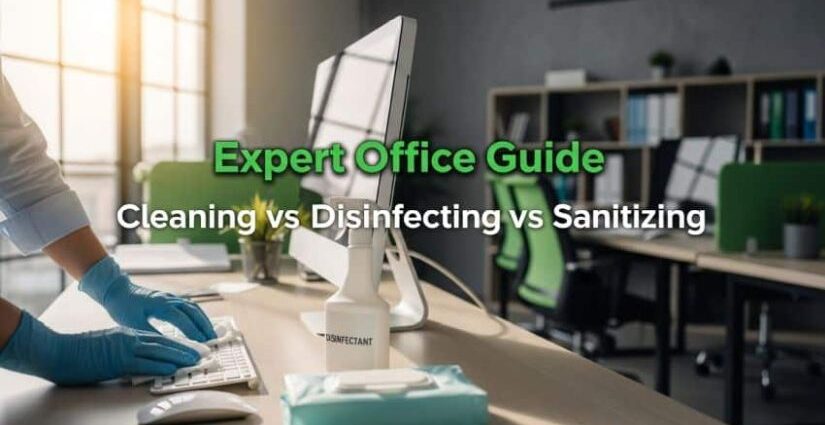
When facility managers in Coeur d’Alene, ID or Spokane Valley discuss workplace hygiene, they often use “cleaning,” “sanitizing,” and “disinfecting” interchangeably. But here’s the problem: these terms describe fundamentally different processes, and confusing them can leave your business vulnerable to health risks, regulatory violations, and diminished customer trust.
Understanding the difference between cleaning and disinfecting—and knowing when to sanitize versus disinfect—isn’t just semantic hairsplitting. It directly impacts infection control, compliance with CDC guidance and OSHA standards, and your ability to protect employees and customers in high-traffic commercial facilities.
Rich Greco, owner of ProTex Janitorial Cleaning by Rich Greco, has spent years training teams across the Inland Northwest region on proper protocols. “Too many business owners think a quick wipe-down with any product kills germs,” Rich explains. “But if you’re not following label directions, matching the right chemical to the surface, and allowing proper contact time, you’re just moving dirt around—not reducing the risk of spreading infection.”
This comprehensive guide clarifies what each term means, explores the science behind viruses and bacteria removal, and provides actionable frameworks for commercial cleaning companies and facility managers working in environments ranging from medical facilities to educational facilities.
Key Takeaways
- Cleaning removes visible dirt and debris but doesn’t necessarily kill germs; it’s the essential pre-cleaning step before any sanitizing or disinfecting.
- Sanitizing reduces bacteria on surfaces to levels deemed safe by public health standards—typically achieving a 3-log reduction (99.9 percent kill rate)—and is ideal for food contact surfaces and lower-risk areas.
- Disinfecting kills a broader spectrum of pathogens, including viruses and bacteria, achieving up to a 5-log reduction (99.999 percent) when using EPA-registered disinfectants with proper dwell time.
- Contact time is non-negotiable: wiping a surface immediately after spraying defeats the purpose; most disinfectants require 3 to 10 minutes of wet contact time to achieve label claims.
- Material compatibility and surface type dictate product selection—using the wrong disinfectant on porous materials or sensitive electronics can cause damage, corrosion, or reduced efficacy.
- A layered approach combining routine cleaning, targeted sanitization, and strategic disinfection of high-touch surfaces creates the most effective infection control plan for workplace hygiene in the post-COVID era.
Understanding the Core Definitions: Setting the Foundation
Before diving into protocols and products, let’s establish clear, featured snippet definitions for each term. This clarity helps ensure everyone on your team—from custodial staff to facility managers—speaks the same language.
Cleaning Definition
Cleaning is the physical removal of dirt and grime, dust, debris, and organic load from surfaces using soap and water, detergent, or other neutral pH cleaners. This process reduces the number of germs present by removing the soil they live in, but cleaning alone doesn’t kill microorganisms.
Think of cleaning as the foundation. “You can’t disinfect a dirty surface effectively,” Rich Greco notes. “Soil removal has to come first, or you’re just sealing bacteria under a layer of chemical residue.”
Common cleaning agents include:
- Detergent degreasers for kitchen and breakroom surfaces
- Alkaline cleaners for heavy soil in industrial cleaning settings
- Enzyme cleaners that break down protein-based stains and organic matter
- Soap and water for general hand hygiene protocols
Sanitizing Definition
Sanitizing reduces the bacterial count on a surface to levels considered safe for public health, typically achieving a 99.9 percent (3-log) reduction. Sanitizers work faster than disinfectants—often within 30 seconds to one minute—and are commonly used on food contact surfaces, cutting boards, and areas where complete pathogen elimination isn’t required.
Sanitization is the middle ground. It’s more rigorous than basic cleaning but less aggressive than full disinfection. This makes it ideal for food service facilities, breakroom sanitation, and surfaces that come into frequent contact with people but don’t pose high viral transmission risks.
Key sanitizer types:
- Chlorine-based sanitizers (sodium hypochlorite at lower concentrations)
- Quaternary ammonium compounds (quats) at specific dilution ratios
- Iodophor sanitizers for food service environments
- Alcohol-based sanitizers (70% isopropyl alcohol) for quick surface treatment
Disinfecting Definition
Disinfecting uses EPA-registered chemicals to kill or inactivate a wide range of pathogens, including viruses, bacteria, and fungi. Disinfectants achieve 99.999 percent (5-log) reduction or higher when used correctly, making them essential for outbreak response cleaning, touchpoint disinfection, and environments where infection control is critical.
“Disinfecting is your frontline defense against influenza virus, SARS-CoV-2, and other emerging viral pathogens,” says Rich. “But it requires precision—wrong product, wrong contact time, or skipping the cleaning step, and you’re wasting time and money.”
Common EPA-registered disinfectants include:
- Sodium hypochlorite bleach solutions (typically 1,000–5,000 ppm)
- Quaternary ammonium compounds (quats) at disinfectant-strength concentrations
- Accelerated hydrogen peroxide (AHP) for broad-spectrum kill with faster breakdown
- Peracetic acid for sporicidal activity against C. difficile spores
- Phenolic disinfectants for healthcare environments requiring MRSA mitigation
Sterilization vs. Disinfection: Where the Line Is Drawn
While cleaning, sanitizing, and disinfecting cover most commercial needs, sterilization represents the highest level of microbial control—eliminating all forms of microbial life, including bacterial spores. Sterilization typically requires autoclaves, heat sanitization (like a dishwasher’s final rinse at 180°F), or specialized chemical sterilants. It’s reserved for surgical instruments, laboratory equipment, and other critical medical applications—not typical office cleaning schedules.
The Science Behind Germ Reduction: Log Reductions and Efficacy
To truly understand cleaning vs. sanitizing vs. disinfecting, you need to grasp the concept of log reduction—a logarithmic scale measuring how many germs a process eliminates.
What Log Reduction Means in Practice
- 1-log reduction = 90% kill (removes one zero from the germ count)
- 2-log reduction = 99% kill
- 3-log reduction = 99.9% kill (sanitizing threshold)
- 4-log reduction = 99.99% kill
- 5-log reduction = 99.999% kill (disinfecting standard)
Log Reduction: Understanding Germ Kill Rates
How different methods compare in eliminating pathogens
Reduces germs present
Does not kill pathogens
Reduces bacteria to safe levels
30 sec – 1 min contact time
Kills viruses, bacteria, fungi
3-10 min contact time required
If a surface starts with 1,000,000 bacteria, a 3-log reduction leaves 1,000 bacteria—acceptable for food contact surfaces under FDA guidelines. A 5-log reduction leaves just 10 bacteria, meeting CDC and EPA standards for disinfection in healthcare and high-risk environments.
Why Contact Time and Dwell Time Are Critical
Every disinfectant and sanitizer has a required wet contact time—the period the surface must remain visibly wet for the chemical to achieve its label claims. This ranges from 30 seconds for some alcohol-based sanitizers to 10 minutes for certain sporicidal disinfectants.
“Spraying and immediately wiping defeats the entire purpose,” Rich emphasizes. “If the label directions say four minutes, that surface needs to stay wet for four minutes. We train our teams to use the spray-and-wipe method only after the dwell time is complete.”
Factors affecting efficacy:
- Organic load: Blood, mucus, or heavy soil inactivates many disinfectants—cleaning first is mandatory
- pH levels: Alkaline or acidic conditions affect chemical stability
- Temperature: Warmer solutions often work faster
- Water hardness: High mineral content can reduce quat effectiveness
- Surface porosity: Porous materials absorb chemicals, reducing surface contact
Regulatory Framework: CDC, EPA, and OSHA Requirements
Commercial facilities cleaning isn’t just about appearances—it’s about compliance. Several federal agencies set the standards your janitorial compliance checklist must address.
EPA Registration and List N/List K
The Environmental Protection Agency maintains EPA List N (products effective against SARS-CoV-2) and EPA List K (tuberculocidal disinfectants). Using an EPA-registered disinfectant ensures your product has been tested and proven effective against specific pathogens under laboratory conditions.
Each EPA registration number corresponds to specific use instructions, dilution ratios, and contact times. Deviating from these instructions voids the efficacy claims.
CDC Guidance for Infection Control
The Centers for Disease Control and Prevention publishes comprehensive infection control plans for various settings, from healthcare waiting areas to daycare sanitation protocols. CDC guidance emphasizes:
- Hand hygiene as the single most effective prevention tool
- Directional cleaning (clean-to-dirty workflow to prevent cross-contamination)
- Enhanced cleaning frequency for high-touch surfaces during seasonal illness spikes
- Respiratory droplet control through proper ventilation and surface disinfection
OSHA Hazard Communication (1910.1200)
OSHA’s Hazard Communication Standard requires employers to maintain Safety Data Sheets (SDS) for all cleaning chemicals, provide secondary labeling on diluted solutions, and train workers on PPE requirements. Your commercial cleaning company should maintain a vendor-provided SDS binder accessible to all custodial staff.
OSHA Bloodborne Pathogens (1910.1030)
For environments where blood or bodily fluids may be present—medical facilities, educational facilities with nursing staff, or manufacturing settings with injury risks—OSHA 1910.1030 mandates specific disinfection protocols, exposure control plans, and post-exposure disinfection procedures.
Choosing the Right Method: When to Clean, Sanitize, or Disinfect
Not every surface requires the same treatment. A risk assessment matrix helps determine which method fits each area of your facility.
Decision Matrix: Choosing the Right Method
Match your cleaning approach to risk level and surface type
When Cleaning Alone Is Sufficient
Regular cleaning with detergent and water is appropriate for:
- Low-touch surfaces (walls, ceilings, baseboards)
- Areas without food contact or bodily fluid exposure
- Surfaces cleaned between sanitizing or disinfecting cycles
- Dust removal and aesthetic maintenance
Rich Greco’s team follows a zone cleaning model in most office and commercial buildings, where general cleaning occurs nightly and targeted disinfection focuses on high-risk zones.
When to Sanitize
Sanitizing is the go-to method for:
- Food service facilities and breakroom countertops
- Cutting boards, prep tables, and food contact surfaces
- Areas requiring HACCP alignment (Hazard Analysis and Critical Control Points)
- Three-compartment sinks used for manual dish sanitization
- Surfaces in retail stores where full disinfection would be excessive
“In a commercial kitchen, you’re sanitizing constantly throughout the day,” says Rich. “But in a lobby or hallway, sanitizing might be overkill—unless we’re in flu season or responding to a known outbreak.”
When Disinfection Is Essential
Disinfecting is required for:
- High-touch surfaces (elevator buttons, door hardware, light switches, phone handsets, keyboards and mice)
- Restroom cleaning protocols (toilets, sinks, faucet handles)
- Healthcare waiting areas and exam rooms
- Daycare toys, changing tables, and play surfaces
- Gym equipment disinfection between user sessions
- Conference rooms and shared workspaces during seasonal illness spikes
- Post-exposure disinfection after a known illness in the workplace
Touchpoint Disinfection: The Critical Focus Areas
Research on fomite transmission (surface-to-person transfer) identifies these high-touch surfaces as infection hotspots:
High-Touch Surfaces: Your Daily Disinfection Priority Map
Focus on these touchpoints to reduce fomite transmission by up to 80%
- Door handles & push plates
- Crash bars on exit doors
- Knobs on interior doors
- Wall-mounted switches
- Conference room controls
- Restroom light panels
- Call buttons (all floors)
- Interior control panels
- Handrails inside cab
- Keyboards & computer mice
- Phone handsets & headsets
- Shared tablets & touchscreens
- Faucet handles & fixtures
- Toilet flush handles/buttons
- Stall door latches
- Microwave handles & buttons
- Coffee maker & water dispenser
- Refrigerator door handles
- Table edges & surfaces
- Chair armrests
- Remote controls & AV equipment
- Reception desk counters
- Waiting area chairs
- Vending machine buttons
- Stairway handrails
- Ramp railings
- Outdoor entrance rails
- Door hardware (handles, push plates, crash bars)
- Light switches and thermostats
- Elevator buttons and handrails
- Reception counters and transaction surfaces
- Keyboards, mice, and phone handsets
- Vending machines and water fountains
- Break room appliances (microwaves, refrigerator handles, coffee makers)
Day porter services often include midday touchpoint disinfection in addition to nightly janitorial services, especially in high-traffic office buildings.
Product Selection Guide: Matching Chemistry to Surface and Pathogen
With hundreds of EPA-registered disinfectants on the market, selecting the right product involves balancing efficacy, surface compatibility, material compatibility, safety, and practical considerations like dwell time and residue control.
Disinfectant Product Comparison Guide
Selecting the right EPA-registered disinfectant for your facility
- Kills viruses, bacteria, fungi, spores
- Fast-acting (1-5 minutes)
- Highly effective and inexpensive
- Works on norovirus & C. diff
- Corrosive to metals and surfaces
- Strong odor, needs ventilation
- Degrades quickly (mix fresh daily)
- Effective against enveloped viruses
- Breaks down into water & oxygen
- Low VOC, EPA Safer Choice
- Shorter contact times (1-5 min)
- More expensive than traditional options
- Can bleach some fabrics/surfaces
- Requires material compatibility check
- Rapid kill (30 seconds to 1 minute)
- Safe for sensitive electronics
- No rinse required on nonporous surfaces
- Effective against enveloped viruses
- Flammable, special storage required
- Evaporates quickly (hard to maintain contact time)
- Ineffective against norovirus & spores
- True sporicidal activity (C. diff)
- Breaks down into acetic acid & oxygen
- Effective in cold water
- No resistant organisms documented
- Strong vinegar-like odor
- Corrosive to metals without inhibitors
- Higher cost, careful handling required
- Effective against TB and MRSA
- Works in presence of organic soil
- Leaves residual antimicrobial film
- Broad-spectrum activity
- Strong chemical odor
- NOT for food contact surfaces
- Environmental persistence concerns
Quaternary Ammonium Compounds (Quats)
Quats disinfectants are workhorses in commercial cleaning—effective against many bacteria and viruses, compatible with most nonporous surfaces, and available in ready-to-use or concentrate formulations.
Pros:
- Broad-spectrum antimicrobial activity
- Relatively low toxicity
- Leave residual antimicrobial coating (though this raises antimicrobial resistance concerns with overuse)
- Compatible with color-coded cleaning systems
Cons:
- Ineffective against norovirus and some non-enveloped viruses
- Can leave sticky residue without proper rinse on food contact surfaces
- Hard water reduces effectiveness—use closed-loop dilution control systems
- Not sporicidal (won’t kill C. difficile spores)
Sodium Hypochlorite (Bleach)
Bleach remains one of the most powerful and cost-effective disinfectants, particularly for outbreak response cleaning involving norovirus control or other resilient pathogens.
Pros:
- Broad-spectrum kill including viruses, bacteria, fungi, and some spores
- Fast-acting with 1–5 minute contact time
- Inexpensive and readily available
- Effective at proper dilution ratios (typically 1,000–5,000 ppm chlorine)
Cons:
- Corrosion risk on metals and certain surfaces—check surface compatibility charts
- Strong odor requires adequate ventilation during cleaning
- Degrades rapidly—must be diluted fresh daily
- Bleached fabrics and colored surfaces
- Requires PPE (gloves, eye protection)
Accelerated Hydrogen Peroxide (AHP)
AHP disinfectants combine hydrogen peroxide with surfactants and other ingredients to enhance stability and speed. They’re increasingly popular for green cleaning initiatives due to rapid environmental breakdown.
Pros:
- Broad-spectrum efficacy including enveloped and non-enveloped viruses
- Breaks down into water and oxygen—minimal environmental impact
- Low VOC formulations meet EPA Safer Choice criteria
- Shorter contact times (often 1–5 minutes)
- Minimal residue
Cons:
- More expensive than traditional disinfectants
- Can bleach fabrics and some surfaces
- Requires material compatibility verification on sensitive surfaces
Phenolic Disinfectants
Phenolics are less common in general commercial settings but remain important in healthcare facilities requiring MRSA mitigation and tuberculocidal activity.
Pros:
- Effective against tuberculosis and MRSA
- Maintains activity in presence of organic soil better than quats
- Leaves residual antimicrobial film
Cons:
- Strong chemical odor
- Not for use on food contact surfaces
- Environmental persistence raises concerns
- Higher toxicity requires careful PPE and ventilation
Alcohol-Based Solutions (70% Isopropyl)
Alcohol-based sanitizers and disinfectants—typically 70% isopropyl alcohol—offer fast-acting surface treatment but evaporate quickly.
Pros:
- Rapid kill (30 seconds to 1 minute)
- Effective against enveloped viruses and many bacteria
- No rinse required on nonporous surfaces
- Ideal for sensitive electronics cleaning when applied with screen-safe methods
Cons:
- Flammable—requires proper storage in chemical storage cabinets
- Evaporates quickly, making sustained wet contact time difficult
- Ineffective against spores and non-enveloped viruses like norovirus
- Can damage plastics and coatings over time
Peracetic Acid (PAA)
Peracetic acid disinfectants are powerful oxidizers used when sporicidal activity is required—particularly in healthcare settings dealing with C. difficile spores or when facing contamination from spore-forming bacteria.
Pros:
- True sporicidal disinfectant activity
- Breaks down into acetic acid and oxygen
- Effective in cold water
- No resistant organisms documented
Cons:
- Strong, pungent odor (vinegar-like)
- Corrosive to metals without corrosion inhibitors
- More expensive than traditional disinfectants
- Requires careful handling and PPE
Application Techniques: Getting Disinfection Right
Even the best disinfectant fails if applied incorrectly. Proper technique ensures log reduction claims translate from the laboratory to your commercial facility.
The Two-Step Process: Clean First, Then Disinfect
“You cannot skip the cleaning step,” Rich Greco insists. “Organic load—grease, dust, bodily fluids—inactivates disinfectants. We first clean with detergent to remove soil, then apply the appropriate disinfectant.”
This pre-cleaning step is especially critical in:
- Food service facilities with heavy grease
- Restrooms with biofilm accumulation
- Manufacturing environments with oil and cutting fluids
Spray-and-Wipe Method (With Proper Dwell Time)
The standard spray-and-wipe method must account for contact time:
- Clean the surface to remove visible soil
- Apply disinfectant evenly to achieve wipe saturation
- Allow the surface to remain wet for the full dwell time (reapply if drying occurs)
- Wipe with clean microfiber cloth or allow to air dry
Why Contact Time is Non-Negotiable
Surfaces must remain wet for these durations to achieve label claims
For surfaces requiring frequent disinfection, consider touchless dispensers that eliminate contamination from shared spray bottles.
Electrostatic Sprayer Application
Electrostatic sprayers charge disinfectant droplets, causing them to wrap around surfaces and adhere more uniformly. This technology enhances coverage of complex geometries like keyboards, mice, and textured surfaces.
Best practices:
- Use EPA-registered products approved for electrostatic application
- Maintain proper dilution ratios for electrostatic equipment
- Apply in sweeping motions for even coverage
- Still respect contact time requirements
- Clean equipment after each use to prevent cross-contamination
UV-C Disinfection Technology
UV-C disinfection uses ultraviolet light (typically 254 nm wavelength) to damage microbial DNA, preventing reproduction. It’s a chemical-free option gaining traction in healthcare and high-risk environments.
Advantages:
- No chemical residue
- Effective against antibiotic-resistant organisms
- Fast cycle times (minutes vs. hours)
- Supplements traditional cleaning
Limitations:
- Line-of-sight only—shadows block UV rays
- Requires room evacuation during treatment (UV-C exposure is hazardous)
- Doesn’t remove soil—cleaning still required first
- UV-C safety precautions mandate proper training and equipment
Two-Bucket and Flat-Mop Systems
Traditional string mops spread contamination. Modern janitorial SOPs favor:
- Two-bucket method: One bucket for clean solution, one for rinsing dirty mop heads
- Flat-mop systems with microfiber pads changed frequently
- No-dip mopping where pre-wetted pads eliminate cross-contamination
- Color-coded cleaning with different colors for restrooms, kitchens, and general areas
“We replaced all our string mops years ago,” Rich explains. “Microfiber flat mops clean better, dry faster, and most importantly, they prevent spreading contamination from one area to another.”
Surface-Specific Protocols: Tailoring Your Approach
Different materials and use cases demand customized protocols. Here’s how to approach common commercial environments.
Restroom Cleaning Protocol
Restrooms present the highest contamination risk and require strict disinfection protocols:
- PPE: Gloves, protective eyewear, and closed-toe shoes
- Cleaning: Remove all debris and soil with detergent
- Disinfection: Apply EPA-registered disinfectant to all surfaces—toilets, urinals, sinks, faucets, door handles, partition latches, and floors
- Contact time: Ensure proper dwell time (typically 3–10 minutes)
- High-touch focus: Extra attention to flush handles, toilet seats, faucet handles, door hardware, and light switches
- Air quality: Ensure adequate ventilation during and after cleaning
Products: Phenolic or quat-based disinfectants for general surfaces; bleach solutions (5,000 ppm) for outbreak situations. Avoid ammonia-based products—never mix bleach and ammonia.
Breakroom Sanitation
Kitchenettes and breakrooms require sanitization of food-contact areas and disinfection of high-touch points:
- Countertops: Clean with detergent, then sanitize with appropriate food service sanitizer
- Cutting boards: Three-compartment sink process—wash, rinse, sanitize (or high-temperature dishwasher with final rinse 180°F)
- Microwave interior: Clean with neutral cleaner
- Refrigerator handles, coffee pot handles, water dispenser: Disinfect daily
- Sinks and faucets: Disinfect to prevent biofilm growth
- Tables and chairs: Clean or sanitize based on use
“Follow the HACCP alignment principle,” advises Rich. “Anything that touches food gets sanitized; everything else gets disinfected as appropriate for touchpoint frequency.”
Conference Rooms and Workstations
Office settings balance productivity with hygiene:
- Keyboards and mice: Alcohol-based wipes or spray (ensure screen-safe methods for monitors)
- Phone handsets: Disinfect daily or after each user in shared spaces
- Conference tables: Clean after each use; disinfect high-touch edges
- Chairs (arms and backs): Spot-clean or disinfect based on traffic
- Door hardware, light switches: Disinfect during each cleaning cycle
- Shared devices (printers, copiers): Disinfect touch panels and frequently used buttons
Educational Facilities: Daycare and School Custodial Programs
Educational facilities face unique challenges with young children and respiratory droplet transmission risks:
- Daycare sanitation: Toys disinfected daily (or between users for mouthed items); changing tables after each use; high chairs after meals
- School custodial program: Desks and chairs cleaned or sanitized daily; shared equipment (computers, tablets) disinfected between classes
- Drinking fountains: Touchless dispensers preferred; traditional fountains disinfected multiple times daily
- Locker rooms: Full disinfection protocol for benches, lockers, and shower areas
- Playground equipment: Periodic disinfection, increased during seasonal illness spikes
Healthcare Waiting Areas and Medical Facilities
Medical facilities demand the highest standards, often referred to as environmental services (EVS):
- Touchpoint disinfection every 2–4 hours in waiting areas
- Exam rooms: Terminal disinfection after each patient
- Isolation rooms: Use sporicidal disinfectant for C. difficile precautions
- Surfaces within patient reach: Disinfect multiple times per day
- Medical equipment: Follow manufacturer protocols and use compatible disinfectants
- PPE requirements: Enhanced protection in patient-care areas
- ATP testing: Use luminometer readings to verify cleanliness
Gym Equipment Disinfection
Fitness centers combine high-touch frequency with sweat and bodily fluids:
- Cardio equipment (treadmills, bikes): Members wipe after use; staff disinfect hourly
- Free weights and machines: Disinfect handles, grips, and touchpoints every 2–4 hours
- Mats and benches: Disinfect after each use
- Locker rooms: Multiple daily disinfection cycles
- Material compatibility: Avoid alcohol on vinyl upholstery (can crack); use quat or AHP products
Building an Effective Cleaning Plan: Integration and Scheduling
Understanding what’s the difference between cleaning, sanitizing, and disinfecting is just the beginning. The real value comes from integrating these methods into a cohesive infection control plan.
Routine vs. Deep Cleaning
Routine cleaning includes:
- Nightly trash removal, floor care, and dusting
- Touchpoint disinfection of high-traffic areas
- Restroom cleaning and sanitization
- Breakroom maintenance
Deep cleaning tackles:
- Carpet and floor refinishing
- Exterior window and glass cleaning
- High dusting (light fixtures, vents, ceiling tiles)
- Biofilm removal in restrooms and kitchens
- Post-construction cleanup
“Most businesses need deep cleaning quarterly, with routine touchpoint disinfection daily or multiple times daily depending on occupancy,” Rich says. “The key is matching cleaning frequency to actual risk—not just doing what you’ve always done.”
Occupancy-Based Scheduling
Return-to-office policies and hybrid work create variable occupancy patterns:
- Low occupancy (≤25% capacity): Reduce frequency of general cleaning; maintain touchpoint disinfection
- Moderate occupancy (25–75%): Standard daily protocols
- High occupancy (>75%): Add midday porter services, increase restroom checks, boost touchpoint frequency
Seasonal Illness Spikes: Enhanced Protocols
During flu season, norovirus outbreaks, or respiratory virus surges, trigger enhanced cleaning frequency:
- Increase touchpoint disinfection from daily to 2–4 times daily
- Switch from sanitizers to broad-spectrum disinfectants in break areas
- Focus on high-touch surfaces: elevator buttons, door hardware, handrails
- Post visitor communication signage explaining protocols
- Train staff on outbreak response cleaning procedures
Team Cleaning vs. Zone Cleaning Models
Zone cleaning assigns specific areas to individual cleaners—efficient but risks inconsistency. Team cleaning deploys specialized workers (vacuum specialist, restroom specialist, detail person) who move through the building together, ensuring consistent quality and better training reinforcement.
Rich’s crews use a hybrid approach: “We use zone cleaning for routine work but switch to team cleaning for deep projects and when training new staff. It gives us flexibility without sacrificing quality.”
Compliance Documentation and Quality Assurance
Your janitorial compliance checklist proves due diligence to regulators, customers, and insurers.
Essential Documentation Elements
- Cleaning verification logs: Track which areas were cleaned, when, and by whom
- Product SDS binder: Maintain current Safety Data Sheets for all chemicals
- Training records: Document custodial staff training on product use, PPE, and protocols
- Quality assurance checklists: Supervisor inspections with dated signatures
- ATP testing logs: Objective luminometer readings verifying surface cleanliness
- Incident reports: Document accidents, spills, near-miss events, and corrective actions
- Equipment maintenance: Track mop head laundering, microfiber replacement cycles, and equipment servicing
Auditable Trail Requirements
For medical, food service, and other regulated industries, maintaining an auditable trail demonstrates compliance:
- Scope of work (SOW) documenting frequencies and standards
- Service level agreements (SLAs) with performance metrics
- Third-party inspection reports
- Client compliance documentation provided quarterly or annually
- Regulatory inspection readiness files for OSHA, health departments, or industry auditors
ATP Testing for Objective Verification
ATP (adenosine triphosphate) testing uses bioluminescence to measure organic contamination on surfaces. While it doesn’t differentiate between harmless and pathogenic organisms, ATP provides an objective benchmark:
- Luminometer readings under 100 RLU (relative light units) indicate clean surfaces
- 100–300 RLU suggests caution; recheck cleaning procedures
- Above 300 RLU indicates inadequate cleaning—retrain staff and investigate
“We use ATP testing as a coaching tool, not punishment,” Rich explains. “When a reading comes back high, we review technique with that cleaner—maybe they’re rushing the contact time or missing a step. It turns quality control into quality improvement.”
Product Safety and Staff Training: Protecting Your Team
Even the most effective disinfectant poses risks if mishandled. Comprehensive training protects custodial staff and ensures regulatory compliance.
OSHA Hazard Communication Training
Every worker handling cleaning chemicals must receive training covering:
- Hazard identification: Understanding pictograms, signal words, and hazard statements
- SDS navigation: Where to find exposure limits, first aid, and handling procedures
- Secondary labeling: Properly labeling diluted solutions in spray bottles
- PPE selection: When gloves, goggles, or respirators are required
- Spill response: Containment and cleanup procedures
- Chemical storage: Proper cabinet use and incompatible chemical separation
Personal Protective Equipment Requirements
PPE requirements vary by chemical and task:
- General cleaning: Nitrile gloves, closed-toe shoes
- Disinfecting with quats or AHP: Gloves, safety glasses if splash risk
- Bleach solutions: Chemical-resistant gloves, eye protection, apron for mixing
- Phenolics or strong acids: Enhanced ventilation, face shield, chemical-resistant clothing
- Electrostatic spraying: Gloves, eye protection, respiratory protection if aerosol exposure risk
Dilution Control Systems
Improper dilution ratios waste money and reduce efficacy. Closed-loop dilution control systems eliminate guesswork:
- Wall-mounted dispensers that automatically dilute concentrates
- Color-coded cartridges prevent mixing errors
- PPM test strips verify sanitizer concentration (typically 200–400 ppm for quats, 50–100 ppm for chlorine)
- Reduce chemical waste and improve consistency
Material Safety Data Sheets Access
OSHA 1910.1200 requires SDS availability wherever chemicals are used. Modern digital systems provide:
- QR codes on chemical labels linking to online SDS databases
- Mobile access for field staff
- Automatic updates when formulations change
- Multilingual options for diverse workforces
Special Considerations: Unique Surfaces and Environments
Not all surfaces tolerate standard disinfection protocols. Understanding material compatibility prevents damage and maintains efficacy.
Sensitive Electronics Cleaning
Modern offices are full of keyboards, mice, touchscreens, and monitors requiring screen-safe methods:
- 70% isopropyl alcohol wipes or spray on microfiber cloths (never spray directly)
- Turn devices off before cleaning
- Avoid excessive moisture—lightly dampened cloth only
- Never use bleach, ammonia, or phenolics on electronics
- Compressed air for keyboards before wiping
- Antimicrobial keyboard covers for high-traffic workstations
“We see a lot of damage from well-meaning but untrained cleaning,” Rich cautions. “A soaked keyboard is a dead keyboard. Training on electronics cleaning saves businesses thousands in replacement costs.”
Porous vs. Nonporous Surfaces
Surface compatibility determines product selection:
Nonporous surfaces (sealed, non-absorbent):
- Stainless steel, sealed granite, glass, ceramic tile
- Accept most disinfectants
- Easier to clean and disinfect effectively
- Can achieve log reduction claims
Porous materials (absorbent):
- Unsealed wood, fabric, upholstery, carpeting
- Absorb chemicals, reducing surface contact time
- Harbor microbes deeper in material structure
- May require steam cleaning, UV-C, or specialized treatments
- Often require material compatibility verification before using strong disinfectants
Touchless Fixtures and Dispensers
Touchless dispensers for soap, paper towels, and sanitizer reduce fomite transmission but still require maintenance:
- Exterior surfaces need regular disinfection (people still touch them)
- Sensor areas attract fingerprints and grime
- Refill without contaminating product
- Battery compartments and mechanical components require periodic attention
Allergen Control and Fragrance-Free Options
Employees with chemical sensitivities, asthma, or allergies benefit from fragrance-free and low-VOC products:
- Unscented disinfectants and cleaners
- Green Seal GS-37 certified products
- EPA Safer Choice labeled options
- Adequate ventilation during cleaning to minimize exposure
- Schedule cleaning during low-occupancy periods when possible
“More clients ask for green cleaning and fragrance-free products every year,” Rich observes. “It’s not just about environmental responsibility—it’s about keeping employees healthy and productive.” Learn more about why green cleaning matters.
Common Mistakes and How to Avoid Them
Even experienced facility managers make errors that undermine cleaning effectiveness. Here are the most frequent pitfalls.
7 Critical Mistakes That Undermine Your Disinfection Program
Avoid these common errors that waste time, money, and leave surfaces vulnerable
Mistake #1: Mixing Chemicals
Never combine bleach with ammonia, acids, or other cleaners. The reaction produces toxic chloramine gas or chlorine gas, causing respiratory damage or death. Similarly, mixing quaternary ammonium products with anionic detergents reduces disinfectant effectiveness.
Solution: Use pre-formulated products; never mix chemicals unless explicitly directed by manufacturer instructions.
Mistake #2: Ignoring Contact Time
Spraying disinfectant and immediately wiping defeats the purpose. Wet contact time is scientifically validated—shortcuts don’t work.
Solution: Train staff on dwell time requirements. Use timers or clean other areas while waiting for contact time to elapse.
Mistake #3: Skipping the Cleaning Step
Disinfecting a visibly dirty surface wastes product and fails to achieve log reduction claims. Organic load inactivates disinfectants.
Solution: Always first clean to remove soil, then apply disinfectant to the clean surface.
Mistake #4: Using the Wrong Product
Not all disinfectants kill all pathogens. Using a product without EPA List N registration during a coronavirus outbreak, or choosing a non-sporicidal product for C. difficile, leaves your facility vulnerable.
Solution: Match product to pathogen threat. Check EPA registration and label claims before purchase. Consult your commercial cleaning company for guidance.
Mistake #5: Inadequate Ventilation
Strong chemicals require airflow to protect workers and occupants. Poor ventilation during cleaning causes respiratory irritation, headaches, and long-term health effects.
Solution: Open windows, use exhaust fans, and schedule cleaning during low-occupancy periods. Ensure indoor air quality meets ASHRAE standards.
Mistake #6: Reusing Contaminated Cloths
Using the same microfiber cloth across multiple surfaces spreads contamination rather than controlling it.
Solution: Implement color-coded cleaning (red for restrooms, yellow for kitchens, blue for general areas). Change cloths frequently. Launder microfiber properly—no fabric softener, which reduces absorbency.
Mistake #7: Disinfectant Overuse
While disinfection is critical in high-risk areas, overusing disinfectants everywhere contributes to antimicrobial resistance and wastes resources.
Solution: Apply risk assessment principles. Use cleaning for low-risk areas, sanitizing for moderate-risk food contact surfaces, and disinfection for high-touch and high-risk zones.
Geographic Considerations: Serving the Inland Northwest
ProTex Janitorial Services serves businesses throughout the Inland Northwest region, and each area presents unique considerations.
Coeur d’Alene, ID (Kootenai County)
Coeur d’Alene businesses range from lakeside hospitality venues to downtown offices. Summer tourism increases foot traffic, demanding more frequent touchpoint disinfection. Winter’s dry indoor air and close quarters during cold weather increase influenza virus transmission risks, requiring adjusted protocols during seasonal illness spikes.
Spokane & Spokane Valley, WA
As the region’s largest metro area, Spokane and Spokane Valley host diverse commercial facilities—from medical facilities to manufacturing plants. Higher population density and more shared spaces (transit centers, convention facilities) require robust infection control plans and quick outbreak response capabilities.
North Idaho Communities: Post Falls, Hayden, Rathdrum
Post Falls, ID, Hayden & Rathdrum, ID balance residential growth with expanding commercial development. Small to mid-sized offices and retail stores benefit from scalable cleaning programs that match occupancy-based scheduling to business growth.
Sandpoint & Ponderay, ID (Bonner County)
Sandpoint Idaho offices serve a smaller but growing market. Seasonal tourism, outdoor recreation industry businesses, and limited service provider options make reliable, well-trained janitorial partners especially valuable to facility managers in Bonner County.
Liberty Lake, Airway Heights & Cheney, WA
Liberty Lake, WA and surrounding areas host corporate campuses, distribution centers, and educational facilities (including university facilities in Cheney). These environments require specialized knowledge of facility maintenance standards, regulatory compliance, and coordination with IT departments for electronics cleaning protocols.
“Every community has different needs,” Rich says. “A medical clinic in Spokane operates differently than a ski resort office in Sandpoint—but the fundamentals of proper cleaning, sanitizing, and disinfecting remain the same. We adapt our approach while maintaining rigorous standards across the North Idaho & Spokane area.”
Cost Considerations and ROI: Smart Investment in Hygiene
Understanding cleaning vs. sanitizing vs. disinfecting helps facility managers allocate budgets effectively and justify investments to leadership.
Total Cost of Ownership
Procurement should evaluate:
- Product cost per gallon or use
- Dilution ratios (concentrates vs. ready-to-use)
- Contact time (faster products reduce labor)
- Equipment requirements (sprayers, dispensers, PPE)
- Training costs and ongoing education
- Equipment maintenance and replacement cycles
- Waste disposal compliance for hazardous materials
Labor Efficiency Gains
Proper protocols actually improve efficiency:
- Closed-loop dilution control eliminates mixing time
- Microfiber systems clean faster than traditional methods
- Electrostatic sprayers cover more square footage per hour
- Well-trained staff make fewer errors requiring rework
- Color-coded cleaning reduces cross-contamination complaints
Risk Mitigation Value
The business case for proper cleaning extends beyond aesthetics:
- Reduced employee sick days and healthcare costs
- Fewer workplace injury claims from housekeeping safety issues
- Improved customer perception and brand reputation
- Compliance with health guidelines avoiding fines
- Lower insurance premiums through demonstrated risk management
“The hidden costs of poor office cleanliness far exceed what you’d spend on proper protocols,” Rich points out. “One norovirus outbreak in a restaurant or daycare can cost tens of thousands in lost revenue, not to mention reputation damage. Prevention is always cheaper than response.”
Advanced Technologies Reshaping Commercial Cleaning
Innovation continues to improve efficacy, safety, and efficiency in professional cleaning.
Electrolyzed Water Systems
Electrolyzed water generators produce cleaning and disinfecting solutions on-site by passing electricity through salt water. The process creates hypochlorous acid (HOCl)—a powerful yet environmentally safe disinfectant.
Benefits:
- Eliminates purchasing and storing harsh chemicals
- Significantly reduces chemical costs over time
- Non-toxic, non-irritating—minimal PPE required
- Effective against broad spectrum of pathogens
- Environmentally sustainable
Considerations:
- Higher upfront equipment cost
- Solutions have short shelf life (days, not months)
- Requires understanding of production parameters
- Must validate efficacy for specific applications
UV-C Disinfection Systems
Beyond handheld wands, automated UV-C disinfection robots increasingly supplement traditional cleaning in healthcare and other high-risk settings.
Applications:
- Terminal room disinfection in hospitals
- Outbreak response in schools or offices
- Supplement to manual cleaning, not replacement
- Particularly valuable for antimicrobial resistance concerns (kills without chemicals)
Limitations:
- Doesn’t remove dirt—cleaning still required first
- Line-of-sight only
- Safety protocols prevent use in occupied spaces
- Capital investment and training requirements
HEPA Filtration and Air Quality Integration
While surface disinfection addresses fomite transmission, airborne pathogens require HEPA filtration and improved ventilation. Progressive facility managers integrate cleaning with indoor air quality strategies:
- HEPA vacuum systems that capture particles without redistributing
- Coordination between cleaning schedules and HVAC cycles
- Respiratory droplet control through ventilation during and after cleaning
- Air scrubbers during post-construction cleanup
Cleaning Management Software and IoT
Data-driven cleaning leverages technology for efficiency and accountability:
- Work order systems tracking cleaning tasks in real time
- IoT sensors monitoring restroom traffic and supply levels
- ATP testing results uploaded to cloud platforms
- Quality assurance inspections conducted on tablets with photo documentation
- Custodial staffing levels adjusted based on occupancy data
- Automated supply restocking alerts
“We’re moving toward predictive cleaning—cleaning when and where it’s needed, not just because it’s Tuesday,” Rich explains. “Technology helps us be smarter about resource allocation while maintaining higher standards.”
Outbreak Response: When Standard Protocols Aren’t Enough
Certain situations demand enhanced cleaning beyond routine protocols. Having an outbreak response cleaning plan before crisis hits is essential.
Triggering Enhanced Protocols
Activate outbreak response when:
- Health department notifies you of confirmed cases (norovirus, COVID-19, etc.)
- Multiple employees report illness within 48 hours
- Confirmed influenza, MRSA, or other contagious disease in facility
- Community-wide illness surge affecting your area
- Regulatory inspection identifies deficiencies
Norovirus Control Protocols
Norovirus—the stomach flu—is notoriously resilient. Standard quat disinfectants don’t work. Norovirus control requires:
- Sodium hypochlorite bleach at 5,000 ppm concentration
- 5–10 minute contact time on all surfaces
- Immediate cleanup of vomit or fecal matter using proper spill response procedures
- Enhanced hand hygiene (soap and water; alcohol sanitizers less effective)
- Focus on high-touch surfaces and frequently used restrooms
- Extended closure of affected areas (24+ hours if possible)
SARS-CoV-2 and Emerging Viral Pathogens
The COVID-19 pandemic permanently changed cleaning expectations. For SARS-CoV-2 and similar respiratory viruses:
- Use EPA List N registered disinfectants
- Increase touchpoint disinfection frequency (2–4 times daily)
- Focus on shared spaces: conference rooms, break areas, elevator buttons
- Coordinate with return to office policies for appropriate occupancy-based scheduling
- Enhance ventilation during cleaning
- Implement workplace wellness messaging and employee education
MRSA and Healthcare-Associated Infections
MRSA mitigation in healthcare settings or facilities with vulnerable populations requires:
- Phenolic or bleach-based disinfectants effective against antibiotic-resistant bacteria
- Terminal disinfection of patient rooms or isolation areas
- Enhanced PPE for cleaning staff (gowns, gloves, eye protection)
- Strict directional cleaning (clean-to-dirty workflow)
- ATP testing and environmental cultures to verify effectiveness
C. Difficile Spore Contamination
C. difficile spores survive most disinfectants, requiring sporicidal products:
- Sodium hypochlorite bleach (5,000+ ppm)
- Peracetic acid based disinfectants
- Extended contact times (10 minutes)
- Manual friction during application (wiping, not just spraying)
- Focus on restroom cleaning and any areas patients occupied
- Continue enhanced protocols for 48–72 hours after patient discharge
Facility Manager Best Practices: Building a Culture of Cleanliness
Beyond selecting the right products and techniques, successful hygiene programs require cultural buy-in and systematic approaches.
Communication and Transparency
Effective facility managers communicate cleaning protocols to occupants:
- Visitor communication signage explaining enhanced procedures
- Digital displays or newsletters highlighting cleaning schedules
- Visible cleaning during occupied hours (day porter services)
- Response protocols for employee concerns
- Quarterly updates on program effectiveness
“Visibility builds trust,” Rich says. “When people see cleaning happening—not just evidence that it happened—they feel safer and appreciate the investment their employer is making.”
Continuous Improvement Planning
A continuous improvement mindset drives excellence:
- Regular quality assurance audits with documented findings
- Root cause analysis when problems occur
- Near-miss reporting to prevent accidents before they happen
- Quarterly service reviews with cleaning partners
- Training and certification updates for staff
- Benchmarking against industry standards and peer facilities
Vendor Partnership Management
Whether you maintain in-house custodial staffing or outsource to a commercial cleaning company, strong partnerships matter:
- Clear scope of work (SOW) with measurable standards
- Service level agreements (SLAs) defining response times and quality metrics
- Regular business reviews discussing performance data
- Collaborative problem-solving, not adversarial finger-pointing
- Fair pricing that recognizes quality costs money
- Long-term relationships that reward consistency
“The best facility managers treat their cleaning partners as collaborators, not just vendors,” Rich observes. “Working with your janitorial team means sharing goals, data, and feedback—building something better together.”
Employee Education and Engagement
Facility cleanliness isn’t just the cleaning crew’s job:
- Workplace wellness messaging encouraging hand hygiene and desk tidiness
- “Clean desk” policies reducing clutter and simplifying cleaning
- Employee responsibility for personal spaces (keyboards, phones)
- Recognition programs celebrating teams that maintain clean workspaces
- Incident reporting systems where anyone can flag concerns
Regulatory Compliance Checklist: Are You Covered?
Use this facility manager checklist to verify your program meets regulatory requirements:
OSHA Compliance
- Hazard Communication (1910.1200) training completed for all staff
- Current SDS available for every chemical in use
- Secondary labeling on all diluted solutions
- Spill response plan documented and practiced
- PPE provided and staff trained on proper use
- Chemical storage cabinets properly labeled and organized
- Bloodborne Pathogens (1910.1030) plan if exposure risk exists
- Annual training refreshers documented
EPA Requirements
- All disinfectants are EPA-registered for intended use
- Products selected from EPA List N or List K as appropriate
- Label directions followed precisely (dilution, contact time)
- Staff trained on emerging viral pathogens policy claims
- Proper waste disposal for chemical containers
CDC Guidelines
- Infection control plan written and current
- Hand hygiene protocol posted and supplies available
- Directional cleaning (clean-to-dirty) workflow implemented
- Enhanced cleaning frequency during illness outbreaks
- Respiratory droplet control measures in place
- Staff trained on cross-contamination prevention
Industry-Specific Requirements
- Food service: HACCP-aligned sanitization, three-compartment sink procedures
- Healthcare: Terminal disinfection protocols, EVS standards
- Education: Age-appropriate products, frequent daycare sanitation
- Manufacturing: Coordination with safety programs, specialized cleaning for production areas
Documentation
- Cleaning verification logs maintained
- Quality assurance inspection records
- Training records for all cleaning staff
- Equipment maintenance logs
- ATP testing results tracked over time
- Incident and near-miss reports filed
- Client compliance documentation ready for audits
Frequently Asked Questions
What is the main difference between cleaning and disinfecting?
Cleaning removes dirt and debris from surfaces using soap, detergent, or other cleaners, but doesn’t necessarily kill germs. Disinfecting uses EPA-registered chemicals to kill pathogens like viruses and bacteria on surfaces, typically achieving a 99.999% reduction when proper contact time is followed. Cleaning must happen first because organic soil inactivates disinfectants.
How long should disinfectant stay on a surface?
Contact time varies by product—typically 1 to 10 minutes. The surface must remain visibly wet during this entire period for the disinfectant to achieve its labeled kill claims. Check the product’s EPA registration label for specific dwell time requirements, and retrain staff who wipe surfaces immediately after spraying.
Can you sanitize instead of disinfect in an office?
Sanitizing is appropriate for lower-risk surfaces like breakroom counters and tables, as it reduces bacteria to safe levels (99.9% reduction). However, high-touch surfaces like door handles, light switches, and restroom fixtures should be disinfected to kill viruses and achieve broader pathogen control, especially during flu season or outbreaks.
What surfaces should be disinfected daily in workplaces?
High-touch surfaces require daily disinfection: door hardware, light switches, elevator buttons, handrails, reception counters, shared keyboards and phones, conference room tables, restroom fixtures, and breakroom appliances. During illness outbreaks or seasonal spikes, increase frequency to 2-4 times daily for maximum protection against fomite transmission.
Is bleach or quat better for office disinfection?
Quaternary ammonium compounds (quats) work well for routine office disinfection—they’re effective against most bacteria and enveloped viruses, compatible with more surfaces, and less corrosive than bleach. Sodium hypochlorite bleach is better for outbreak response, particularly norovirus or C. difficile, due to its broader spectrum and sporicidal activity, though it requires ventilation and careful material compatibility consideration.
Do I need different products for cleaning vs disinfecting?
Yes, use separate products or a two-step process. Cleaning products (detergents, degreasers) remove soil but don’t kill germs. Disinfectants kill pathogens but work poorly on visibly dirty surfaces. Clean first with detergent to remove organic load, then apply EPA-registered disinfectant to the clean surface and allow proper contact time for effectiveness.
How do you verify that disinfection is actually working?
ATP testing provides objective verification by measuring organic contamination through bioluminescence. Readings under 100 RLU indicate clean surfaces; above 300 RLU suggests inadequate cleaning. Combine ATP testing with quality assurance inspections, cleaning verification logs, and periodic review of illness rates among building occupants to validate your infection control plan’s effectiveness.
What’s the best way to disinfect electronics safely?
Use 70% isopropyl alcohol on a slightly dampened microfiber cloth—never spray directly onto devices. Turn electronics off before cleaning, avoid excessive moisture, and never use bleach, ammonia, or phenolic disinfectants on screens or keyboards. For shared workstations, disinfect keyboards, mice, and touchscreens between users, and consider antimicrobial covers for high-traffic areas.
Conclusion: Knowledge Translates to Healthier Workplaces
The difference between cleaning, sanitizing, and disinfecting isn’t just technical terminology—it’s the foundation of effective infection control in commercial facilities. Facility managers who understand these distinctions can:
- Allocate resources efficiently by matching methods to actual risk levels
- Protect employees and customers through science-based protocols
- Maintain regulatory compliance with OSHA, EPA, and CDC requirements
- Reduce illness transmission and associated costs
- Build trust through transparency and visible commitment to workplace hygiene
Rich Greco summarizes it this way: “We’re not just making buildings look clean—we’re making them genuinely safe for the people who work and do business there. That requires knowing what the difference between these methods is and having the discipline to do things right, every single time, even when no one’s watching.”
Whether you manage an office building in Spokane Valley, a medical facility in Coeur d’Alene, or a school in Sandpoint, the principles remain constant: clean first to remove soil, sanitize food-contact surfaces and moderate-risk areas, and disinfect high-touch surfaces and high-risk zones with appropriate EPA-registered products and proper contact time.
For businesses throughout the Inland Northwest region, from Liberty Lake to Post Falls, Hayden to Airway Heights, investing in proper cleaning, sanitizing, and disinfecting protocols isn’t just good hygiene. It’s good business, supporting employee health and productivity, protecting your brand reputation, and demonstrating your commitment to the health and safety of everyone who enters your facility.
Take the Next Step Toward Better Facility Hygiene
Ready to implement science-based cleaning, sanitizing, and disinfecting protocols tailored to your facility’s unique needs? ProTex Janitorial Services brings decades of expertise serving businesses throughout North Idaho and the Spokane area.
Contact us to discuss your facility’s specific requirements, or request a free estimate to learn how our comprehensive approach to commercial cleaning can protect your employees, impress your customers, and give you confidence that your facility meets the highest standards.
Visit our blog for more insights on facility management, seasonal cleaning strategies, and industry best practices that help business owners make informed decisions about their cleaning programs.
ProTex Janitorial Services: Professional cleaning solutions for the Inland Northwest, delivered with integrity, expertise, and an unwavering commitment to your facility’s health and safety.