The Power of First Impressions in Building Brand Credibility
When customers enter your facility, they form judgments within the first 7 seconds—and cleanliness is one of the most powerful signals that shape those initial perceptions. A well-maintained facility doesn’t just look good; it communicates professionalism, attention to detail, and a genuine commitment to customer experience. In today’s competitive business environment, where brand reputation can make or break success, the impact of cleanliness extends far beyond aesthetics.
Every touchpoint in the customer journey sends a message about your brand image. From the moment visitors step into your lobby to their interactions in restrooms, meeting spaces, and common areas, cleanliness plays a crucial role in shaping how customers perceive your brand. A spotless environment signals that you care about quality, safety, and the well-being of everyone who walks through your doors.
“In my years working with businesses across Spokane and Northern Idaho, I’ve seen firsthand how facility cleanliness directly influences customer decisions,” explains Rich Greco, owner of ProTex Janitorial Services. “A clean and well-maintained space isn’t just about appearance—it’s about building trust from the very first impression. When clients see that you prioritize cleanliness, they naturally assume you bring that same level of care to everything you do.”
Research consistently demonstrates that cleanliness directly affects customer perception, purchase decisions, and long-term loyalty. The areas where cleanliness influences your brand extend from first contact areas like lobbies and entryways to behind-the-scenes spaces that reflect your operational standards. Understanding this connection empowers businesses to make strategic investments in professional cleaning services that deliver measurable returns through enhanced brand credibility and customer trust.
Key Takeaways
- Facility cleanliness is essential for creating positive first impressions that build brand equity and customer confidence within the critical first 7 seconds of contact
- Cleanliness standards directly impact customer satisfaction, repeat business, and word-of-mouth referrals, with studies showing that clean environments increase purchase likelihood by up to 40%
- Maintaining a clean facility reduces health and safety risks while demonstrating commitment to cleanliness that resonates with employees, customers, and stakeholders
- Professional cleaning services deliver consistent results through proven cleaning protocols, trained staff, and quality assurance systems that maintain the highest cleanliness standards
- Investment in cleanliness generates strong ROI through reduced absenteeism, improved employee morale, enhanced brand perception, and competitive differentiation in your market
- Strategic cleaning programs aligned with your brand values—including eco-friendly cleaning practices—strengthen your overall brand position and support ESG and CSR alignment initiatives
The Critical First 7 Seconds
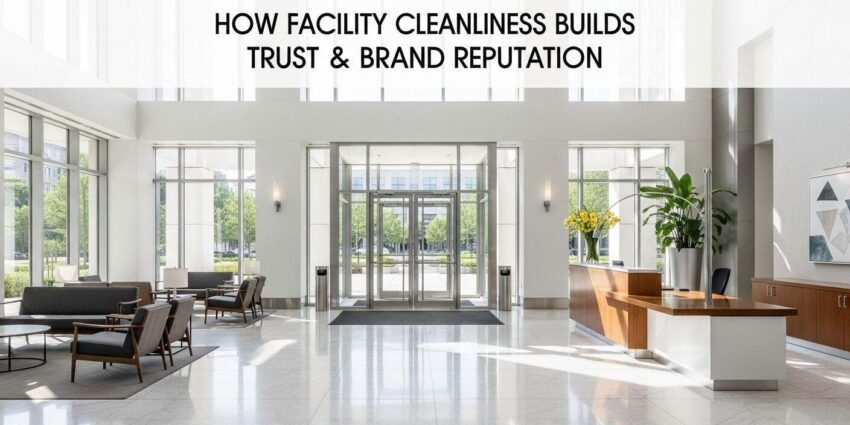
Cleanliness directly influences customer trust — from the moment they walk through your door, every surface tells a story about your brand’s commitment to quality and professionalism.
Understanding How Cleanliness Shapes Brand Perception
The Psychology of Cleanliness and Trust
The human brain processes environmental cues instantaneously, making snap judgments about safety, quality, and trustworthiness based on visual and sensory information. Cleanliness ranks among the most powerful of these cues, triggering what researchers call the “halo effect of cleanliness”—when a clean space leads people to assume positive qualities about the organization, its products, and its people.
This psychological response operates on multiple levels:
Cognitive Processing:
- First impressions form within 50 milliseconds of visual contact
- Attention to the first 7 seconds proves critical for establishing positive associations
- Sensory cleanliness cues including visual order, fresh scents, and tactile surfaces all contribute to perceived quality
- The brain associates cleanliness and hygiene with competence, reliability, and care
Emotional Response:
- A clean environment triggers feelings of calm, safety, and comfort
- Well-maintained spaces reduce anxiety and stress responses
- Spotless conditions create a sense of trust and confidence that extends beyond the physical environment
- Emotional reactions to cleanliness operate largely at the subconscious level, influencing behavior before rational thought
Trust Formation:
- Clean business environments signal attention to detail across all operations
- Customers associate cleanliness with quality control, safety standards, and ethical practices
- Consistently clean facilities demonstrate reliability and follow-through
- Trustworthiness heuristics rely heavily on cleanliness as a proxy for overall organizational quality
The Moment of Truth: Critical Touchpoints Where Cleanliness Matters Most
Service blueprinting identifies customer journey touchpoints where cleanliness affects brand perception most dramatically. These “moments of truth” represent opportunities to build trust or risk losing customer confidence:
Entry Experience (First Contact):
- Entryway cleanliness creates immediate impressions about your standards
- Lobby appearance standards should reflect your premium brand position
- Matting systems following the 15-foot matting rule reduce soil entry while signaling professionalism
- Glass doors and windows serve as billboards for your cleanliness commitment
Restroom Standards:
- Restroom cleanliness benchmarks rank as the #1 factor customers use to judge overall facility hygiene
- Poor restroom conditions can override positive impressions from other areas
- Regular day porter services ensure restrooms maintain a clean standard throughout business hours
- Touchpoint mapping identifies high-traffic times requiring extra attention
Customer-Facing Spaces:
- Reception areas, waiting rooms, and consultation spaces require highest cleanliness standards
- Product display areas and retail spaces directly link cleanliness to merchandise quality
- Meeting rooms and conference spaces reflect your professionalism and preparation
Employee Areas:
- Breakroom hygiene practices affect staff health, morale, and their representation of your brand
- Clean employee spaces demonstrate that you value your team
- Behind-the-scenes cleanliness influences how staff discuss your company externally
Where Cleanliness Influences Brand Trust Most
Customer perception impact by facility touchpoint
Pro Tip: Prioritize resources on high-impact areas where cleanliness creates the strongest first impressions and lasting brand associations.
“Every surface tells a story about your organization,” notes Rich Greco. “When we work with clients on developing cleaning protocols, we map out these critical touchpoints and create cleaning frequency matrices that ensure consistent standards where they matter most. The goal is creating an environment that builds trust at every interaction point.”
The Business Impact: How Cleanliness Affects Your Bottom Line
Direct Financial Returns from Facility Cleanliness
Investing in cleanliness delivers measurable financial benefits that extend far beyond the cost of professional cleaning:
The Business Impact of Professional Cleaning
Measurable returns on investment across key business metrics
Increased Sales and Revenue:
- Retail studies show clean stores generate 20-40% higher sales than comparable dirty stores
- Customers spend more time browsing in clean and organized environments
- Positive impressions directly correlate with purchase likelihood
- Clean spaces reduce price sensitivity—customers perceive higher value
Customer Retention:
- Customer satisfaction scores improve dramatically with superior cleanliness
- Trust and loyalty develop through consistent cleanliness standards
- Repeat business rates increase when facilities exceed cleanliness expectations
- Net promoter score influence from cleanliness can boost referrals by 30% or more
Operational Efficiency:
- Preventive maintenance alignment through proper cleaning extends asset lifecycles
- Facility cleaning programs reduce repair costs and replacement frequency
- Well-maintained facilities operate more efficiently with fewer emergency repairs
- Total cost of ownership decreases when cleanliness prevents deterioration
Risk Mitigation:
- Slip and fall prevention through proper cleaning practices reduces liability exposure
- Health and safety compliance protects against regulatory penalties
- Infection control protocols minimize disease transmission and associated costs
- Facility risk mitigation plans incorporate cleanliness as a core component
Employee Well-Being and Productivity Gains
The impact of cleanliness on workforce performance represents one of the most significant yet often overlooked benefits:
Health Outcomes:
- Indoor air quality improvements through proper facility cleaning reduce respiratory issues
- HEPA filtration and MERV 13 filtration systems combined with regular cleaning enhance air quality
- Absenteeism reduction of 15-20% documented in facilities with superior cleanliness programs
- Presenteeism decrease—employees perform better when not distracted by poor conditions
Morale and Engagement:
- Employee well-being initiatives including workplace cleanliness boost job satisfaction
- Clean and well-maintained work environments demonstrate organizational respect for staff
- Psychological safety cues from clean surroundings support mental health
- Team pride increases when workplaces maintain highest cleanliness standards
Productivity Metrics:
- Studies link clean environments to 5-15% productivity improvements
- Reduced distractions from odors, clutter, and visual disorder
- Better focus and concentration in well-maintained spaces
- Enhanced creativity and problem-solving in orderly environments
Competitive Differentiation Through Cleanliness Excellence
In crowded markets, cleanliness serves as a powerful differentiator:
Market Positioning:
- Strong brand reputation built on consistent cleanliness standards creates competitive moats
- Perceived quality elevation through superior environmental maintenance
- Premium pricing justified by attention to detail across all touchpoints
- Brand trust signals that distinguish your organization from competitors
Industry-Specific Advantages:
- Healthcare facilities leverage medical office cleaning excellence for patient confidence
- Educational facilities attract students and faculty through superior school cleaning services
- Hospitality venues win bookings based on hotel cleaning and venue appearance
- Manufacturing and industrial sites demonstrate operational excellence through facility cleaning
Building Your Brand Through Strategic Cleanliness Standards
Developing Comprehensive Cleaning Protocols
Cleaning standard operating procedures (SOPs and checklists) form the foundation of consistent brand-building cleanliness:
Assessment and Planning:
- Conduct risk assessment matrices identifying high-impact areas
- Map customer journey touchpoints requiring priority attention
- Establish standards of cleanliness aligned with brand positioning
- Define cleaning frequency matrices based on traffic and usage patterns
Protocol Development:
- Create detailed SOPs for each facility type and area
- Specify products, methods, and dwell time for different surfaces
- Include material safety considerations and fixture compatibility guidelines
- Integrate sanitizing vs disinfecting protocols based on surface type and risk level
Quality Standards:
- Implement quality assurance audits with objective measurement criteria
- Utilize ATP testing for biological contamination verification
- Establish log reduction targets for critical surfaces
- Deploy third-party inspections for unbiased performance validation
Recommended Cleaning Frequency by Facility Type
Optimal schedules for maintaining brand-appropriate cleanliness standards
| Facility Type | Daily | Day Porter | Recommended |
|---|---|---|---|
| Healthcare Facilities | YES | YES | Multiple daily cleanings + on-call |
| Retail Stores | YES | HIGH TRAFFIC | Daily + porter for busy periods |
| Office Buildings | YES | OPTIONAL | Nightly cleaning after hours |
| Educational Facilities | YES | RECOMMENDED | Daily + lunch/break periods |
| Hospitality | YES | YES | Multiple daily + 24/7 response |
| Manufacturing | YES | VARIES | Shift-based + production clean |
Custom Scheduling: ProTex Janitorial Services develops tailored cleaning frequency matrices based on your facility’s traffic patterns, brand standards, and budget considerations.
“We’ve found that businesses with documented cleaning protocols and regular quality assurance audits maintain significantly better cleanliness standards than those relying on informal approaches,” explains Rich. “The consistency that comes from systematized processes plays a crucial role in maintaining the strong reputation that enhances brand value over time.”
Selecting the Right Cleaning Partner
Choosing professional cleaning services requires careful evaluation beyond cost considerations:
Credentials and Certifications:
- ISSA CIMS certification demonstrates commitment to quality management systems
- GBAC STAR accreditation validates infection prevention expertise
- Green Seal GS-42 certification ensures environmental responsibility
- Staff training and certification in specialized cleaning techniques
Service Capabilities:
- Comprehensive service offerings including routine cleaning, specialty cleaning, and industrial cleaning
- Flexibility for after-hours cleaning strategy that minimizes business disruption
- Occupancy-based scheduling adapting to your facility’s unique patterns
- Emergency response capabilities for incident management
Technology and Innovation:
- Modern cleaning management software for tracking and reporting
- Real-time cleaning logs providing transparency and accountability
- QR code transparency boards allowing instant access to cleaning histories
- Electrostatic spraying and ULV fogging for comprehensive surface coverage
Communication Systems:
- Stakeholder communication protocols keeping you informed
- Complaint resolution processes with defined response times
- Regular supervisor inspections with documented results
- KPIs and SLAs clearly defining performance expectations
Implementing Green Cleaning for Brand Enhancement
Eco-friendly cleaning programs deliver dual benefits—superior cleanliness and enhanced brand reputation:
The Eco-Friendly Cleaning Advantage
How sustainable cleaning practices enhance both brand reputation and occupant health
Environmental Benefits:
- EPA Safer Choice and UL EcoLabel products reduce chemical exposure
- Low VOC products improve indoor air quality for occupants
- Water stewardship practices minimize environmental impact
- Waste reduction and recycling and diversion programs support sustainability
Brand Advantages:
- Sustainable cleaning programs resonate with environmentally conscious customers
- ESG and CSR alignment strengthens corporate responsibility positioning
- Marketing opportunities through environmental certifications
- Competitive differentiation in markets valuing green cleaning
Health and Safety:
- EPA List N disinfectants provide effective pathogen control without harsh chemicals
- Antimicrobial efficacy maintained while reducing toxic exposures
- Cross-contamination prevention through color-coded microfiber systems
- Occupant health outcomes improve with reduced chemical sensitivities
Industry-Specific Cleanliness Strategies That Build Trust
Healthcare and Medical Facilities
Healthcare facility cleaning demands the highest standards where cleanliness literally saves lives:
Critical Requirements:
- Infection control protocols following CDC and OSHA guidelines
- High-touch surface disinfection with verified contact time adherence
- Pathogen risk mitigation through validated cleaning methods
- OSHA 1910 hygiene standards compliance for worker safety
Brand Impact:
- Patient confidence directly correlates with visible cleanliness
- Hospital janitorial quality affects patient satisfaction scores and reimbursement
- Dental office cleaning and medical office cleaning standards influence patient retention
- Regulatory compliance protections maintain good reputation and operating licenses
ProTex Janitorial Services provides specialized medical facility cleaning that meets stringent healthcare standards while building trust with patients and staff throughout Spokane and Northern Idaho healthcare facilities.
Educational Facilities: Schools and Universities
Educational facility cleaning creates learning environments that support student success:
Student Health Protection:
- Kootenai County educational facility cleaning reduces illness transmission
- School cleaning services minimize absenteeism during flu season
- University cleaning services maintain healthy dormitory and classroom conditions
- Hand hygiene compliance support through proper restroom maintenance
Institutional Reputation:
- Facility cleanliness influences enrollment decisions
- Campus tours highlight cleaning standards as quality indicators
- Parent confidence grows from well-maintained educational spaces
- Brand credibility builds through consistent environmental excellence
Commercial Office and Retail Environments
Office and commercial buildings and retail stores leverage cleanliness for competitive advantage:
Office Cleaning Excellence:
- Spokane Valley office cleaning and Liberty Lake commercial spaces requiring professional standards
- Hybrid work models demanding flexible cleaning schedules
- Breakroom hygiene supporting employee wellness programs
- Carpet and floor maintenance preserving asset value
Retail Success Factors:
- Clean store environments directly increase sales conversion
- Product presentation enhanced by immaculate surroundings
- Commercial carpet cleaning maintaining brand-appropriate appearance
- Customer experience optimization through cleanliness excellence
Industrial and Manufacturing Facilities
Manufacturing facility cleaning demonstrates operational discipline:
Safety and Compliance:
- Industrial cleaning reducing accident risks and regulatory violations
- Warehouse cleaning services supporting inventory protection
- Hazard communication and SDS compliance in chemical handling
- Aerospace facility cleaning meeting stringent industry specifications
Operational Excellence:
- Food processing plant sanitation preventing contamination
- Industrial cleaning supporting quality control systems
- Manufacturing production efficiency through organized, clean work areas
- Vendor and customer tour readiness reflecting organizational standards
Hospitality and Food Service
Hospitality cleaning directly influences booking decisions and reviews:
Guest Experience:
- Hotel cleaning services creating memorable stays
- Restaurant cleaning services ensuring health code compliance and diner confidence
- Casino cleaning maintaining premium entertainment environments
- Fitness center cleaning and gym facility cleaning supporting member retention
Reputation Management:
- Online reviews heavily weight cleanliness observations
- Brand sentiment analysis shows cleanliness as top mention category
- Review response protocols addressing cleanliness concerns
- Social proof from cleanliness driving booking decisions
Advanced Cleaning Technologies and Methodologies
Modern Disinfection and Sanitization
Contemporary cleaning incorporates science-backed technologies:
Electrostatic and Fogging Systems:
- Electrostatic spraying providing 360-degree surface coverage
- ULV fogging for large-area disinfection
- Even coating of complex surfaces and hard-to-reach areas
- Reduced chemical use through improved application efficiency
Steam and Heat-Based Methods:
- Steam cleaning using high-temperature vapor for chemical-free sanitation
- Effective for upholstery, carpet, and hard surface cleaning
- Allergen reduction without chemical residues
- Eco-friendly alternative to traditional disinfection
Validation and Verification:
- ATP testing measuring cleanliness at molecular level
- Cleaning validation protocols ensuring effectiveness
- Log reduction targets documenting pathogen elimination
- Third-party testing providing objective verification
Color-Coded Systems for Cross-Contamination Prevention
Color-coded microfiber systems prevent the spread of pathogens between areas:
System Implementation:
- Red materials for high-risk areas (restrooms, healthcare)
- Yellow for moderate-risk areas (kitchens, breakrooms)
- Green for low-risk areas (offices, lobbies)
- Blue for glass and mirror cleaning
- Cross-contamination prevention through dedicated equipment
Microfiber Advantages:
- Superior soil and bacteria removal compared to cotton
- Reduced chemical and water usage
- Extended durability and lifecycle value
- Consistent cleaning performance across all surfaces
Air Quality Management
Indoor air quality (IAQ) represents an invisible but critical aspect of facility cleanliness:
Monitoring and Control:
- IAQ monitoring systems tracking particulates and VOCs
- CO2 monitoring ensuring adequate ventilation
- PM2.5 reduction protecting respiratory health
- Humidity control preventing mold growth and pathogen proliferation
Ventilation Optimization:
- ASHRAE 62.1 ventilation standards compliance
- MERV 13 filtration or higher for particle capture
- HEPA filtration in sensitive environments
- Regular HVAC cleaning and maintenance
“Indoor air quality is an often-overlooked component of how customers perceive a facility’s cleanliness,” Rich Greco explains. “You can’t see it, but poor air quality creates subtle cues—stale odors, stuffiness, dust in the air—that undermine trust. Comprehensive facility cleaning addresses both visible and invisible cleanliness factors to create truly healthy environments.”
Measuring and Communicating Your Cleanliness Standards
Key Performance Indicators for Cleaning Programs
KPIs and SLAs for cleaning provide objective measurement:
Operational Metrics:
- Cleaning frequency adherence rates
- Inspection scores from supervisor and third-party audits
- Complaint volume and resolution times
- Supply usage and inventory management efficiency
Outcome Metrics:
- Customer satisfaction scores specific to cleanliness
- Employee feedback on workplace environment quality
- ATP test results and other biological monitoring data
- Incident rates related to slips, falls, and hygiene issues
Business Impact Metrics:
- Absenteeism rates correlated with cleaning improvements
- Customer retention and repeat business patterns
- Brand sentiment analysis from reviews and social media
- Sales performance in relation to cleanliness investments
Scorecards and Transparency Systems
Scorecards and dashboards communicate performance to stakeholders:
Real-Time Reporting:
- Real-time cleaning logs accessible via mobile devices
- QR code transparency boards in high-traffic areas
- Digital displays showing last cleaning time and next scheduled service
- Photo documentation of completed work
Stakeholder Communication:
- Monthly performance reports with trend analysis
- Continuous improvement PDCA (Plan-Do-Check-Act) methodology
- Root cause analysis for recurring issues
- Incident reporting workflows ensuring rapid response
Building Brand Equity Through Cleanliness Excellence
Strategic communication transforms cleanliness from background operation to brand differentiator:
Marketing Integration:
- Feature cleanliness standards in marketing materials
- Showcase certifications and awards prominently
- Create video content documenting cleaning processes
- Share behind-the-scenes cleanliness stories on social media
Reputation Management:
- Review response protocols highlighting cleanliness investments
- Proactive solicitation of feedback on facility conditions
- Case studies demonstrating commitment to cleanliness
- Industry speaking opportunities establishing thought leadership
Brand Equity Lift:
- Position cleanliness as core brand value
- Align cleaning standards with overall brand promise
- Train customer-facing staff to discuss facility cleanliness
- Create memorable experiences around facility excellence
Regional Excellence: Professional Cleaning in the Inland Northwest
Understanding Local Needs and Challenges
Spokane commercial cleaning and Northern Idaho cleaning services must address regional factors:
Climate Considerations:
- Harsh winters requiring entryway matting and salt management
- Seasonal allergens affecting indoor air quality
- Temperature fluctuations impacting humidity and air quality
- Snow and ice creating unique tracking and safety challenges
Business Environment:
- Kootenai County businesses and Bonner County facilities with diverse needs
- Growing Coeur d’Alene janitorial and Post Falls facility cleaning markets
- Spokane Valley and Liberty Lake commercial development requiring professional services
- Eastern Washington cleaning standards meeting or exceeding national benchmarks
Local Expertise and Availability
Trusted cleaning services in Spokane and Northern Idaho offer unique advantages:
Community Knowledge:
- Understanding of local business culture and expectations
- Established relationships with regional facilities
- Familiarity with area-specific regulations and requirements
- Local cleaning company near me providing responsive service
Service Areas:
- Spokane brand reputation services across all sectors
- Northern Idaho customer trust built through consistent performance
- Professional cleaning in the Spokane area from experienced providers
- Facility cleanliness in Coeur d’Alene meeting resort-town standards
“Being based in the Inland Northwest means we understand the specific challenges local businesses face,” says Rich. “From Sandpoint to Hayden to downtown Spokane, we’ve developed cleaning strategies that work in our climate and meet the expectations of our community. That local expertise makes customers feel confident they’re working with a partner who truly understands their needs.”
Industry-Specific Regional Services
ProTex Janitorial Services provides specialized cleaning across Pacific Northwest industries:
Healthcare:
- Spokane healthcare facility cleaning for hospitals and clinics
- Northern Idaho hospital janitorial services
- Medical office cleaning in Spokane area practices
Education:
- Spokane school cleaning services for K-12 facilities
- Kootenai County educational facility maintenance
- University cleaning services in Spokane Valley
Government:
- Government building cleaning for municipal facilities
- Spokane courthouse janitorial services
- Municipal facility cleaning in North Idaho communities
Industrial:
- Manufacturing facility cleaning in Spokane
- Industrial cleaning Northern Idaho for production facilities
- Warehouse cleaning services throughout the region
- Aerospace facility cleaning meeting industry standards
- Food processing plant sanitation for regional producers
Hospitality:
- Restaurant cleaning services Spokane
- Hotel cleaning services in downtown Spokane and Coeur d’Alene
- Casino cleaning Northern Idaho for entertainment venues
Specialized Facilities:
- Senior living facility cleaning Spokane
- Assisted living cleaning Northern Idaho
- Church cleaning services in Spokane
- Community center cleaning throughout the region
- Fitness center cleaning Spokane Valley
- Gym and recreation facility cleaning in Coeur d’Alene
Overcoming Common Cleanliness Challenges
Budget Constraints and ROI Justification
Budget allocation for cleanliness requires strategic thinking:
Cost-Benefit Analysis:
- Calculate lifecycle value of cleanliness including asset preservation
- Quantify productivity gains and absenteeism reduction
- Measure customer retention value attributed to facility conditions
- Compare total cost of ownership vs. short-term expense minimization
Value Optimization:
- Focus resources on high-impact customer journey touchpoints
- Implement frequency matrices balancing cost and standards
- Leverage technology for efficiency gains
- Consider outsourcing vs. in-house cleaning service models
“Many businesses view cleaning as a cost center, but the smart ones recognize it as an investment in their brand,” Rich notes. “When we help clients calculate the full impact on the success of your business—from reduced sick days to increased sales—the ROI of proper facility cleaning becomes clear.”
Managing Inconsistent Standards
Consistently clean facilities require systems and accountability:
Training Programs:
- Comprehensive training and certification for staff
- Onboarding and retraining cadence maintaining skills
- Specialized training for different facility types
- Supervisor inspections ensuring quality standards
Quality Assurance:
- Cleaning standard operating procedures documented and accessible
- Quality assurance audits on regular schedules
- Third-party inspections providing objective assessment
- Continuous improvement processes addressing gaps
Communication and Expectation Management
Stakeholder communication prevents misunderstandings:
Clear Service Agreements:
- Detailed scopes of work with specific deliverables
- KPIs and SLAs defining success metrics
- Incident reporting workflows with response timeframes
- Regular review meetings discussing performance
Feedback Systems:
- Multiple channels for reporting concerns
- Complaint resolution protocols with defined processes
- Real-time cleaning logs providing transparency
- Customer satisfaction surveys measuring perception
Creating Your Facility Cleanliness Strategy
Conducting a Cleanliness Audit
Start with comprehensive assessment:
Current State Analysis:
- Walk through facility noting cleanliness issues
- Document first impression areas needing improvement
- Identify high-touch surfaces requiring extra attention
- Assess indoor air quality and odor control needs
- Review existing cleaning practices and schedules
Gap Analysis:
- Compare current standards against industry benchmarks
- Identify areas where cleanliness influences brand perception most
- Assess health and safety compliance status
- Evaluate customer and employee feedback themes
Opportunity Identification:
- Prioritize improvements based on brand impact
- Calculate potential ROI for different initiatives
- Identify quick wins vs. longer-term projects
- Determine resource requirements
Developing Your Action Plan
Create systematic improvement roadmap:
Short-Term Actions (30-90 Days):
- Address critical first contact areas immediately
- Improve restroom cleanliness benchmarks
- Implement daily cleaning of high-touch surfaces
- Establish basic quality control procedures
Medium-Term Initiatives (3-6 Months):
- Implement comprehensive cleaning protocols
- Launch staff training programs
- Install matting systems and other preventive measures
- Begin measuring KPIs and tracking improvements
Long-Term Strategy (6-12 Months+):
- Achieve relevant certifications (GBAC, Green Seal, etc.)
- Implement advanced technologies (electrostatic spraying, ATP testing)
- Build continuous improvement culture
- Integrate cleanliness into brand marketing
Partnering with ProTex Janitorial Services
Professional cleaning in the Spokane area and Northern Idaho:
Comprehensive Services:
- Routine cleaning maintaining daily standards
- Specialty cleaning for unique requirements
- Floor cleaning and refinishing preserving surfaces
- Exterior window and glass cleaning enhancing curb appeal
- Post-construction cleaning preparing new spaces
Quality Commitment:
- Trained and certified cleaning professionals
- Quality assurance audits ensuring consistent results
- Eco-friendly cleaning options supporting sustainability
- Responsive communication and customer service
Industry Expertise:
- Experience across multiple industries and facility types
- Understanding of regional challenges and requirements
- Commitment to cleanliness excellence in every project
- Proven track record building trust with Inland Northwest businesses
Frequently Asked Questions
How does cleanliness directly impact customer purchasing decisions?
Studies demonstrate that facility cleanliness significantly influences buying behavior, with clean stores experiencing 20-40% higher sales than comparable facilities with poor cleanliness. Customers form first impressions within seconds, and a spotless environment signals quality and care. This positive impression extends to product perception, with shoppers attributing higher value to merchandise in well-maintained spaces.
What are the most important areas to prioritize for building brand trust?
First contact areas deserve highest priority—lobbies, entryways, and reception spaces where customers form initial impressions. Restroom cleanliness ranks second, as poor conditions override positive impressions elsewhere. Customer-facing spaces including meeting rooms and product displays should maintain highest cleanliness standards. Finally, employee areas matter because staff represent your brand and clean workspaces influence external perceptions.
How quickly do cleanliness improvements affect brand reputation?
Initial brand perception changes occur immediately—customers notice improvements during their next visit. However, building a strong reputation for cleanliness requires 3-6 months of consistent performance to overcome previous negative impressions. Social proof through online reviews begins shifting within 60-90 days as customers share positive experiences. Long-term brand equity builds over 6-12 months as cleanliness excellence becomes associated with your identity.
What’s the ROI of investing in professional cleaning services?
Professional cleaning services typically deliver 200-400% ROI when accounting for reduced employee absenteeism (15-20% improvement), increased productivity (5-15% gains), extended asset lifecycles (20-30% longer), reduced accident liability, and most significantly, increased revenue from improved customer satisfaction and retention. For retail businesses, the sales lift from cleanliness improvements alone often exceeds cleaning costs.
How do eco-friendly cleaning practices affect brand perception?
Eco-friendly cleaning programs significantly enhance brand perception, particularly among younger consumers and B2B clients with ESG commitments. Surveys show 70% of customers prefer businesses demonstrating environmental responsibility, and green cleaning practices serve as visible proof of those values. Sustainable cleaning programs reduce indoor pollutants while improving occupant health outcomes and employee well-being.
Can poor cleanliness damage an otherwise strong brand?
Absolutely. Cleanliness directly influences overall brand perception and can undermine years of positive reputation-building. Customers view cleanliness as a fundamental standard—when facilities fall short, they question quality across all areas. Social media amplifies negative experiences, with cleanliness complaints generating particularly strong engagement. Even luxury brands suffer when cleanliness standards slip, as the disconnect between promises and reality erodes customer trust.
How often should commercial facilities be professionally cleaned?
Frequency depends on facility type, traffic volume, and brand positioning. High-traffic retail stores and medical facilities typically require daily cleaning with additional day porter services during operating hours. Office buildings commonly need nightly service, while low-traffic facilities may maintain standards with less frequent professional cleaning. The key is establishing cleaning frequency matrices that align with your specific needs and brand standards.
Conclusion: Cleanliness as a Strategic Brand Investment
The connection between facility cleanliness and brand reputation represents one of business’s most powerful yet underutilized strategic opportunities. When you prioritize cleanliness, you’re not merely maintaining a building—you’re actively building trust, enhancing brand perception, and creating competitive advantages that drive measurable business results.
“Cleanliness isn’t just about appearances—it’s a fundamental business strategy,” reflects Rich Greco. “Every clean and organized space you create is an investment in your brand’s reputation. The businesses that understand this connection and act on it consistently are the ones that build strong reputations, win customer loyalty, and ultimately achieve the success of your business they’re striving for.”
The evidence is clear: facility cleanliness delivers measurable returns through increased sales, enhanced employee productivity, reduced operational costs, and strengthened competitive positioning. More importantly, it creates the sense of trust that transforms first-time visitors into loyal advocates who champion your brand within their networks.
Whether you operate a medical facility, educational institution, retail store, office building, manufacturing plant, or hospitality venue, the impact of cleanliness on customer perception remains constant. Your facility’s condition communicates your values, priorities, and commitment to excellence—or the lack thereof.
The businesses thriving in today’s competitive environment recognize that investing in cleanliness isn’t optional—it’s essential. They understand that maintaining a clean facility requires more than occasional attention; it demands systematic approaches, professional expertise, consistent execution, and ongoing measurement. These organizations partner with professional cleaning services that bring specialized knowledge, proven cleaning protocols, advanced technologies, and accountability systems that deliver the consistently clean results their brand reputation demands.
For businesses throughout Spokane, Coeur d’Alene, Post Falls, Spokane Valley, Liberty Lake, and across Northern Idaho, ProTex Janitorial Services stands ready to help you leverage cleanliness as a strategic brand-building tool. Our comprehensive approach combines industry expertise, eco-friendly cleaning options, advanced methodologies, and unwavering commitment to your success.
Ready to enhance your brand through superior facility cleanliness? Contact ProTex Janitorial Services today to discuss how our professional cleaning services can help you build trust, boost your brand, and create the clean environment that your customers, employees, and stakeholders deserve. Visit our services page to explore our full range of capabilities, or request an estimate to begin your journey toward cleanliness excellence.
Your facility tells a story about your brand with every surface, every space, and every moment. Make sure it’s a story of excellence, professionalism, and unwavering commitment to quality. Because in the end, cleanliness and your customers’ trust aren’t separate concerns—they’re two sides of the same coin, working together to build brand strength that endures.
About ProTex Janitorial Services
ProTex Janitorial Services provides comprehensive commercial cleaning solutions throughout the Spokane and Northern Idaho regions. Founded by Rich Greco, ProTex combines decades of industry expertise with modern technologies and sustainable cleaning practices to deliver exceptional results across diverse facility types. Our commitment to quality assurance, professional training, and customer satisfaction has made us a trusted cleaning services partner for businesses seeking to enhance their brand through superior facility maintenance.
Service Areas: Spokane, Spokane Valley, Liberty Lake, Coeur d’Alene, Post Falls, Hayden, Sandpoint, and surrounding communities throughout Eastern Washington and Northern Idaho.
Contact Information:
Additional Resources:
- The Hidden Costs of Poor Office Cleanliness
- Why Regular Cleaning is Essential in Facilities Management
- The Importance of Regular Office Cleaning for Employee Health & Productivity
- Deep Cleaning vs Routine Office Cleaning: What Your Business Needs
- Janitorial Quality Control Checklist: Ensuring Excellence in Cleaning Services