
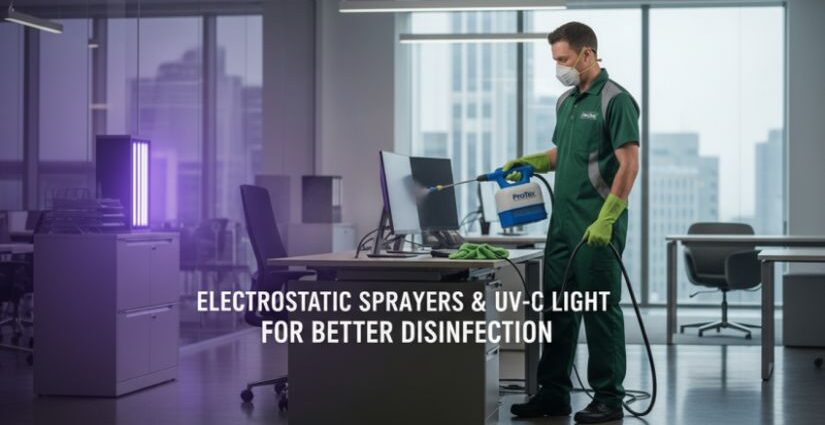
The era of SARS-CoV-2 fundamentally changed how businesses approach disinfection. What once seemed like extreme sanitization measures during the COVID-19 pandemic have now become standard expectations for maintaining healthy, pathogen-free environments. Today’s facility managers face mounting pressure to prevent the spread of illness while managing tight budgets and ensuring minimal disruption to daily operations.
Enter two revolutionary disinfection technologies: electrostatic sprayers and UV-C light systems. These next-generation disinfecting equipment solutions deliver hospital-grade cleaning with unprecedented speed and efficiency, transforming how commercial spaces combat germs, viruses, and bacteria.
“We’ve witnessed a complete paradigm shift in client expectations,” says Rich Greco, owner of ProTex Janitorial Cleaning by Rich Greco. “Businesses no longer just want surfaces to look clean—they want verified pathogen reduction and infection control. Electrostatic sprayers and UV-C disinfection give us the tools to deliver that assurance while covering large areas quickly and efficiently.”
Key Takeaways
- Electrostatic sprayers apply disinfectant using charged droplets that wrap around surfaces 360 degrees, achieving 70% better surface coverage than conventional spray methods
- UV-C light delivers chemical-free germicidal irradiation at wavelengths between 200-280 nanometers, destroying viral and bacterial DNA in seconds without residual disinfectant concerns
- Combined deployment of both technologies creates a comprehensive disinfection system—electrostatic application for liquid disinfectants on porous surfaces, UV-C for rapid terminal disinfection and air purification
- EPA-registered disinfectants used with electrostatic sprayers can achieve 99.9% pathogen reduction with proper contact time and dwell time requirements
- Healthcare settings, educational facilities, and food service operations benefit most from these advanced disinfection systems due to high foot traffic and stringent sanitation standards
- Investment in modern disinfecting equipment reduces labor costs by 40-60% compared to manual disinfection while improving environmental hygiene and workplace safety compliance
Electrostatic vs. Traditional Spray Coverage Comparison
Traditional Spray Bottle
- ❌ Only front-facing surfaces
- ❌ Misses undersides & crevices
- ❌ Inconsistent application
- ❌ 100% manual coverage
Electrostatic Sprayer
- ✅ 360° wrap-around coverage
- ✅ Reaches hidden surfaces
- ✅ Uniform application
- ✅ Charged particle attraction
⚡ 85% IMPROVEMENT in surface coverage + 40-60% faster application time
Understanding Electrostatic Spray Technology: How Charged Particles Transform Disinfection
The Science Behind Electrostatic Disinfection
Electrostatic sprayers revolutionized the cleaning and disinfection industry by harnessing basic physics principles. These specialized devices apply an electrostatic charge to liquid disinfectants as they exit the nozzle, transforming ordinary droplets into magnetically attracted particles that seek out and coat surfaces with remarkable precision.
Here’s how the process works: As the disinfectant solution passes through the sprayer, it receives a positive electrical charge. Meanwhile, the surfaces being treated naturally hold a negative or neutral charge. This creates an attractive force—similar to how a balloon sticks to a wall after rubbing it on your hair—causing the electrostatically charged droplets to actively wrap around objects rather than simply landing where they’re sprayed.
The result? Surface coverage increases dramatically. Traditional spray bottles and manual disinfection methods typically achieve 30-40% coverage, with disinfectant only landing on directly visible surfaces. Electrostatic spray technology, however, reaches the hidden sides, undersides, and crevices of objects, achieving 70-75% total surface coverage.
Types of Electrostatic Sprayers: Handheld vs. Backpack Systems
Modern electrostatic disinfection comes in two primary configurations, each suited for different operational needs:
Handheld Electrostatic Sprayers
- Lightweight cordless units weighing 3-5 pounds
- Ideal for quick spot treatments and smaller areas
- Tank capacity ranges from 32-64 ounces
- Perfect for disinfecting high-touch surfaces like doorknobs, light switches, and shared equipment
- Typical coverage: 800-1,200 square feet per tank
Backpack Sprayers
- Larger capacity units (1-3 gallons) worn like a backpack
- Designed to disinfect large areas with minimal refill interruptions
- Covers 10,000-15,000 square feet per tank
- Essential for industrial cleaning and commercial spaces
- Reduces operator fatigue during extended disinfection sessions
Leading brands like EMist and Victory have pioneered these spray technology innovations, with devices now featuring adjustable particle size controls (40-80 microns), variable flow rates, and rechargeable lithium-ion batteries that support 2-4 hours of continuous operation.
Disinfectant Chemistry: What Solutions Work Best?
Not all disinfectant chemicals are compatible with electrostatic sprayers. The wrong disinfectant solution can damage equipment, reduce efficacy, or create safety hazards. Here’s what works:
Compatible Disinfectants:
- Hydrogen Peroxide-Based Solutions (0.5-7% concentration)
- Zero-residue disinfectants that break down into water and oxygen
- Broad-spectrum efficacy against bacteria, viruses, and fungi
- No personal protective equipment (PPE) required beyond basic eye protection
- Typical contact time: 1-10 minutes depending on concentration
- Quaternary Ammonium Compounds (Quats)
- Popular EPA-registered disinfectants for commercial use
- Effective against enveloped viruses including SARS-CoV-2
- Leave antimicrobial coating that extends protection
- Food-safe disinfectants available for food service facilities
- Chlorine Dioxide Solutions
- Powerful oxidizing agent with rapid germ elimination
- Effective at low concentrations (500-2,000 ppm)
- Used for decontamination in healthcare-associated infections
- Requires specialized handling due to vapor sensitivity
- EPA List N Disinfectants
- Specifically approved for use against COVID-19
- Includes brands like Clorox and other validated cleaning protocols
- Must verify “electrostatic application” appears on product label
Incompatible Solutions:
- Bleach-based disinfectants (sodium hypochlorite above 10%) can corrode metal components
- Alcohol-based solutions risk flammability in electrostatic systems
- Phenolic disinfectants may damage plastics and leave sticky residue
- Oil-based products clog nozzles and spray mechanisms
“Choosing the right disinfectant chemistry is as important as the application method itself,” Rich Greco emphasizes. “At ProTex Janitorial Services, we conduct thorough surface compatibility testing and risk assessment for disinfection before implementing any new disinfectant technology. That due diligence protects both our clients’ facilities and our custodial staff safety.”
Application Techniques: Maximizing Coverage Efficiency
Proper application of disinfectant using electrostatic sprayers requires training and technique. Simply pointing and spraying won’t deliver optimal results. Follow these validated disinfection methods:
Pre-Cleaning Requirements
Before any disinfectant application, surfaces must be free of visible soil and organic matter. Bioburden reduction through preliminary cleaning ensures disinfectants can work effectively:
- Remove debris, dust, and organic material
- Clean heavily soiled areas with detergent and water
- Dry surfaces before applying disinfectant spray
- Pre-cleaning improves microbial inactivation by 60-80%
Optimal Spraying Distance and Technique
- Hold sprayer nozzle 3-4 feet from target surfaces
- Use sweeping motions rather than concentrated streams
- Apply sufficient disinfectant to create visible wetness
- Allow electrostatically charged droplets to settle before touching surfaces
- Typical application rate: 1-2 ounces per 100 square feet
Contact Time and Dwell Time Requirements
The disinfectant must remain wet on surfaces for a specified duration to achieve labeled pathogen reduction:
- Most EPA-registered disinfectants require 5-10 minutes contact time
- Healthcare-grade disinfectants may need 1-2 minutes for viral particle reduction
- Monitor dwell time requirements closely—surfaces drying too quickly reduce efficacy
- Reapply if surfaces dry before minimum contact time elapses
- Document treatment cycles for compliance and verification testing
Room-to-Room Workflow Optimization
Efficient zone disinfection coverage requires systematic planning:
- Start with high-touch surfaces in each room
- Progress from cleanest to dirtiest areas
- Disinfect large areas using overlapping spray patterns
- Use portable foggers for supplemental air disinfection
- Allow proper reentry time after disinfection (typically 10-30 minutes)
- Maintain logs tracking which areas received treatment and when
Safety Protocols and Personal Protective Equipment
While electrostatic sprayers reduce occupational exposure compared to manual methods, proper safety protocols remain essential:
Minimum PPE Requirements:
- Safety glasses or face shields to prevent eye irritation
- Chemical-resistant gloves (nitrile or neoprene)
- Long sleeves and long pants to minimize skin contact
- N95 respirators when using aerosolized disinfectants in enclosed spaces
- Shoe covers in contaminated environments
Ventilation and Air Quality Considerations:
- Ensure adequate ventilation during and after application
- Open windows and activate HVAC systems to accelerate drying
- Monitor for respiratory irritation or chemical sensitivity
- Post warning signs during active disinfection
- Follow OSHA standards for chemical exposure limits
Maintenance Protocols for Sprayers:
Regular device maintenance prevents equipment failure and ensures consistent performance:
- Rinse tanks and nozzles with clean water after each use
- Inspect O-rings and seals monthly for wear
- Clean filters weekly during heavy use periods
- Charge batteries fully between shifts
- Replace worn components per manufacturer specifications
- Annual professional calibration for commercial units
UV-C Light Disinfection: Germicidal Irradiation Without Chemicals
The Germicidal Power of Shortwave UV
While electrostatic sprayers excel at applying liquid disinfectants, UV-C light offers a completely different approach: chemical-free pathogen elimination through germicidal irradiation. This technology leverages specific wavelengths of ultraviolet radiation to destroy microbial DNA and RNA, preventing replication and effectively neutralizing bacteria, viruses, fungi, and other pathogens.
Ultraviolet-C (UV-C) occupies the 200-280 nanometer range of the light spectrum—considerably shorter wavelengths than the UV-A (315-400 nm) that causes sunburns or UV-B (280-315 nm) that damages skin. These short-wavelength photons carry enough energy to break molecular bonds within pathogen genetic material, causing permanent cellular damage.
The process, known as ultraviolet germicidal irradiation (UGVI), has been used for over a century in water treatment and medical sterilization. The COVID-19 pandemic accelerated adoption in commercial and healthcare settings, with businesses seeking touchless technology to supplement traditional cleaning protocols.
How UV-C Destroys Pathogens at the Molecular Level
UV-C Dosage Required for Pathogen Elimination
Measured in millijoules per square centimeter (mJ/cm²)
💡 Key Insight: UV-C effectiveness follows the inverse square law—doubling the distance from the light source reduces intensity by 75%. Proper positioning and exposure time are critical for achieving target pathogen reduction.
When UV-C radiation strikes a microorganism, the photobiological process happens rapidly:
- UV photons penetrate the cell wall or viral envelope
- DNA/RNA absorption occurs at 260-265 nm (peak germicidal wavelength)
- Thymine dimers form, creating abnormal bonds between nucleotide base pairs
- Genetic replication becomes impossible, preventing reproduction
- Cell death or viral inactivation occurs within seconds to minutes
The effectiveness of this photolysis process depends on several factors:
UV Dosage (Measured in mJ/cm²)
Dosage combines intensity and exposure time. Higher doses achieve greater log reduction:
- 99% reduction (2-log): 2-10 mJ/cm² (most bacteria and enveloped viruses like SARS-CoV-2)
- 99.9% reduction (3-log): 10-30 mJ/cm² (resistant bacteria, mold spores)
- 99.99% reduction (4-log): 30-100 mJ/cm² (bacterial spores, non-enveloped viruses)
UV Intensity
Measured in microwatts per square centimeter (µW/cm²), intensity decreases with distance from the germicidal lamp:
- Follows inverse square law: doubling distance reduces intensity by 75%
- Most commercial UV-C devices deliver 1,000-50,000 µW/cm² at 1-foot distance
- UV penetration depth limited—shadowed areas receive no treatment
- Reflective surfaces can enhance coverage but may create uneven distribution
Exposure Duration
Time determines total UV dosage received:
- Stationary systems: 5-30 minutes per room depending on size
- Mobile robots: Multiple passes at varying distances
- Continuous systems: Always-on air disinfection in occupied spaces (when properly shielded)
- Insufficient exposure produces sublethal damage—pathogens may recover
Types of UV-C Disinfection Systems
Modern UV disinfection technology comes in multiple configurations, each designed for specific applications:
Portable UV Systems (Mobile Units)
- Roll-able towers with multiple germicidal lamps
- Height-adjustable arms for better room coverage
- 360-degree emission patterns for zone disinfection
- Ideal for terminal cleaning procedures between patient rooms
- Typical treatment time: 10-20 minutes per 500 square feet
UV-C Disinfection Robots (Autonomous Systems)
- Self-navigating robots that map and treat rooms systematically
- Advanced sensors prevent UV exposure to humans or pets
- Multiple treatment cycles ensure comprehensive coverage
- Used extensively in healthcare settings and hospitals
- Can document UV intensity at multiple room locations for verification testing
Handheld UV Wands
- Portable devices for spot disinfection
- Consumer-grade models often underpowered for reliable pathogen reduction
- Requires very close proximity (1-2 inches) and slow movement
- Risk of inadequate exposure time and inconsistent coverage
- Not recommended as primary disinfection method for commercial applications
Upper-Room UVGI Systems (Continuous Air Disinfection)
- Wall-mounted fixtures directing UV-C upward
- Disinfects air as it circulates through upper room volume
- Safe for occupied spaces when properly installed and maintained
- Reduces airborne transmission of respiratory droplets
- Particularly effective in high-ceiling areas with good air circulation
In-Duct UV Systems
- Installed within HVAC systems
- Treats air and prevents microbial contamination of ductwork
- Continuous operation improves overall indoor air quality
- Supplements high-efficiency filtration
- Reduces mold, bacteria, and viral particles in recirculated air
Far-UV Light (222 nm)
- Emerging technology using filtered excimer lamps
- Cannot penetrate human skin or eye surface layer
- Potentially safe for occupied-space disinfection
- Still undergoing FDA guidelines review and safety validation
- May revolutionize continuous disinfection systems in high-traffic areas
UV-C Safety Considerations and Exposure Limits
Despite its effectiveness, UV-C radiation poses serious health hazards when safety protocols aren’t followed. Direct exposure to UV-C can cause:
- Photokeratitis: Painful eye inflammation (similar to “welder’s flash”)
- Erythema: Severe skin burns resembling intense sunburn
- Increased skin cancer risk with repeated exposure
- Corneal damage from even brief direct viewing
OSHA Standards and UV Exposure Limits:
- Maximum permissible exposure: 0.1 mJ/cm² over 8 hours at 254 nm
- Rooms must be unoccupied during UV-C treatment
- Motion sensors and interlocks prevent accidental exposure
- Warning signs required on all UV-C equipment
- Timer controls ensure automatic shutoff
World Health Organization (WHO) Recommendations:
- Never view germicidal lamps directly
- Ensure complete room evacuation before activation
- Use remote controls or automated timers exclusively
- Install emergency shutoff switches accessible from outside rooms
- Provide comprehensive training for all operators
- Regular photobiological safety audits
“UV-C technology delivers incredible germicidal effectiveness, but respect for the equipment is non-negotiable,” notes Rich Greco. “We’ve implemented rigorous workplace safety compliance protocols for all UV disinfection systems. Every technician completes certification training, and we use integrated safety sensors that immediately shut down units if anyone enters during treatment cycles. There’s zero tolerance for shortcuts when it comes to personal safety protocols.”
Limitations of UV-C Disinfection
While powerful, UV-C technology has inherent constraints:
Surface Penetration Issues:
- UV-C cannot penetrate solids, liquids, or opaque materials
- Shadowed areas receive zero germicidal irradiation
- Porous surfaces (fabric, wood) only treated on exposed surfaces
- Textured surfaces create micro-shadows reducing effectiveness
Surface Porosity Considerations:
- Works best on non-porous, reflective surfaces (stainless steel, glass, sealed floors)
- Fabric, upholstery, and carpeting poorly suited for UV-C alone
- Organic matter blocks UV penetration—requires pre-cleaning
Line-of-Sight Dependency:
- Only surfaces directly exposed to UV-C receive treatment
- Complex geometries need multiple lamp positions or robot passes
- Cluttered rooms significantly reduce coverage efficiency
Material Compatibility:
- Some plastics degrade with prolonged UV exposure
- Colors may fade on fabrics and painted surfaces
- Rubber gaskets can become brittle
- Requires surface compatibility assessment before implementation
Electrostatic Sprayers vs. UV-C Light: Comparative Analysis
When to Use Each Technology
Both electrostatic disinfection and UV-C systems deliver superior pathogen reduction compared to traditional manual disinfection, but they excel in different scenarios. Understanding when to deploy each technology—or combine them—optimizes infection control outcomes.
Technology Selection Guide: When to Use Each Method
Match the right disinfection technology to your facility’s specific needs
Choose Electrostatic Sprayers When:
- Treating porous surfaces like carpets, upholstery, or fabric partitions
- Disinfecting complex equipment with many crevices
- Coverage efficiency must reach undersides and hidden surfaces
- Specific EPA-registered disinfectants are mandated (food service, healthcare)
- Residual antimicrobial protection is desired
- Treating outdoor surfaces or partially enclosed areas
- Budget constraints require lower initial equipment investment ($500-$2,500 per unit)
Choose UV-C Light When:
- Chemical-free disinfection is required (food preparation areas, chemical-sensitive environments)
- Rapid room turnover efficiency is critical (hotels, medical exam rooms)
- Treating hard, non-porous surfaces predominantly
- Air disinfection and bioaerosol control needed
- Eliminating residual disinfectant concerns
- Targeting emerging viral threats with unknown chemical sensitivities
- Long-term operational costs must be minimized (no consumable disinfectants)
Combined Deployment Strategy:
Many healthcare facilities and high-risk environments implement integrated disinfection systems using both technologies sequentially:
- Pre-clean surfaces using standard routine cleaning protocols
- Apply disinfectant via electrostatic sprayer to all surfaces
- Allow contact time per manufacturer specifications (5-10 minutes typically)
- Deploy UV-C for terminal disinfection focusing on air and hard surfaces
- Ventilate the space before reentry
This layered approach achieves maximum microbial inactivation while addressing each technology’s limitations. Electrostatic application reaches porous and shadowed surfaces, while UV-C provides rapid, chemical-free treatment of exposed hard surfaces and air.
Effectiveness Against Different Pathogens
Not all pathogens respond equally to disinfection methods. Understanding which target pathogens require specialized approaches ensures appropriate treatment selection:
Bacteria (Most Susceptible)
- Gram-positive (Staphylococcus aureus, MRSA): Highly susceptible to both methods
- Gram-negative (E. coli, Pseudomonas): Effective with proper dosage
- Tuberculosis (Mycobacterium tuberculosis): Requires higher UV doses or specialized chemical disinfectants
- Typical reduction: 99.99% (4-log) with either technology when properly applied
Viruses (Variable Susceptibility)
- Enveloped viruses (SARS-CoV-2, influenza, HIV): Easily inactivated by both methods
- Non-enveloped viruses (norovirus, rotavirus): Require higher UV doses or specific quaternary ammonium compounds
- Emerging pathogens: UV-C offers advantage since mechanism doesn’t depend on specific viral characteristics
- Virus inactivation: 99.9% (3-log) typically achieved in 5-15 minutes
Fungi and Mold
- Spores highly resistant to chemical disinfectants
- UV-C more effective but requires extended exposure
- Combination approach recommended for serious fungal contamination
Bacterial Spores (Most Resistant)
- Clostridium difficile (C. diff) spores particularly challenging
- Require sporicidal disinfectants (bleach, hydrogen peroxide at high concentrations)
- UV-C needs very high doses (100+ mJ/cm²) for reliable spore inactivation
- Extended contact time essential with electrostatic application
Antimicrobial Resistance Concerns:
Unlike antibiotics, physical disinfection methods (UV-C) and properly used chemical disinfectants don’t contribute to antimicrobial resistance. However, inadequate application—insufficient contact time, improper dilution, or sublethal UV exposure—can theoretically select for hardier pathogens. Following validated cleaning protocols prevents this risk.
Cost-Benefit Analysis: Initial Investment vs. Long-Term Savings
Implementing advanced disinfection technology requires capital investment, but the return on investment (ROI) typically materializes within 12-24 months through labor savings and reduced infection-related costs.
Electrostatic Sprayer Costs:
Initial Investment:
- Handheld units: $500-$1,500
- Backpack sprayers: $1,500-$3,500
- Commercial-grade systems: $3,000-$5,000
- EMist or Victory pro models: $2,000-$4,000
Ongoing Operational Costs:
- EPA-registered disinfectants: $15-$40 per gallon
- Coverage: 10,000-15,000 square feet per gallon
- Battery replacement: $100-$200 every 2-3 years
- Annual maintenance: $200-$400
Labor Savings:
- 40-60% reduction in disinfection time vs. manual methods
- One operator can treat 15,000-20,000 sq ft per hour
- Reduced worker fatigue and injury risk
UV-C System Costs:
Initial Investment:
- Portable towers: $3,000-$8,000
- UV-C disinfection robots: $75,000-$125,000
- Upper-room UVGI: $500-$2,000 per fixture
- Handheld UV wands: $50-$300 (consumer-grade)
Ongoing Operational Costs:
- Germicidal lamp replacement: $50-$300 every 8,000-12,000 hours
- Electricity: $0.10-$0.50 per treatment cycle
- Annual calibration/verification: $500-$1,000
- No chemical consumables required
Labor Savings:
- 70-80% faster terminal disinfection vs. manual wiping
- Autonomous robots require minimal supervision
- One robot can treat 10-15 rooms per 8-hour shift
Hidden Cost Considerations:
Beyond equipment expenses, consider:
- Training Requirements: Staff certification on proper use, safety protocols, and device maintenance
- Insurance Premium Reductions: Some insurers discount coverage for facilities using verified disinfection systems
- Sick Leave Reduction: Improved infection control decreases employee illness-related absences
- Liability Protection: Documented disinfection protocols reduce legal exposure during infectious disease outbreaks
- Regulatory Compliance: May be required for healthcare licensing, food safety certifications
Labor Efficiency and Time Savings
Labor Efficiency: Time to Disinfect 50,000 Sq. Ft. Facility
Comparing traditional manual methods vs. advanced disinfection technologies
Annual savings: $3,240 – $8,100 while achieving superior pathogen reduction
*Based on average labor rate of $18/hour for manual cleaning and electrostatic application
Traditional manual disinfection—wiping surfaces with cloths and spray bottles—is notoriously time-intensive. Modern disinfecting equipment transforms operational efficiency:
Traditional Manual Method:
- Average 30-45 minutes per 1,000 square feet
- Significant physical strain causing worker fatigue
- Inconsistent coverage—many surfaces missed
- High risk of cross contamination from reused cloths
Electrostatic Spraying:
- Average 8-12 minutes per 1,000 square feet (75% faster)
- Minimal physical exertion
- Consistent, verifiable coverage
- No cross-contamination risk
UV-C Treatment:
- Average 5-10 minutes per room (unattended)
- Zero labor during actual disinfection cycle
- Operator handles multiple rooms simultaneously
- Ideal for high-turnover environments
For a typical 50,000-square-foot office building, these time savings translate dramatically:
- Manual disinfection: 25-37.5 hours
- Electrostatic disinfection: 6.5-10 hours (saving 15-27 hours)
- Combined electrostatic + UV-C: 10-15 hours with superior pathogen reduction
At an average labor rate of $18-$25 per hour, facilities save $270-$675 per complete disinfection cycle while achieving better microbiological safety outcomes.
Real-World Applications Across Industries
Healthcare Settings and Hospital Infection Control
Healthcare-associated infections (HAIs) affect approximately 1 in 31 hospital patients on any given day, according to CDC data. These nosocomial infections cost the U.S. healthcare system billions annually while causing significant patient suffering. Advanced disinfection technology plays a critical role in hospital infection control and infection prevention strategies.
Advanced Disinfection by Industry
Technology adoption and critical applications across major sectors
Critical Application Areas:
Patient Rooms and Terminal Cleaning:
- UV-C robots treat rooms between patients, eliminating residual pathogens from previous occupants
- Electrostatic sprayers treat mattresses, privacy curtains, and medical equipment
- Combined approach achieves 99.99% reduction in surface contamination
- Reduces C. difficile transmission by up to 30%
Operating Rooms and Procedural Areas:
- Pre-operative disinfection using electrostatic application of surgical-grade disinfectants
- UV-C air disinfection systems running continuously during low-occupancy periods
- Critical for preventing surgical site infections
Emergency Departments:
- High patient turnover demands rapid room turnover efficiency
- Portable UV systems treat exam rooms in 5-8 minutes between patients
- Electrostatic sprayers quickly disinfect high-touch surfaces
Long-Term Care Facilities:
- Vulnerable populations require enhanced environmental hygiene
- Weekly deep disinfection reduces influenza and norovirus outbreaks
- Particularly important in medical facilities serving immunocompromised patients
“Healthcare disinfection isn’t optional—it’s life-saving,” Rich Greco explains. “We’ve partnered with several medical facilities in the Inland Northwest, implementing EPA-approved disinfection protocols that meet or exceed WHO recommendations. The combination of electrostatic spraying for comprehensive surface treatment and UV-C for rapid air disinfection gives healthcare administrators confidence that they’re providing the safest possible environment for patients and staff.”
Educational Facilities: Protecting Students and Staff
Schools, colleges, and universities face unique disinfection challenges: large populations sharing confined spaces, high-touch surface concentrations, and limited cleaning windows. The COVID-19 pandemic permanently elevated expectations for environmental cleaning and disinfection in educational facilities.
Classrooms and Lecture Halls:
- Electrostatic spraying treats desks, chairs, keyboards, and shared learning materials in minutes
- Coverage efficiency critical when treating 30-40 desks per classroom
- Quaternary ammonium disinfectants provide residual protection between cleanings
- UV-C systems deployed during evening hours for air and surface treatment
Cafeterias and Food Service Areas:
- Food-safe disinfectants via electrostatic application maintain sanitation standards
- Critical touchpoints: trays, tables, condiment stations, payment terminals
- Frequent treatment cycles during peak flu season reduce absenteeism
Athletic Facilities and Locker Rooms:
- Moisture-rich environments prone to MRSA and fungal growth
- Electrostatic treatment reaches locker interiors, benches, and shower areas
- UV-C supplementation for pool areas and equipment rooms
Common Areas and Hallways:
- Handrails, water fountains, door handles receive focused electrostatic treatment
- Upper-room UVGI systems provide continuous air disinfection in high-traffic corridors
Outbreak Response:
- Rapid deployment during seasonal flu outbreaks or COVID-19 cases
- Whole-building disinfection completed during school breaks
- Documented cleaning protocols satisfy parent and regulatory concerns
Schools implementing these technologies report 20-35% reductions in student and staff sick days, directly improving attendance rates and academic outcomes while reducing substitute teacher costs.
Office Buildings and Commercial Spaces
Modern offices face the challenge of maintaining employee confidence in workplace safety while managing facility cleanliness efficiently. The shift to hybrid work models hasn’t eliminated cleaning needs—if anything, inconsistent occupancy patterns complicate cleaning protocols.
High-Touch Surface Concentrations:
- Doorknobs, elevator buttons, shared copiers, conference room controls
- Electrostatic treatment ensures 360-degree coverage of complex equipment
- Daily disinfection maintains consistently free of germs environments
Conference Rooms and Meeting Spaces:
- Between-meeting rapid disinfection using portable electrostatic sprayers
- UV-C wands for quick treatment of tabletops and technology interfaces
- Critical for buildings hosting client meetings and presentations
Restrooms:
- Combination approach: electrostatic application reaching all fixture surfaces
- UV-C treatment of floors, walls, and air
- Hydrogen peroxide disinfectants eliminate odors while killing pathogens
Break Rooms and Kitchens:
- Food-contact surfaces require food-safe disinfectants
- Electrostatic sprayers quickly treat refrigerator handles, microwaves, coffee makers
- Reduces transmission of norovirus and other foodborne pathogens
Building Lobbies and Reception Areas:
- First impressions matter—visible disinfection technology reassures visitors
- Rapid treatment during business hours using low-odor, fast-drying disinfectants
- UV-C air filtration improves overall indoor air quality
ProTex Janitorial Services has equipped multiple commercial buildings throughout Boise and Spokane with comprehensive disinfection programs combining both technologies, resulting in measurably improved employee health and reduced infection transmission.
Food Service and Restaurant Environments
Food service facilities operate under stringent sanitation requirements where pathogen control isn’t just about customer health—it’s regulatory compliance and business survival. A single foodborne illness outbreak can permanently damage reputation and trigger closure.
Kitchen and Food Preparation Areas:
- EPA-registered, food-safe disinfectants applied via electrostatic spraying
- Treatment of food contact surfaces requires specific product approval
- Reaches difficult areas: hood vents, refrigeration coils, storage shelving
- Pre-opening disinfection ensures germ elimination before food prep begins
Dining Areas:
- Rapid table turnover using electrostatic sprayers treats seats, tables, menus
- UV-C supplementation during closed hours for floors and air
- Particularly critical for high-volume restaurants and buffet settings
Restrooms:
- Customer-facing restrooms require frequent, thorough disinfection
- Combination of chemical and UV-C treatment maintains highest standards
- Visible cleaning practices build customer confidence
Back-of-House Areas:
- Break rooms, receiving docks, storage areas often overlooked
- Employee health directly impacts food safety—cross contamination prevention essential
- Regular disinfection reduces staff illness and associated labor shortages
Drive-Through and Pickup Areas:
- Payment terminals, pickup shelves, door handles require frequent treatment
- Handheld electrostatic sprayers enable quick, between-customer disinfection
Restaurants implementing advanced disinfecting equipment report improved health inspection scores and reduced employee sick days, with some chains making visible disinfection part of their brand promise to customers.
Manufacturing and Industrial Settings
Industrial cleaning environments present unique challenges: large square footage, heavy equipment with complex geometries, and often chemical-sensitive processes. Yet worker health and productivity depend on effective contamination control.
Production Floors:
- Large areas demand efficient coverage—backpack electrostatic sprayers ideal
- Disinfect large spaces quickly: 15,000-20,000 sq ft per hour
- Reduces absenteeism during seasonal illness peaks
- Critical for maintaining production schedules
Break Rooms and Common Areas:
- High worker density creates infection transmission risk
- Shift-change disinfection prevents cross-shift contamination
- Time clocks, vending machines, lockers treated with electrostatic precision
Equipment and Machinery:
- Shared control panels, tools, and equipment harbor pathogens
- Electrostatic charge ensures disinfectant reaches recessed buttons and crevices
- Compatible disinfectants won’t damage sensitive electronics or metal surfaces
Loading Docks and Warehouses:
- High-traffic areas where external contamination enters facilities
- UV-C systems can supplement in areas with limited chemical compatibility
- Particularly important for manufacturing facilities with clean-room requirements
Retail Stores and Shopping Centers
Retail environments balance customer experience with operational efficiency. Visible cleanliness drives purchasing decisions, while invisible pathogen control protects both customers and employees during extended shifts.
Sales Floors:
- Shopping carts, product displays, checkout counters require frequent disinfection
- Handheld electrostatic sprayers enable rapid treatment during operating hours
- Low-odor disinfectants maintain pleasant shopping environment
Fitting Rooms:
- High-touch, confined spaces with frequent turnover
- Quick electrostatic treatment between customers
- Critical during cold and flu season
Restrooms:
- Customer perception of store cleanliness heavily influenced by restroom condition
- Frequent disinfection using combination approaches
- UV-C supplementation during overnight hours
Employee Break Areas:
- Often overlooked despite being contamination hotspots
- Staff health directly impacts customer service and labor costs
- Regular disinfection reduces sick leave and maintains staffing levels
Implementation Best Practices: Getting Started with Advanced Disinfection
Staff Training and Certification Requirements
Successfully deploying electrostatic sprayers and UV-C systems requires comprehensive training that goes beyond “point and spray.” Custodial staff safety and disinfection efficacy both depend on proper technique.
Essential Training Components:
Equipment Operation:
- Proper assembly, filling, and charging procedures
- Adjusting spray patterns and droplet size for different applications
- Understanding visual indicators (battery level, tank capacity, malfunction alerts)
- Troubleshooting common issues before calling for service
Chemical Safety and Handling:
- Reading and understanding Safety Data Sheets (SDS)
- Proper dilution ratios for concentrated disinfectants
- PPE selection based on disinfectant chemistry
- Emergency response procedures for spills or exposure
- Storage requirements to prevent degradation
Application Techniques:
- Optimal spraying distance and motion patterns
- Recognizing adequate surface wetness
- Contact time monitoring and documentation
- Pre-cleaning requirements for heavily soiled surfaces
- Sequence planning for room to room efficiency
UV-C Safety Protocols:
- Understanding UV exposure hazards
- Room clearance verification procedures
- Safety interlock systems and emergency shutoffs
- Warning signage placement and removal
- Incident reporting for any accidental exposure
Documentation and Compliance:
- Maintaining treatment logs with dates, areas, and products used
- Recording contact times and coverage areas
- Verification testing procedures
- Regulatory reporting requirements for healthcare and food service
“Training isn’t a one-time event—it’s an ongoing commitment,” Rich Greco emphasizes. “At ProTex, every technician completes initial certification plus quarterly refresher training. We also conduct annual competency testing to ensure techniques remain consistent with manufacturer recommendations and evolving best practices. The investment in education pays dividends through better outcomes and zero safety incidents.”
Creating Standard Operating Procedures
Standard operating procedures (SOPs) transform training into consistent daily practice. Well-designed protocols ensure reliable pathogen reduction regardless of which team member performs the work.
SOP Components for Electrostatic Disinfection:
- Pre-Treatment Checklist:
- Remove clutter and obstacles
- Complete preliminary cleaning
- Identify high-touch surfaces requiring extra attention
- Verify proper disinfectant for surface types present
- Check equipment battery level and tank capacity
- Application Protocol:
- PPE donning sequence
- Room entry and exit routes
- Systematic coverage pattern (top-to-bottom, far-to-near)
- Spray distance and application rate standards
- Visual verification of adequate wetness
- Contact time timer initiation
- Post-Treatment Steps:
- Equipment rinsing and storage
- Treatment log completion
- PPE removal and disposal
- Hand hygiene
- Area signage updates (wet surfaces, reentry times)
SOP Components for UV-C Treatment:
- Pre-Treatment Protocol:
- Room clearance verification (visual inspection + occupancy sensors)
- Door posting with warning signs
- Equipment positioning for optimal coverage
- Room mapping documentation for autonomous robots
- Timer or program selection based on room size
- Treatment Cycle:
- Remote activation from outside room
- Safety interlock verification
- Treatment duration monitoring
- Multiple position cycling if needed for complex geometries
- Automatic shutoff confirmation
- Post-Treatment Protocol:
- Cooling period (lamps remain hot)
- Warning sign removal
- Treatment log documentation
- Room clearance for reentry
- Equipment return to storage/charging
Quality Assurance and Verification Testing
How do you know your disinfection program actually works? Testing disinfectant efficacy and verification testing provide objective evidence of pathogen reduction.
ATP (Adenosine Triphosphate) Testing:
- Measures organic matter and microbial contamination
- Handheld luminometers provide instant results
- Before-and-after testing demonstrates cleaning effectiveness
- Target values: <100 RLU (Relative Light Units) for clinical areas, <250 RLU for general surfaces
- Quarterly testing recommended for high-risk areas
Microbial Culture Testing:
- Laboratory analysis of surface swabs
- Identifies specific bacterial species present
- Confirms effectiveness against target pathogens
- Annual validation testing for regulatory compliance
UV Dosimeter Testing:
- Chemical indicators that change color when adequate UV dosage received
- Placed at multiple room locations during treatment
- Verifies UV intensity reaching all areas
- Identifies shadowed zones requiring equipment repositioning
Fluorescent Marker Testing:
- UV-reflective gel applied to surfaces before cleaning
- Black light inspection reveals missed areas
- Training tool demonstrating coverage patterns
- Monthly spot-checks maintain technique consistency
Customer Satisfaction Surveys:
- Subjective but valuable feedback on perceived cleanliness
- Tracks improvements in facility appearance and odor
- Early warning system for training gaps or equipment issues
Maintenance and Equipment Longevity
Advanced disinfecting equipment represents significant capital investment. Proper maintenance extends service life while ensuring consistent performance.
Electrostatic Sprayer Maintenance:
Daily:
- Rinse tank and spray lines with clean water
- Wipe exterior surfaces
- Check for leaks or damaged components
- Recharge batteries fully
Weekly:
- Clean or replace filters
- Inspect nozzles for clogs or wear
- Check hose connections for tightness
- Wipe battery contacts
Monthly:
- Deep clean all components with mild detergent
- Inspect O-rings and gaskets for deterioration
- Test spray pattern consistency
- Calibrate flow rate if adjustable
Annually:
- Professional service inspection
- Replace worn seals and gaskets
- Battery capacity testing
- Full system calibration
UV-C System Maintenance:
After Each Use:
- Allow lamps to cool completely
- Wipe exterior surfaces
- Check power cords for damage
- Return to proper storage location
Weekly:
- Clean lamp surfaces with approved cleaning solution
- Inspect reflectors for dust accumulation
- Test safety interlocks and sensors
- Verify timer accuracy
Monthly:
- Document cumulative lamp hours
- Test UV intensity with dosimeter
- Inspect wheels/casters on mobile units
- Check warning labels for legibility
Annually:
- Replace germicidal lamps per manufacturer schedule (typically 8,000-12,000 hours)
- Professional calibration and intensity verification
- Safety system testing and certification
- Filter replacement if applicable
Keeping detailed device maintenance logs documents compliance and helps identify patterns suggesting early replacement needs.
The Future of Disinfection Technology
Emerging Innovations and Research
The disinfection technology landscape continues evolving rapidly. Recent innovations promise even more effective pathogen control with reduced labor and environmental impact.
Antimicrobial Coating Technology:
- Long-lasting surface treatments providing continuous pathogen reduction
- Copper-based and silver-ion coatings kill microbes on contact
- Applied via electrostatic sprayers for better adhesion
- Reduces recontamination risk between cleaning cycles
- Duration: 30-90 days depending on formulation and surface type
Nanotechnology Coatings:
- Photocatalytic surfaces activated by ambient light
- Continuously produce reactive oxygen species destroying pathogens
- Self-cleaning properties reduce organic buildup
- Particularly promising for high-touch surfaces in healthcare settings
Continuous Disinfection Systems:
- Always-on air purification using upper-room UVGI
- Dry hydrogen peroxide vapor systems for occupied spaces
- Photocatalytic oxidation integrated into HVAC
- Shifts from periodic terminal cleaning to constant environmental hygiene
Autonomous Disinfection Robots:
- AI-powered navigation mapping rooms and optimizing coverage
- Multi-technology platforms combining UV-C, electrostatic spray, and air filtration
- Self-docking, recharging, and refilling capabilities
- Fleet management software coordinating multiple robots
- Reduces labor while improving consistency
Plasma-Activated Water:
- Electrical discharge converts water into short-lived antimicrobial solution
- On-demand generation eliminates chemical storage
- Zero-residue disinfectant decomposes back to water in minutes
- Early adoption in healthcare and food service
Far-UVC (222nm) for Occupied Spaces:
- Filtered excimer lamps producing germicidal wavelengths safe for human exposure
- Potentially revolutionary for continuous air disinfection in occupied areas
- Still undergoing extensive safety validation
- Could enable constant pathogen reduction in high-risk settings
Integration with Building Management Systems
Smart building technology increasingly incorporates disinfection systems into centralized environmental controls:
IoT-Enabled Disinfection Equipment:
- Connected devices reporting usage, locations, and maintenance needs
- Automated scheduling based on occupancy patterns
- Real-time monitoring of disinfectant levels and battery status
- Alerts for missed treatments or equipment malfunctions
Occupancy-Triggered Disinfection:
- Sensors detecting when rooms empty
- Automated UV-C activation during unoccupied periods
- Optimizes treatment timing without manual intervention
- Maximizes room availability while maintaining hygiene
Data Analytics and Reporting:
- Dashboards tracking disinfection frequency and coverage
- Correlation analysis between cleaning and illness rates
- Predictive maintenance alerts
- Compliance documentation for regulatory requirements
HVAC Integration:
- Coordinated air disinfection and ventilation
- UV-C systems activated during air recirculation
- Electrostatic air filtration removing particulates
- Improved overall indoor air quality
Pandemic Preparedness and Future-Proofing
The COVID-19 pandemic demonstrated the critical importance of pandemic preparedness infrastructure. Facilities that had invested in advanced disinfection capabilities adapted quickly, while others scrambled to implement emergency measures.
Building Resilience for Future Outbreaks:
Modern disinfection programs should anticipate emerging viral threats:
- Flexible protocols easily adapted to new pathogens
- Scalable capacity for surge disinfection during outbreaks
- Cross-trained staff capable of rapid deployment
- Equipment reserves preventing service interruption during supply chain disruptions
- Vendor relationships ensuring priority access to disinfectants and parts
Lessons from COVID-19:
The pandemic revealed several critical insights:
- Speed matters: Facilities with existing UV-C and electrostatic infrastructure responded days faster than those requiring emergency procurement
- Documentation provides confidence: Verified cleaning protocols reduced stakeholder anxiety and liability concerns
- Multiple technologies create redundancy: Supply chain disruptions affected specific disinfectant types—having diverse capabilities maintained continuity
- Communication is essential: Visible disinfection practices and transparent reporting built trust with occupants
- Prevention is cheaper than outbreak response: Routine advanced disinfection costs less than emergency deep cleaning and business interruption
“The next pandemic isn’t a question of if, but when,” notes Rich Greco. “Businesses that view advanced disinfection as temporary COVID measures are making a critical mistake. These technologies represent foundational infrastructure for managing infectious disease risk—whether that’s seasonal flu, norovirus outbreaks, or the next novel pathogen. At ProTex Janitorial Services, we’re helping clients build resilient disinfection programs that don’t just react to crises but prevent them through consistent, verified pathogen control.”
Regulatory Compliance and Industry Standards
EPA Registration and Approved Disinfectants
The Environmental Protection Agency (EPA) regulates disinfectant products in the United States, ensuring efficacy claims are scientifically validated. Understanding EPA-registered disinfectants is essential for compliant operations.
EPA List N – Disinfectants for COVID-19:
- Specific products verified effective against SARS-CoV-2
- Includes contact times and surface types
- Updated regularly as new products receive approval
- Most also effective against broader pathogen spectrum
EPA Registration Number Requirements:
- All disinfectants must display EPA registration number
- Format: EPA Reg. No. XXXXX-XXX-XXXXX
- Verifies product has undergone efficacy testing
- Check EPA database to confirm registration status and approved uses
Label Claims and Restrictions:
- Only use products for EPA-approved purposes
- Follow dilution ratios exactly as specified
- Observe required contact times
- Surface compatibility limitations must be respected
- Electrostatic application must be specifically approved on label
Emerging Pathogen Claims:
- Some products approved against broader pathogen categories
- Useful for responding to novel disease outbreaks
- Based on demonstrated efficacy against surrogate organisms
Healthcare-Specific Regulations
Healthcare settings face the most stringent disinfection requirements given vulnerable patient populations and hospital-acquired infections risks.
CDC Guidelines for Environmental Hygiene:
- Routine cleaning and disinfection schedules
- Terminal disinfection after patient discharge
- Outbreak response protocols
- PPE requirements for environmental services staff
- Documentation and verification testing
Joint Commission Standards:
- Accreditation requirements for infection control
- Staff training documentation
- Quality assurance programs
- Incident reporting and root cause analysis
- Performance improvement initiatives
CMS (Centers for Medicare & Medicaid Services):
- Conditions of Participation requiring infection prevention programs
- Survey protocols assessing environmental cleanliness
- Enforcement actions for deficiencies
- Financial penalties for healthcare-associated infections
OSHA Bloodborne Pathogen Standard:
- Requirements for cleaning contaminated surfaces
- Appropriate disinfectants for blood and body fluid exposure
- Personal safety protocols for custodial staff
- Training and vaccination requirements
Food Service and FDA Requirements
Food service facilities must meet FDA Food Code standards and often additional local health department requirements.
Food Contact Surface Requirements:
- Only EPA-approved, food-safe disinfectants permitted
- Sanitizers must meet specific concentration requirements
- Rinse requirements for some products
- Documentation of sanitizer concentration testing
Non-Food Contact Areas:
- Broader range of disinfectant options
- Must not contaminate food preparation areas
- Storage requirements preventing cross-contamination
Health Inspection Compliance:
- Documentation of cleaning schedules
- Product labels and SDS sheets readily available
- Staff training records
- Temperature logs for chemical storage
Cost Optimization Strategies
Maximizing ROI on Disinfection Equipment
Strategic implementation maximizes the return on investment in advanced disinfecting equipment.
Right-Sizing Equipment to Facility Needs:
Don’t over-invest in capabilities you won’t use:
- Small offices (<5,000 sq ft): Single handheld electrostatic sprayer sufficient
- Medium facilities (5,000-25,000 sq ft): Backpack sprayer plus portable UV-C unit
- Large complexes (>25,000 sq ft): Multiple backpack sprayers and UV-C robots for efficiency
- Multi-building campuses: Centralized equipment pool with scheduling system
Lease vs. Purchase Analysis:
Consider leasing for:
- New programs with uncertain volume
- Rapidly evolving technology where upgrades matter
- Limited capital budgets requiring monthly payment spreading
- Maintenance included in lease agreements
Purchase when:
- Long-term commitment to technology platform
- High utilization justifies ownership
- Capital available for upfront investment
- In-house maintenance capabilities exist
Chemical Concentrate vs. Ready-to-Use:
- Concentrates: Lower per-gallon cost but require dilution labor and storage
- RTU (Ready-to-Use): Convenience and consistency but higher per-application cost
- Best practice: Concentrates for routine use, RTU for specialized applications
Return on Investment Timeline
How quickly advanced disinfection equipment pays for itself
Electrostatic Sprayer
- 40-60% faster disinfection
- Superior surface coverage
- Reduced worker fatigue
UV-C Portable System
- Chemical-free disinfection
- No consumable costs
- Continuous air purification
5-Year Total Savings Projection
*Conservative estimates based on medium-sized facilities. Actual savings may vary by facility size, usage frequency, and labor rates.
Reducing Operational Costs
Chemical Usage Optimization:
- Precise dilution controls prevent waste from over-concentration
- Tank capacity matching to job size reduces disposal of unused solution
- Electrostatic application uses 50-65% less disinfectant than conventional methods
- Bulk purchasing negotiates better pricing on frequently used products
Labor Efficiency Improvements:
- Route optimization minimizes travel time between treatment areas
- Scheduled treatments during low-occupancy periods reduce interruptions
- Cross-training enables flexible deployment during peak demand
- Documentation automation eliminates redundant paperwork
Predictive Maintenance:
- Regular servicing prevents expensive emergency repairs
- Usage tracking identifies replacement needs before failures
- Parts inventory for common replacements minimizes downtime
- Maintenance contracts with vendors provide predictable budgeting
Energy Management:
- UV-C systems on timers avoid unnecessary operation
- Battery charging during off-peak electricity rates
- Energy-efficient LED UV lamps reduce power consumption
- Properly maintained equipment operates more efficiently
Choosing the Right Technology for Your Facility
Assessment Framework and Decision Criteria
Selecting appropriate disinfection technology requires systematic evaluation of multiple factors:
Facility Characteristics:
- Total square footage: Determines equipment capacity needs
- Room layout: Complex geometries favor electrostatic sprayers
- Surface types: Porous materials require chemical disinfectants; hard surfaces suit UV-C
- Occupancy patterns: Unoccupied periods enable UV-C deployment
- Existing infrastructure: HVAC systems may integrate UV-C air disinfection
Risk Profile:
- Population vulnerability: Healthcare and schools need highest standards
- Foot traffic volume: High-traffic areas require frequent treatment
- Outbreak history: Past incidents indicate infection control gaps
- Regulatory requirements: Healthcare and food service face mandatory standards
- Liability concerns: Public-facing businesses benefit from verified protocols
Operational Constraints:
- Staff availability: Autonomous robots reduce labor demands
- Budget limitations: Phased implementation spreads costs
- Chemical sensitivities: Some occupants require zero-residue options
- Time windows: Limited access periods favor faster technologies
- Storage capacity: Equipment and chemical storage requirements
Performance Requirements:
- Target pathogens: Specific organisms may require particular approaches
- Coverage area: Square footage determines equipment quantity
- Treatment frequency: Daily vs. weekly affects equipment durability needs
- Verification expectations: Some clients demand testing documentation
- Speed requirements: Emergency response needs rapid deployment capability
Questions to Ask Equipment Vendors
Before purchasing disinfection equipment, gather comprehensive information:
Product Performance:
- What independent testing validates claimed pathogen reduction?
- Which EPA-registered disinfectants are compatible?
- What surface types should NOT be treated with this equipment?
- How long does treatment take per 1,000 square feet?
- What is the effective range/coverage area per application?
Operational Considerations:
- How long is battery life under typical use conditions?
- What is tank capacity and how many refills needed for large facilities?
- Is equipment suitable for both indoor and outdoor use?
- What preventive maintenance is required and how often?
- What is the typical service life before replacement needed?
Safety and Compliance:
- What PPE is required for operators?
- Are there any reentry time restrictions after treatment?
- What safety certifications does equipment carry (UL, CE, etc.)?
- What training is recommended or required for operators?
- Are there any special storage or transportation requirements?
Support and Service:
- What warranty coverage is provided?
- Is technical support available 24/7 or limited hours?
- Where are service centers located and what is typical repair turnaround?
- Are loaner units available during repairs?
- What is the process for obtaining replacement parts?
Total Cost of Ownership:
- What are the consumable costs (chemicals, lamps, batteries, filters)?
- Are there any recurring software or licensing fees?
- What accessories or add-ons might be needed?
- Are volume discounts available for multiple units?
- Can I trial the equipment before purchasing?
Working with Professional Janitorial Services
Many facilities lack the expertise, equipment, or labor to implement advanced disinfection programs internally. Partnering with professional janitorial services offers several advantages:
Expertise and Training:
- Professional technicians receive ongoing certification training
- Stay current on evolving best practices and regulations
- Understand which technologies suit specific applications
- Troubleshoot issues quickly without trial-and-error learning curve
Equipment Access:
- No capital investment required
- Access to latest technology without purchasing
- Maintenance and repairs handled by service provider
- Backup equipment ensures uninterrupted service
Scalability:
- Easily adjust service frequency as needs change
- Surge capacity during flu season or outbreaks
- No hiring/firing headaches with staffing fluctuations
- Pay only for actual service delivered
Compliance and Documentation:
- Professionals understand regulatory requirements
- Maintain proper documentation for audits
- Carry appropriate insurance and bonding
- Reduce liability through verified protocols
Cost Predictability:
- Fixed monthly contracts simplify budgeting
- No surprise equipment repairs or chemical price spikes
- Economies of scale reduce per-square-foot costs
- Allows internal staff to focus on core business activities
“Many facility managers initially consider handling disinfection in-house to save money,” explains Rich Greco. “However, when they factor in equipment costs, training, chemical management, regulatory compliance, and staff time, outsourcing often delivers better results at lower total cost. At ProTex Janitorial Services, we’ve invested hundreds of thousands of dollars in advanced disinfection equipment and ongoing training. Our clients get access to that capability without the capital outlay, plus the confidence that comes from working with certified professionals who do this every day.”
Common Mistakes and How to Avoid Them
Equipment Misuse and Application Errors
Even advanced technology fails when improperly used. Common mistakes undermine disinfection effectiveness:
Insufficient Contact Time:
- Mistake: Wiping surfaces dry immediately after spraying
- Impact: Disinfectant requires wet contact time to kill pathogens
- Solution: Train staff on specific product contact times; use timers
Inadequate Pre-Cleaning:
- Mistake: Applying disinfectant to visibly dirty surfaces
- Impact: Organic matter shields pathogens from disinfectant
- Solution: Always complete preliminary cleaning before disinfection
Wrong Disinfectant Selection:
- Mistake: Using non-compatible chemicals in electrostatic sprayers
- Impact: Equipment damage, reduced efficacy, safety hazards
- Solution: Verify product label specifically approves electrostatic application
Improper Dilution:
- Mistake: “Eyeballing” concentrate ratios or using measuring cups
- Impact: Over-dilution reduces effectiveness; over-concentration wastes money and increases exposure
- Solution: Use automatic dilution systems or pre-measured packets
Spraying Too Close or Too Far:
- Mistake: Incorrect nozzle-to-surface distance
- Impact: Uneven coverage, runoff, or insufficient surface coating
- Solution: Follow manufacturer recommendations (typically 3-4 feet)
Neglecting Shadowed Areas:
- Mistake: Assuming UV-C treats entire room uniformly
- Impact: Pathogens survive in UV-blocked zones
- Solution: Use multiple lamp positions or autonomous robots mapping coverage
Ignoring Material Compatibility:
- Mistake: Using UV-C on photosensitive materials or harsh chemicals on delicate surfaces
- Impact: Fading, cracking, degradation of treated surfaces
- Solution: Conduct compatibility testing before full-scale implementation
Skipping Verification Testing:
- Mistake: Assuming treatments work without objective confirmation
- Impact: False confidence while pathogens persist
- Solution: Implement regular ATP or microbial testing programs
Safety Violations and Health Risks
Cutting corners on safety creates immediate and long-term health hazards:
Inadequate PPE:
- Risk: Chemical exposure causing skin irritation, respiratory issues, or eye damage
- Solution: Provide appropriate PPE and enforce usage policies
Poor Ventilation:
- Risk: Chemical vapor accumulation causing respiratory distress
- Solution: Ensure adequate airflow; delay reentry until air exchanges complete
Ignoring UV-C Safety Protocols:
- Risk: Photokeratitis, skin burns, long-term eye damage
- Solution: Mandatory room clearance verification; safety interlocks on all equipment
Improper Chemical Storage:
- Risk: Degradation reducing efficacy; accidental mixing creating toxic fumes
- Solution: Climate-controlled storage; clear labeling; SDS sheets readily accessible
Neglecting Equipment Maintenance:
- Risk: Leaks, malfunctions, ineffective treatment
- Solution: Scheduled maintenance programs; daily inspections
Frequently Asked Questions
What is the difference between electrostatic sprayers and traditional spray bottles?
Electrostatic sprayers apply a positive electrical charge to disinfectant droplets, causing them to wrap around surfaces 360 degrees and cling to treated areas. Traditional spray bottles rely on gravity and direct spray patterns, typically achieving only 30-40% coverage compared to 70-75% with electrostatic technology. This means electrostatic application reaches hidden surfaces, undersides of objects, and complex geometries that manual spraying misses entirely.
How long does UV-C light take to disinfect a room effectively?
Treatment time varies by room size, UV intensity, and target pathogens. Typical portable UV systems require 5-10 minutes per 500 square feet for 99.9% bacterial reduction. Larger rooms or more resistant organisms may need 15-30 minutes. Autonomous UV-C robots systematically treat rooms in 10-20 minutes with multiple positions ensuring comprehensive coverage. Contact time is critical—insufficient exposure produces inadequate pathogen reduction.
Are electrostatic disinfectants safe for use around food preparation areas?
Yes, when using EPA-registered, food-safe disinfectants specifically approved for food contact surfaces. These products meet FDA requirements and pose no contamination risk when used according to label directions. Quaternary ammonium compounds, hydrogen peroxide solutions, and certain peracetic acid formulations carry food-safe certifications. Always verify the product label explicitly approves food service use and follow any required rinse procedures.
Can UV-C light damage furniture, floors, or equipment with repeated use?
Extended UV-C exposure can degrade certain materials over time. Plastics may yellow or become brittle, fabrics can fade, and some finishes may crack. However, typical disinfection exposure (10-20 minutes daily) poses minimal risk for most commercial-grade materials. Wood, metal, glass, and sealed surfaces tolerate UV-C well. Conduct surface compatibility assessments before implementing UV programs, and rotate treatment areas to distribute any cumulative exposure effects.
How often should facilities perform electrostatic disinfection for optimal results?
Frequency depends on facility type, occupancy levels, and risk factors. High-traffic healthcare settings and food service facilities typically require daily disinfection of high-touch surfaces. Offices and retail spaces benefit from 2-3 times weekly treatment, with daily spot disinfection of heavily used areas. During flu season or infectious disease outbreaks, increase frequency to once or twice daily. The goal is maintaining consistently low microbial loads.
What training is required to operate electrostatic sprayers and UV-C systems safely?
Operators should complete manufacturer-specific training covering equipment operation, chemical safety, proper application techniques, PPE requirements, and emergency procedures. Most programs require 4-8 hours of initial training plus annual refreshers. Healthcare and food service may mandate additional certifications. UV-C operators need extensive safety training on photokeratitis risks, room clearance procedures, and emergency shutdown protocols given serious exposure hazards.
Do these technologies eliminate the need for traditional cleaning methods?
No—advanced disinfection supplements rather than replaces traditional cleaning. Pre-cleaning removes visible soil, dust, and organic matter that otherwise shield pathogens from disinfectants and block UV-C light. Optimal infection control combines regular routine cleaning, targeted high-touch surface disinfection, and periodic deep disinfection using advanced technologies. Each layer addresses different aspects of environmental hygiene and pathogen control.
What is the typical return on investment timeline for disinfection equipment?
Most facilities recoup initial equipment costs within 12-24 months through labor savings and reduced illness-related expenses. A backpack electrostatic sprayer costing $3,000 saves approximately 20-30 labor hours monthly compared to manual disinfection. At $20/hour, that’s $400-$600 monthly savings, yielding ROI in 5-7 months. Additional benefits include reduced employee sick leave and potentially lower insurance premiums, accelerating payback further.
Are there any pathogens resistant to electrostatic disinfection or UV-C light?
Bacterial spores (like C. difficile) show high resistance to both methods, requiring sporicidal disinfectants at high concentrations or very high UV doses. Non-enveloped viruses (norovirus, poliovirus) resist some disinfectant chemistries but respond to UV-C with adequate exposure. Mycobacteria (tuberculosis) require extended contact times or specialized disinfectants. Proper product selection, sufficient contact time, and appropriate UV dosing overcome most resistance challenges.
Can electrostatic sprayers be used outdoors or only in enclosed spaces?
Electrostatic sprayers work both indoors and outdoors, though outdoor effectiveness decreases in windy conditions that disperse charged droplets before they reach surfaces. Ideal outdoor applications include enclosed patios, covered entryways, and parking garages with limited airflow. For best results outdoors, work during calm conditions and adjust spray distance to account for air movement. Indoor applications remain more predictable and efficient.
How do I verify that disinfection is actually working in my facility?
Implement ATP (adenosine triphosphate) testing using handheld luminometers to measure surface cleanliness before and after treatment. Target values below 100 RLU for healthcare areas and below 250 RLU for general surfaces indicate effective cleaning. Quarterly microbial culture testing provides laboratory confirmation of specific pathogen presence. UV dosimeters placed during UV-C treatment verify adequate light intensity reached all areas. Documentation creates accountability and trending identifies improvement opportunities.
What should I do if someone is accidentally exposed to UV-C light?
Immediately remove the person from UV exposure and turn off the equipment. For eye exposure, flush eyes with clean water for 15 minutes and seek medical attention—symptoms may not appear for several hours but can include pain, tearing, and temporary vision loss. For skin exposure, treat like a sunburn with cool compresses and over-the-counter pain relievers. Report all incidents and review safety protocols to prevent recurrence.
Conclusion: Building a Comprehensive Disinfection Strategy
The evolution of disinfection technology has fundamentally transformed how facilities combat pathogens and protect occupants. Electrostatic sprayers and UV-C light systems represent the cutting edge of infection control, delivering hospital-grade sanitization with unprecedented efficiency and effectiveness.
These technologies aren’t competing alternatives—they’re complementary tools addressing different aspects of comprehensive environmental hygiene. Electrostatic application excels at treating complex surfaces, porous materials, and areas requiring residual antimicrobial protection. UV-C provides rapid, chemical-free disinfection of air and hard surfaces while enabling continuous protection in unoccupied spaces.
The facilities achieving the best outcomes recognize that advanced disinfection requires more than equipment purchases. Success demands:
- Systematic planning matching technology to facility-specific needs
- Comprehensive training ensuring proper technique and safety compliance
- Quality assurance programs verifying actual pathogen reduction
- Ongoing maintenance keeping equipment performing optimally
- Documentation practices demonstrating due diligence and regulatory compliance
- Continuous improvement adapting to emerging pathogens and evolving best practices
“Disinfection technology has advanced remarkably over the past five years, but equipment alone doesn’t keep people safe,” Rich Greco concludes. “At ProTex Janitorial Services, we’ve built comprehensive disinfection programs combining the right technologies with trained professionals, validated protocols, and verified results. Whether you’re managing a healthcare facility, educational campus, commercial office building, or industrial operation, investing in next-generation disinfection isn’t just about meeting today’s expectations—it’s about building resilience for whatever pathogenic challenges tomorrow brings.”
The era of SARS-CoV-2 taught us that infectious disease preparedness isn’t optional—it’s essential business infrastructure. Facilities that embraced electrostatic sprayers, UV-C light, and other advanced disinfecting equipment didn’t just survive the pandemic; they thrived by offering occupants confidence, safety, and peace of mind.
As we look toward the future, the question isn’t whether to adopt these technologies, but how quickly you can implement them before the next outbreak tests your facility’s readiness. The time to prepare isn’t during a crisis—it’s now, while you can thoughtfully plan, train staff, and establish protocols that will serve you for years to come.
Take the Next Step
Ready to elevate your facility’s disinfection program with electrostatic sprayers and UV-C technology? Contact ProTex Janitorial Services today for a comprehensive assessment of your disinfection needs. Our certified technicians will evaluate your facility, recommend appropriate technologies, and design a customized program delivering verified pathogen reduction and peace of mind.
From routine cleaning to specialty cleaning and advanced disinfection services, ProTex Janitorial Cleaning by Rich Greco brings over two decades of expertise to businesses throughout Boise, Spokane, and the Inland Northwest. We don’t just clean—we protect your people, your reputation, and your bottom line through evidence-based infection control.
Request a free estimate and discover how next-generation disinfection technology can transform your facility’s health, safety, and cleanliness standards. Because in the era of heightened hygiene awareness, good enough isn’t good enough anymore—your occupants deserve the best, and ProTex delivers it.
About the Author: This article was written with expertise from Rich Greco, owner of ProTex Janitorial Cleaning, a leading provider of commercial cleaning and advanced disinfection services throughout Idaho and Eastern Washington. With over 20 years of experience in facility management and infection control, Rich and his team have helped hundreds of businesses implement cutting-edge cleaning protocols that protect occupants and enhance environmental hygiene. ProTex Janitorial Services specializes in commercial cleaning, industrial cleaning, floor care, and advanced disinfection technologies for facilities of all sizes.
Related Articles You May Find Helpful:
- Why Green Cleaning Matters: Healthier Workplaces, Stronger Business
- Deep Cleaning vs. Routine Office Cleaning: What Your Business Needs
- The Importance of Regular Office Cleaning for Employee Health & Productivity
- How Facility Cleanliness Builds Trust & Brand Reputation
- Janitorial Quality Control Checklist: Ensuring Excellence in Cleaning Services