
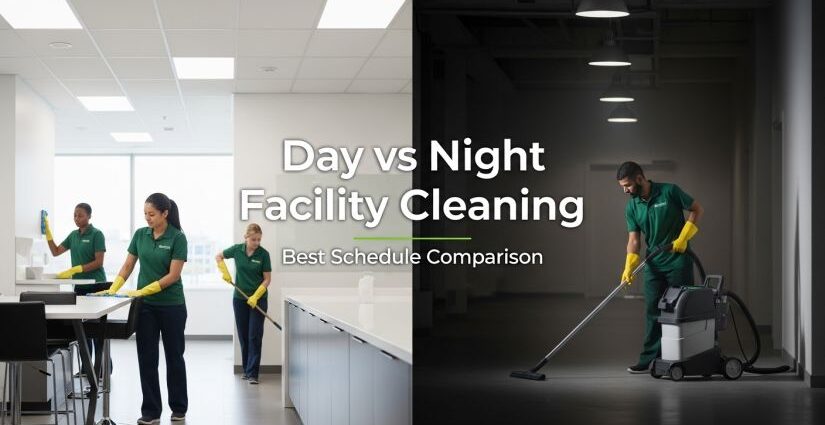
Choosing between day cleaning and night cleaning affects more than just when your janitorial crew arrives. The timing of commercial cleaning services influences employee productivity, security protocols, maintenance costs, and even your facility’s reputation. Facility managers across Spokane, Coeur d’Alene, and North Idaho face this decision regularly, yet many default to after-hours cleaning without exploring whether daytime cleaning services might better serve their operations.
“Over my years running ProTex Janitorial Services, I’ve seen businesses transform their operations simply by adjusting when cleaning happens,” says Rich Greco, owner of ProTex Janitorial Cleaning by Rich Greco. “There’s no universal answer. A medical facility has different needs than a warehouse, and an office building operates differently from a retail store. The right choice depends on your specific business operations, building type, and what you value most: visibility, minimal disruption, or cost efficiency.”
This guide examines the pros and cons of day and night cleaning, helping you decide the best time for your commercial facility. We’ll explore how cleaning during business hours versus after hours impacts everything from employee safety to floor care scheduling, providing the framework you need to optimize your facility management schedule.
Key Takeaways
- Daytime cleaning offers real-time supervision and immediate issue response, making it ideal for high-traffic facilities where the presence of cleaning staff enhances security and allows instant spill cleanup.
- Night cleaning provides uninterrupted cleaning with minimal disruption to daily operations, better suited for offices and facilities where quiet, thorough cleaning takes priority over staff interaction.
- Day porter services bridge the gap by maintaining cleanliness during business hours while nighttime crews handle deep cleaning tasks, creating a combination of day and night cleaning that addresses both immediate and intensive needs.
- Cost differences between day shift and night shift cleaning vary based on labor rates, utility usage, and security requirements, making financial analysis essential when choosing between day or night cleaning.
- Building type and occupancy patterns determine optimal cleaning times; retail stores benefit from visible day cleaning, while corporate offices often prefer after-hours janitorial services to avoid workflow interruption.
- Hybrid day-night cleaning schedules deliver maximum flexibility, allowing routine cleaning during slower periods and specialized tasks when facilities are empty.
Day vs Night Cleaning: Quick Comparison
Day Cleaning
Night Cleaning
Understanding Day vs Night Facility Cleaning
The question of whether to schedule cleaning during or after business hours represents one of the most consequential decisions in facility operations strategy. Both approaches deliver clean, safe environments, but they achieve this goal through different operational models that affect your building maintenance schedule, staff workflow, and bottom line.
What Is Daytime Cleaning?
Daytime cleaning refers to janitorial services performed during regular business hours when employees, customers, or building occupants are present. This approach typically involves cleaning staff present during the day who work around active spaces, focusing on high-touch area cleaning, restroom maintenance, and immediate response to spills or maintenance issues.
Daytime cleaning encompasses several service models:
- Day porter services provide continuous maintenance with on-site staff managing restrooms, common areas, and quick-response cleaning throughout business hours
- Scheduled daytime cleaning assigns crews to specific time blocks during operational hours, often targeting low-traffic periods
- Visible maintenance teams that enhance building appearance while occupants are present, demonstrating your commitment to a clean environment
- Real-time issue response allows immediate cleanup of spills, addressing maintenance problems before they become safety hazards
“When you see cleaning staff during the day, there’s an immediate sense that someone cares about the facility,” Greco explains. “Day porters don’t just clean; they become part of your team. They notice burned-out lights, report maintenance issues, and keep your office building looking professional all day long.”
What Is Night Cleaning?
Night cleaning or after-hours cleaning occurs when facilities are closed or minimally staffed, typically during evening or overnight hours. This traditional approach allows cleaning crews to work without navigating around occupants, enabling more efficient completion of deep cleaning tasks and intensive maintenance activities.
Night cleaning characteristics include:
- Uninterrupted cleaning allows crews to move freely through spaces, using equipment without concern for noise or workflow disruption
- After-hours deep cleaning tackles intensive tasks like floor refinishing, carpet extraction, and thorough disinfection
- Minimal business disruption ensures employees arrive to spotless facilities without witnessing cleaning activities
- Enhanced security protocols required for nighttime access, with cleaners working under reduced lighting and heightened security measures
The differences between day and night cleaning extend beyond simple timing. Daytime services emphasize visibility, interaction, and rapid response, while nighttime operations prioritize efficiency, thoroughness, and minimal interference with business operations.
The Pros and Cons of Daytime Cleaning
Understanding the benefits and drawbacks of cleaning during business hours helps facility managers evaluate whether this approach aligns with their operational needs and workplace culture.
Benefits of Day Cleaning
Daytime cleaning services deliver distinct advantages that make them increasingly popular across Spokane and Coeur d’Alene commercial facilities:
1. Real-Time Supervision and Quality Control
When cleaning staff are present during the day, facility managers can observe work quality firsthand. This visibility enables immediate feedback, ensures quality control standards are met, and allows direct communication between building managers and janitorial teams. You’re not discovering problems the next morning; you’re watching them get resolved in real time.
2. Immediate Response to Spills and Emergencies
Spills happen during business hours. With day porter services, cleanup occurs within minutes rather than waiting overnight. This rapid response prevents slip-and-fall accidents, protects flooring from permanent damage, and demonstrates your commitment to employee safety. Emergency spill cleanup becomes a routine service rather than a crisis.
3. Enhanced Building Security
Staff present during operational hours means no after-hours building access is required. Security concerns diminish when you don’t need to provide access control after hours to cleaning crews. This reduces theft risk, simplifies access badge management, and eliminates worries about unauthorized access to sensitive areas or equipment.
4. Improved Energy Efficiency
Cleaning when HVAC systems, lighting, and utilities are already running avoids additional energy usage for cleaning. You’re not heating, cooling, or illuminating empty buildings solely for janitorial purposes. This approach reduces utility costs and supports your environmental sustainability cleaning initiatives.
5. Positive Visibility and Brand Perception
“When clients visit your facility and see professional cleaners maintaining high standards, it reinforces your brand,” notes Greco. “That visible commitment to cleanliness communicates professionalism. It’s marketing you didn’t even realize you were doing.”
Clients, vendors, and employees notice staff present during the day, maintaining restroom cleanliness, emptying trash, and keeping common areas pristine. This creates a lasting impression about your facility’s appearance standards and operational excellence.
6. Better Communication and Coordination
Daytime presence facilitates direct communication with facility managers, allowing cleaners to report maintenance issues, coordinate with other service providers, and adjust cleaning priorities based on daily needs. This collaboration improves overall facility operations and prevents small problems from escalating.
Drawbacks of Daytime Cleaning
Despite these advantages, daytime cleaning presents challenges that may not suit every facility:
1. Potential Disruption to Daily Operations
Cleaning activities during business hours can interrupt workflow, create noise, and require employees to navigate around cleaning equipment. While skilled day porters minimize disruption, some businesses find any cleaning presence distracting, particularly in quiet professional environments like law firms or creative studios.
2. Limited Scope for Deep Cleaning
Intensive tasks requiring significant floor space, strong chemical odors, or extended drying times become difficult during business hours. Carpet cleaning, floor refinishing, and high-level dusting often can’t happen when occupants are present, requiring supplemental after-hours services for these deep cleaning tasks.
3. Higher Labor Costs in Some Markets
Depending on regional labor markets, day shift cleaning crews may command higher wages than night shift workers. This wage differential varies by location but can impact your overall maintenance costs when choosing between day or night schedules.
4. Privacy and Confidentiality Concerns
Certain industries handling sensitive information, confidential documents, or private client meetings may prefer cleaning when staff aren’t working. Medical facilities, legal offices, and financial institutions often implement strict protocols limiting when cleaning staff can access certain areas.
5. Traffic and Accessibility Challenges
In high-traffic periods, moving equipment, supplies, and personnel through occupied spaces creates logistical complications. Elevators filled with employees, crowded hallways, and occupied restrooms can slow cleaning efficiency and extend the time required to complete routine cleaning tasks.
The Pros and Cons of Night Cleaning
Traditional after-hours cleaning remains the dominant model across commercial properties, but understanding both its strengths and limitations helps you determine if this approach truly serves your facility’s needs.
Benefits of Night Cleaning
Nighttime cleaning services offer compelling advantages that explain their widespread adoption:
1. Zero Disruption to Business Operations
The most significant benefit of night cleaning is simple: your employees never encounter cleaning activities. They arrive to clean, fresh spaces without disruption. This minimal interruption cleaning approach proves ideal for businesses where focus and quiet matter, such as call centers, accounting firms, and professional services.
2. Uninterrupted, Efficient Cleaning
Without navigating around people, meetings, or office equipment, night shift janitorial crews complete tasks faster and more thoroughly. They move freely, access all areas simultaneously, and maintain consistent workflows. This efficiency often translates to higher cleaning productivity and better overall results.
3. Optimal Timing for Intensive Tasks
After-hours deep cleaning accommodates tasks impossible during business hours: wet floor cleaning, carpet extraction, high-dusting, and strong disinfection protocols. Floors dry overnight, chemical odors dissipate before morning, and your team arrives to spaces that underwent thorough, professional maintenance.
4. Better Access to All Areas
Conference rooms, private offices, and restricted areas become accessible after hours. Cleaning crews don’t work around meetings, wait for rooms to empty, or skip areas because they’re occupied. This complete facility access for cleaners ensures consistent, comprehensive cleaning across your entire property.
5. Reduced Liability and Safety Concerns
Wet floors, cleaning equipment, and moving carts create trip hazards during occupied hours. Nighttime cleaning eliminates these risks when employees aren’t present, reducing liability exposure and preventing accidents that occur when cleaning activities overlap with business operations.
6. Lower Perceived Costs
In many markets, night shift workers accept lower wages than daytime equivalents, potentially reducing labor costs. While this varies regionally and by industry, the perceived cost savings contribute to night cleaning’s popularity among budget-conscious facility managers.
Drawbacks of Night Cleaning
Despite its prevalence, cleaning at night introduces challenges that can compromise quality, security, and long-term value:
1. Lack of Supervision and Quality Control
“The biggest risk with night cleaning is you don’t know what you’re getting until the next morning,” Greco observes. “If something’s missed or done poorly, you discover it when your employees or clients do. That delayed feedback makes maintaining consistent quality harder and resolving issues slower.”
Without direct oversight, ensuring cleaning quality control depends entirely on trust, documented procedures, and periodic inspections. Problems may persist for days before facility managers notice them.
2. Security and Access Control Issues
After-hours access requires providing building keys, security codes, or access cards to cleaning personnel. This creates security concerns at night, increases theft risk, and complicates access management, particularly in facilities with sensitive equipment, inventory, or confidential information. Implementing robust access badge management and security protocols becomes essential but adds complexity.
3. Higher Utility and Energy Costs
Operating HVAC systems, lighting, and building systems after hours solely for cleaning purposes increases energy usage. These utility costs, while often overlooked, accumulate significantly over time. Facilities running climate control and full lighting for a three-hour cleaning shift pay for utilities that would otherwise be off.
4. Delayed Response to Issues
Maintenance problems discovered during night cleaning wait until morning for resolution. A leaking pipe, broken fixture, or security concern identified at 11 PM doesn’t get addressed until staff return the next day, potentially causing additional damage or safety hazards.
5. Staffing Reliability Challenges
Night shift positions often experience higher turnover rates and attendance problems. Finding reliable night shift janitorial crews proves more difficult than daytime hiring, and worker attendance reliability becomes a persistent challenge. This instability can compromise cleaning consistency and force providers to constantly recruit and train new personnel.
6. Reduced Lighting and Working Conditions
Even with building lights on, nighttime presents challenges. Exterior tasks require security lighting, certain areas may have reduced illumination, and working in empty buildings can feel isolating. These conditions affect both cleaning efficiency and worker satisfaction, potentially impacting the thoroughness of the work performed.
Day Porter Services: The Hybrid Solution
Day porter services represent a middle ground between traditional night cleaning and full daytime operations, offering many benefits of staff presence without completely eliminating after-hours cleaning.
Day Porter vs Night Janitor: Understanding the Difference
Two distinct roles that work together for optimal facility maintenance
Day Porter
Night Janitor
What Day Porters Provide
Day porters are on-site maintenance team members who maintain cleanliness and respond to immediate needs during business hours, typically working 4-8 hour shifts. Unlike full cleaning crews, day porters focus on maintaining already-clean facilities rather than performing initial deep cleaning.
Typical day porter responsibilities include:
- Restroom maintenance and supply restocking throughout the day, ensuring facilities never run out of essentials
- Common area cleaning in lobbies, breakrooms, and conference rooms as they’re used
- Immediate spill cleanup and emergency response to prevent accidents
- Trash and recycling collection from individual workspaces and shared areas
- High-touch surface disinfection, particularly important for healthcare facilities and during illness seasons
- Facility appearance monitoring, ensuring your building always looks professional
- Communication liaison between building occupants and facility management
“Day porter vs janitor isn’t an either-or choice,” Greco clarifies. “Day porters handle maintenance during the day, while janitors do the heavy lifting at night. Together, they create a combination of day and night services that keeps facilities consistently clean rather than clean once and gradually degrading until the next service.”
When Day Porter Services Make Sense
Certain facility types benefit tremendously from day porter services:
High-Traffic Facilities
Retail stores, shopping centers, and public buildings experience continuous use throughout the day. Waiting until night to address messes accumulated during business hours leaves your facility looking neglected for hours. Day porters maintain cleanliness continually, ensuring your space always meets facility appearance standards.
Medical and Healthcare Facilities
Healthcare facilities require constant attention to health and safety compliance. Day porters provide ongoing disinfection, waste removal, and touchpoint disinfection that can’t wait for after-hours cleaning. This continuous maintenance supports infection control and patient safety.
Educational Facilities
Schools and universities need real-time response to spills, restroom maintenance between classes, and cafeteria cleanup. Day porters keep educational facilities safe and clean throughout school hours while night crews handle classrooms and administrative areas.
Corporate Campuses with Client Traffic
Businesses hosting clients, vendors, or frequent visitors benefit from visible maintenance demonstrating professionalism. Day porters ensure conference rooms, lobbies, and common areas remain spotless, supporting your corporate image maintenance goals.
Food Service and Hospitality
Restaurants, hotels, and event venues require constant cleaning during operational hours. Day porters maintain dining areas, restrooms, and public spaces while specialized crews handle deep cleaning during closed periods.
Combining Day Porters with Night Cleaning
The most effective strategy often involves a hybrid day-night cleaning schedule:
- Day porters maintain appearance, handle immediate needs, and keep high-traffic areas clean during business hours
- Night crews perform intensive cleaning, floor care, restroom deep cleaning, and tasks requiring uninterrupted access
- Specialized teams handle periodic deep cleaning, like carpet extraction and window cleaning, on optimized schedules
This combination of day and night cleaning delivers both immediate response and thorough maintenance, maximizing cleanliness while optimizing costs.
Cost Comparison: Day vs Night Cleaning
Understanding the true cost comparison day vs night requires looking beyond base labor rates to examine total facility operating costs.
Total Cost Analysis: Beyond Labor Rates
Understanding the complete picture of cleaning schedule costs
Direct Labor Costs
Labor cost differences vary significantly by market. In some regions, night shift workers command premium wages (shift differentials of 10-20%) to compensate for overnight hours. In other markets, daytime positions prove more expensive due to higher demand and better working conditions, attracting more qualified candidates.
Across North Idaho and Eastern Washington, Greco notes: “The wage difference is less dramatic than people expect. Good cleaners know their value regardless of shift. You might save 5-10% on night shift labor, but that savings disappears if you’re dealing with higher turnover or quality issues.”
Utility and Energy Costs
Utility cost impact favors daytime cleaning in most scenarios. Operating HVAC, lighting, and building systems for 3-4 hours solely for night cleaning adds measurable expenses. A typical commercial building might spend $50-100 per cleaning session on utilities that would otherwise be off.
Daytime cleaning uses energy already being consumed for business operations, effectively making utilities a sunk cost rather than an incremental expense of cleaning services.
Security and Access Costs
After-hours cleaning requires additional security measures: access control systems, security guard coordination, alarm system management, and potentially increased insurance premiums. These indirect costs accumulate but often go unconsidered when evaluating janitorial scheduling options.
Quality-Related Costs
Poor cleaning quality generates hidden expenses: additional service calls, employee complaints, health issues from inadequate disinfection, and reputational damage. While difficult to quantify precisely, the hidden costs of poor office cleanliness often exceed any savings from choosing the lowest-cost cleaning schedule.
Total Cost of Ownership
When evaluating ROI of cleaning schedules, consider:
- Base labor rates for cleaning personnel
- Utility costs for after-hours building operation
- Security and access control expenses
- Supervision and quality control costs
- Turnover and recruitment expenses
- Business disruption costs (if applicable)
- Emergency response capabilities
- Long-term asset protection (floors, carpets, fixtures)
“Price shopping cleaning services by comparing hourly rates alone misses the bigger picture,” emphasizes Greco. “The cheapest option often costs more long-term when you factor in quality problems, damage from inadequate maintenance, and the management time spent dealing with issues. Reliable cleaning crews deliver more value than low prices.”
Building Type Considerations
Your facility type dramatically influences which cleaning schedule works best. Different building uses create unique requirements, occupancy patterns, and priorities.
Optimal Cleaning Schedule by Building Type
Match your facility type to the most effective cleaning approach
Office Buildings
Traditional office building cleaning has historically occurred after hours, and this approach still works well for many corporate environments. However, increasing numbers of office buildings adopt day porter models to maintain appearance during business hours while night crews handle intensive tasks.
Best approach: Hybrid model with day porters for restrooms and common areas, night cleaning for individual offices and deep cleaning.
Healthcare and Medical Facilities
Medical facilities require 24-hour maintenance. Healthcare facility cleaning must accommodate patient care schedules, comply with strict health and safety compliance standards, and provide immediate response to biological hazards.
Best approach: Continuous day porter presence for patient areas, waiting rooms, and restrooms, with specialized deep cleaning teams working during low-census periods.
Retail Stores and Shopping Centers
Retail environments demand visible cleanliness during operating hours. Customers notice dirty floors, overflowing trash, and neglected restrooms immediately, making daytime maintenance essential for retail store cleaning.
Best approach: Day porters during store hours for public areas, after-hours crews for back-of-house and intensive floor care.
Schools and Educational Facilities
School cleaning schedules must work around class schedules, extracurricular activities, and varying occupancy throughout the year. Educational facilities benefit from both day porters during school hours and comprehensive evening cleaning.
Best approach: Day porters for cafeterias, restrooms, and high-traffic areas during school hours, full cleaning crews in evenings and weekends.
Industrial and Manufacturing Facilities
Industrial cleaning in manufacturing facilities must accommodate production schedules. Many plants run multiple shifts, making traditional “after hours” meaningless. Industrial cleaning schedules typically align with production downtime or slower shifts.
Best approach: Cleaning crews working during production downtime, with day porter support for office areas and break rooms during business hours.
Warehouses and Distribution Centers
Warehouse cleaning operations focus on safety, organization, and specific areas rather than comprehensive facility cleaning. Many warehouses operate 24/7, requiring flexible scheduling around shipping and receiving activities.
Best approach: Scheduled cleaning during slower operational periods, with ongoing maintenance of office areas, break rooms, and restrooms.
Hospitality and Food Service
Restaurants, hotels, and event venues require constant cleaning during operational hours, with deep cleaning during closed periods. These facilities prioritize customer-facing areas while operational, saving back-of-house deep cleaning for off-hours.
Best approach: Continuous cleaning during operating hours for customer areas, intensive cleaning after closing for kitchens, storage, and behind-the-scenes spaces.
Factors to Consider When Choosing Your Cleaning Schedule
Beyond building type, several critical factors influence whether day or night cleaning works best for your business.
Business Operations and Workflow
How does your business operate? A quiet law office has different needs than a bustling call center. Consider:
- Noise tolerance during business hours
- Workflow sensitivity to disruption
- Client and visitor traffic patterns
- Employee focus requirements
- Meeting and conference room usage
Businesses where concentration and quiet matter often prefer after-hours cleaning, while those with constant activity may not even notice daytime cleaning presence.
Occupancy Patterns and Peak Hours
When is your facility busiest? Traditional 9-5 offices might prefer night cleaning, but businesses with evening events, late shifts, or 24-hour operations require different approaches. Understanding your occupancy patterns helps identify natural windows for cleaning activities.
Security Requirements
Facilities handling sensitive information, valuable inventory, or confidential materials must carefully evaluate security concerns associated with after-hours access. While reputable cleaning companies thoroughly vet employees and carry insurance, some businesses prefer not providing building access when staff aren’t present.
Budget and Cost Priorities
Your budget influences but shouldn’t solely determine your decision. While labor cost differences matter, consider total cost of ownership including utilities, security, quality, and long-term asset protection. Sometimes the seemingly cheaper option costs more over time.
Facility Size and Complexity
Larger, more complex facilities may require multi-shift facility maintenance simply due to the time required for thorough cleaning. A 200,000-square-foot office building can’t be cleaned adequately by a small crew in a few hours, necessitating extended or overlapping shifts regardless of preference for day or night cleaning.
Health and Safety Regulations
Certain industries face strict health and safety compliance requirements dictating cleaning frequency and timing. Healthcare facilities, food service operations, and childcare centers must maintain specific standards throughout operational hours, often requiring daytime cleaning support.
Employee and Occupant Preferences
Don’t overlook your team’s input. Some employees appreciate seeing cleaning staff maintain their workspace and value the ability to request immediate attention to issues. Others find any cleaning presence distracting and prefer arriving to already-clean spaces. Survey your team to understand their priorities.
Environmental and Sustainability Goals
If environmental sustainability cleaning is a priority, daytime cleaning offers energy efficiency advantages by avoiding after-hours utility consumption. This aligns with green cleaning initiatives and LEED certification goals.
Making the Decision: Which Schedule Is Right for You?
After weighing the pros and cons of daytime and nighttime cleaning, how do you decide which approach works best for your facility?
Should You Choose Day or Night Cleaning?
Answer these key questions to determine your optimal schedule
Assess Your Priorities
Start by ranking what matters most:
- Quality and consistency – Do you need direct oversight and real-time quality control?
- Minimal disruption – Is avoiding any distraction to daily operations paramount?
- Cost efficiency – Are you optimizing for lowest total cost of ownership?
- Security – Do you have concerns about after-hours building access?
- Immediate response – Is rapid spill cleanup and issue resolution critical?
- Appearance – Does visible cleanliness during business hours matter?
Your priorities guide your decision. A retail store prioritizing appearance chooses differently than a corporate office prioritizing minimal disruption.
Evaluate Your Current Situation
If you currently use night cleaning, ask:
- Are we consistently satisfied with cleaning quality?
- Do we discover problems only after they’ve existed for hours?
- Are spills and messes accumulating during the day?
- Do visitors see our facility at its worst before evening cleaning?
- Are we spending extra on utilities for after-hours cleaning?
Affirmative answers suggest exploring daytime cleaning or day porter services might improve your situation.
If you currently use day cleaning, consider:
- Does cleaning activity disrupt business operations?
- Are there tasks we can’t complete during business hours?
- Do employees complain about cleaning presence?
- Would intensive deep cleaning be more effective after hours?
These signals indicate night cleaning or a hybrid approach might better serve your needs.
Consider a Hybrid Approach
“Most facilities benefit from some combination rather than pure day or night cleaning,” Greco advises. “Maybe you need day porters for restrooms and common areas but prefer offices cleaned after hours. Or perhaps you want night cleaning normally but need specialty cleaning services during specific periods for events or seasonal needs.”
A combination cleaning model offers maximum flexibility:
- Morning crews prepare facilities for the day, handling overnight messes and ensuring spaces open clean
- Day porters maintain cleanliness during business hours, responding immediately to needs
- Evening/night crews perform deep cleaning, floor care, and intensive maintenance
- Specialized teams handle periodic services like carpet cleaning or window washing on optimal schedules
Trial Periods and Flexibility
Don’t view your decision as permanent. Many commercial cleaning services offer flexible contracts allowing schedule adjustments. Consider:
- Testing day porter services for 90 days to evaluate benefits
- Starting with night cleaning and adding daytime maintenance if needed
- Adjusting schedules seasonally based on occupancy patterns
- Modifying approaches as your business evolves
Your cleaning schedule should adapt to your business, not the reverse.
Implementing Your Optimal Cleaning Schedule
Once you’ve decided on the best time of day for your commercial facility to be cleaned, successful implementation requires planning and clear communication.
Partnering with the Right Janitorial Service Provider
Not all cleaning companies offer flexible scheduling options. When evaluating janitorial service providers, ensure they:
- Offer both day and night cleaning services
- Provide experienced day porter teams if needed
- Demonstrate flexibility to adjust schedules as your needs change
- Maintain adequate janitorial staffing levels for reliable service
- Use janitorial management software for coordination and reporting
- Carry appropriate insurance and train staff in safety protocols
“ProTex Janitorial Services has built our reputation on flexibility,” Greco notes. “We serve facilities across North Idaho and Spokane with customized schedules matching their operations. Whether you need day porters in Sandpoint, night crews in Post Falls, or combination schedules in Spokane Valley, we adapt to your needs rather than forcing you into rigid schedules.”
Establishing Clear Expectations
Successful janitorial scheduling requires documented expectations covering:
- Specific cleaning tasks to be performed during each shift
- Quality standards and inspection criteria
- Communication protocols for reporting issues
- Response times for emergency cleanups
- Building access procedures and security requirements
- Coordination with other service providers
- Frequency of specialized services like carpet cleaning or floor refinishing
Clear service level agreements prevent misunderstandings and ensure both parties understand responsibilities.
Training and Onboarding
Whether day or night cleaning, proper training for janitorial staff ensures consistent results. Your cleaning provider should:
- Train staff on your facility’s specific requirements
- Certify cleaners in appropriate protocols and safety procedures
- Provide orientation on your building layout and access
- Establish relationships between cleaners and facility staff
- Ensure familiarity with proper disinfection protocols
Monitoring and Quality Assurance
Regardless of schedule, maintaining cleaning quality control requires ongoing oversight:
- Regular inspections using standardized quality control checklists
- Digital maintenance logs and reports tracking completed tasks
- Feedback mechanisms for employees to report concerns
- Periodic audits ensuring compliance with contracted services
- Performance metrics tracking consistency and reliability
Modern janitorial management software and smart cleaning technology enable real-time monitoring, creating accountability regardless of when cleaning occurs.
Communication and Coordination
Successful cleaning schedules depend on effective communication with facility managers. Establish:
- Primary contacts for both daytime and after-hours issues
- Protocols for reporting maintenance discoveries
- Methods for requesting additional services or schedule changes
- Regular meetings reviewing performance and addressing concerns
- Emergency contact procedures for urgent situations
Frequently Asked Questions
What are the main differences between day and night cleaning?
Day cleaning occurs during business hours with staff present, offering real-time supervision and immediate spill response but potentially disrupting operations. Night cleaning happens after hours, providing uninterrupted access and minimal disruption but lacking direct oversight and requiring additional security measures and utility costs.
How much more expensive is day cleaning compared to night cleaning?
Cost differences vary by market and total analysis scope. While some regions show 5-10% labor cost variations, daytime cleaning often reduces utility expenses by avoiding after-hours HVAC operation. Total cost differences typically range from negligible to 15%, depending on your facility’s specific circumstances and chosen service model.
Can we switch from night to day cleaning if we’re unhappy?
Yes, reputable janitorial providers offer flexible contracts allowing schedule adjustments. Consider testing alternative schedules through pilot programs before committing fully. Most facilities successfully transition between day, night, or hybrid models by coordinating with their cleaning provider and communicating changes to building occupants.
What is a day porter and do we need one?
Day porters are on-site maintenance professionals working during business hours to maintain cleanliness, restock supplies, and respond immediately to spills or issues. Facilities with high traffic, client visitors, or requiring constant presentation typically benefit most from day porter services supplementing regular janitorial cleaning.
How do we maintain security with night cleaning crews?
Implement strict access control using timed security badges, verify all cleaning personnel through background checks, install security cameras in sensitive areas, and ensure your cleaning company carries adequate insurance and bonding. Reputable providers like ProTex thoroughly vet employees and maintain comprehensive security protocols.
Is hybrid cleaning more expensive than choosing just day or night?
Hybrid models may show slightly higher labor costs due to multiple shifts, but they often deliver better overall value through optimized efficiency. Day porters handle quick tasks during business hours while night crews complete intensive work, reducing total labor hours needed while improving cleanliness, consistency, and occupant satisfaction.
How long does it take to see results from changing cleaning schedules?
Most facilities notice immediate differences in appearance and cleanliness. However, evaluating whether a schedule truly works requires 60-90 days to assess factors like employee satisfaction, operational disruption, cost impact, and consistency. Allow adequate trial periods before making final schedule decisions.
What cleaning tasks must happen after hours, regardless of our preference?
Intensive floor care, including stripping, refinishing, and buffing, typically requires after-hours completion due to drying time and safety concerns. Deep carpet extraction, high-dusting, and strong chemical disinfection also work better after hours. Even facilities preferring day cleaning usually need supplemental after-hours services for these specialized tasks.
Conclusion: Choosing the Best Cleaning Schedule for Your Facility
The decision between day vs night facility cleaning isn’t about which approach is objectively superior. It’s about which model aligns with your business operations, facility type, budget, and priorities. Daytime cleaning offers visibility, immediate response, and enhanced security, while nighttime cleaning provides uninterrupted access and minimal disruption. For many facilities, a hybrid approach combining day porters with night crews delivers optimal results.
“Your cleaning schedule should support your business goals, not constrain them,” emphasizes Rich Greco. “Whether you choose day cleaning, night cleaning, or a combination, what matters most is partnering with a reliable janitorial service that understands your needs and adapts its approach accordingly. At ProTex, we’ve been helping North Idaho and Spokane businesses optimize their facility cleaning operations for years, and we know there’s no one-size-fits-all solution.”
Take time to evaluate your facility’s unique requirements, consult with experienced commercial cleaning professionals, and be willing to adjust your approach as needs evolve. The right cleaning schedule enhances your workplace environment, protects your investment in facilities, and demonstrates your commitment to employee well-being and professional appearance.
Ready to explore which cleaning schedule works best for your facility? Contact ProTex Janitorial Services for a consultation. We’ll assess your specific needs, discuss your priorities, and recommend a customized approach delivering exceptional cleanliness on a schedule that supports your operations. Whether you need routine daily maintenance, specialized services, or flexible hybrid scheduling, our team provides the expertise and reliability North Idaho and Spokane businesses trust.
Request your free cleaning estimate today and discover how the right cleaning schedule transforms your facility’s appearance, efficiency, and reputation.