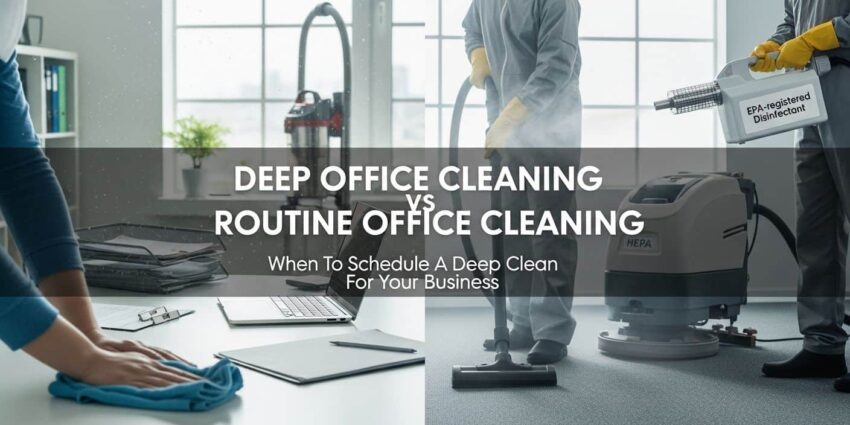
Every successful business knows that maintaining a clean office environment is crucial for employee health, productivity, and professional appearance. However, many facility managers and business owners struggle to understand the differences between deep cleaning and routine cleaning—and more importantly, when their workplace needs each type of service.
As someone who has witnessed the direct correlation between workplace cleanliness and employee well-being in my practice, I can attest to the significant impact that proper cleaning protocols have on both physical and mental health outcomes. Deep cleaning vs regular cleaning isn’t just about aesthetics; it’s about creating environments that support peak performance and reduce stress-related workplace issues.
Understanding the difference between commercial cleaning approaches can help you make informed decisions that protect your investment, maintain compliance with health regulations, and ensure your team works in the healthiest possible environment.
Key Takeaways
- Routine cleaning maintains daily cleanliness and tidiness, while deep cleaning tackles embedded dirt, allergens, and contaminants that regular cleaning might miss
- Deep office cleaning should be scheduled quarterly or biannually, depending on foot traffic, industry requirements, and seasonal factors
- Professional deep cleaning services use specialized equipment and EPA-registered disinfectants that aren’t available in standard janitorial supplies
- Regular cleaning and deep cleaning work together to create comprehensive cleaning programs that maximize employee health and productivity
- Commercial deep cleaning provides measurable ROI through reduced sick days, improved air quality, and extended asset lifespan
- Service frequency options should align with your facility’s specific needs, from daily routine tasks to quarterly intensive deep cleans
Understanding Routine Office Cleaning
Regular office cleaning forms the backbone of any effective facility maintenance program. This type of cleaning focuses on maintaining daily cleanliness and preventing the accumulation of surface-level dirt and debris.
What Regular Cleaning Typically Involves
Routine cleaning encompasses a wide range of daily or weekly cleaning tasks designed to keep your office presentable and functional:
Daily Janitorial Tasks:
- Emptying trash receptacles and replacing liners
- Dusting desks, workstations, and common surfaces
- Vacuuming high-traffic carpet areas
- Cleaning and disinfecting high-touch surfaces like door handles, light switches, and keyboards
- Restroom cleaning and restocking supplies
- Kitchen and break room maintenance
- Spot cleaning of walls and windows
Weekly Janitorial Tasks:
- Thorough floor mopping and sanitizing
- Detailed restroom deep cleaning
- Conference room setup and cleaning
- Comprehensive dusting of all surfaces
- Window cleaning (interior)
- Carpet spot treatment
Benefits of Consistent Routine Cleaning
Regular cleaning helps maintain professional appearances while providing several measurable benefits:
Employee Health & Productivity: Regular cleaning maintains sanitary conditions that reduce the spread of germs and allergens. Research shows that employees in consistently clean environments take 23% fewer sick days compared to those in poorly maintained facilities.
Professional Image: First impressions matter tremendously in business. Clean office spaces convey professionalism, attention to detail, and operational excellence to clients and prospects.
Asset Protection: Regular cleaning helps preserve furniture, carpeting, and equipment by preventing the buildup of damaging contaminants.
Regulatory Compliance: Many industries require consistent cleaning protocols to meet OSHA cleaning requirements and health department standards.
As I often explain to my patients dealing with workplace stress, “Environmental factors play a crucial role in mental health outcomes. A well-maintained workspace reduces cognitive load and creates psychological safety that enhances performance.”
Limitations of Routine Cleaning
While routine cleaning and deep cleaning both serve important purposes, regular cleaning might miss several critical areas:
- Embedded dirt and allergens in carpet fibers and upholstery
- Bacterial growth in HVAC systems and ductwork
- Deep-seated stains that require specialized treatment
- Hidden contamination in hard-to-reach areas
- Accumulated grime on light fixtures and ceiling tiles
The Power of Deep Office Cleaning
Deep cleaning goes beyond surface-level maintenance to address the contaminants and buildup that regular cleaning is typically unable to handle. This comprehensive cleaning approach involves intensive procedures designed to restore your facility to like-new condition.
What Deep Cleaning Services Include
Commercial deep cleaning encompasses specialized procedures that require professional equipment and expertise:
Deep Cleaning Checklist for Offices:
- HVAC Coil and Vent Cleaning
- Air duct sanitization and debris removal
- Filter replacement with appropriate MERV ratings
- Coil cleaning to improve air quality and system efficiency
- Hard Floor Stripping and Waxing
- Complete removal of old wax layers
- Deep cleaning of vinyl composition tile (VCT)
- Professional re-waxing and floor burnishing
- Hot Water Extraction Carpet Cleaning
- Pre-treatment of high-traffic areas
- Deep extraction to remove embedded dirt and allergens
- Stain treatment for carpets using professional-grade solutions
- Tile and Grout Deep Cleaning
- Specialized equipment to remove built-up grime
- Antimicrobial treatment to prevent future growth
- Sealing to protect against future staining
- Upholstery and Fabric Cleaning
- Professional treatment of office furniture
- Odor control and neutralization
- Fabric protection application
- High-Touch Surface Disinfection
- Electrostatic disinfection using EPA-registered products
- UV-C surface treatment for additional pathogen elimination
- Comprehensive sanitization procedures
Deep Cleaning Equipment and Techniques
Professional cleaning services utilize specialized equipment that delivers superior results:
Advanced Cleaning Systems:
- HEPA filtration vacuums that capture 99.97% of particles 0.3 microns or larger
- Hot water extraction systems for deep carpet and upholstery cleaning
- Electrostatic sprayers for uniform disinfectant application
- UV-C sanitization equipment for pathogen elimination
- Color-coded cleaning systems to prevent cross-contamination
“From a forensic standpoint, the difference between surface cleaning and deep sanitization can be literally life-changing,” I explain to facility managers. “Deep cleaning protocols eliminate not just visible dirt, but the microscopic contaminants that can trigger allergic reactions, respiratory issues, and immune system stress.”
When Your Office Needs Deep Cleaning
How often offices should be deep cleaned depends on several factors:
Quarterly Deep Cleaning Schedule:
- High-traffic commercial spaces
- Medical and healthcare facilities
- Food service environments
- Educational institutions
Bi-Annual Deep Clean:
- Standard office environments
- Professional service firms
- Retail locations with moderate foot traffic
Annual Deep Clean:
- Low-traffic professional offices
- Executive suites with controlled access
- Specialized facilities with strict environmental controls
Situational Deep Cleaning:
- Post-construction cleaning after renovations
- Move-in move-out cleaning for tenant transitions
- Post-event cleaning services after large gatherings
- Emergency deep cleaning following contamination incidents
- COVID-19 cleaning protocols and outbreak response
Deep Cleaning vs Regular Cleaning: The Complete Comparison
Understanding the difference between these cleaning approaches helps you make informed decisions about your facility’s needs.
Scope and Frequency
Areas of Focus
Regular Cleaning Focuses On:
- Maintaining daily tidiness
- Surface dust and debris removal
- High-touch surface sanitization
- Trash removal and restocking supplies
- Basic floor and restroom maintenance
Deep Cleaning Focuses On:
- Embedded dirt and allergen removal
- HVAC system cleaning and optimization
- Deep-seated stain removal
- Comprehensive floor restoration
- Hidden area sanitization and treatment
Cost Considerations
Regular Cleaning:
- Lower per-visit costs
- Predictable monthly expenses
- Hourly cleaning rates typically range from $25 to $45 per hour
- Cost per square foot cleaning averages $0.05-0.15 for routine services
Deep Cleaning:
- Higher upfront investment
- Flat-rate deep cleaning quotes often provide better value
- Typically ranges from $0.10 to $0.35 per square foot, depending on scope
- Significant long-term savings through asset preservation
Health and Safety Benefits
Combined Cleaning Regimen Benefits:
- Reduce sick days by up to 35% through comprehensive pathogen elimination
- Improved indoor air quality (IAQ) through HVAC cleaning and filtration
- Enhanced employee morale and productivity
- Reduced allergen exposure for sensitive individuals
“In my psychiatric practice, I consistently observe that employees working in professionally maintained environments report lower stress levels, better focus, and improved job satisfaction,” I note. “The psychological impact of a genuinely clean workspace cannot be overstated.”
Industry-Specific Deep Cleaning Requirements
Different industries have unique office needs that influence cleaning frequency and protocols:
Medical Facilities
Medical facilities require the most stringent cleaning protocols:
- Daily disinfection procedures using hospital-grade products
- Monthly deep cleaning schedule for patient areas
- Specialized infection prevention cleaning protocols
- MSDS safety data sheets compliance for all cleaning chemicals
Educational Facilities
Educational facilities need frequent deep cleaning due to high occupancy:
- Quarterly deep cleaning during school breaks
- Enhanced sanitizing vs disinfecting protocols during flu season
- Fogging and misting services for large classroom areas
- Summer intensive cleaning programs
Manufacturing & Production
Manufacturing facilities face unique contamination challenges:
- Industrial cleaning protocols for specialized equipment
- Hazardous waste disposal procedures compliance
- OSHA cleaning requirements for worker safety
- Environmental contamination prevention measures
Office Commercial Buildings
Standard office buildings benefit from balanced cleaning approaches:
- Bi-annual comprehensive cleaning programs
- Preventive maintenance cleaning schedules
- Asset protection through cleaning initiatives
- Employee health and productivity optimization
Green Cleaning and Sustainability
Modern businesses increasingly demand green cleaning products and sustainable cleaning practices:
Eco-Friendly Deep Cleaning Options
Green Seal Certified Cleaners:
- Low-VOC cleaning products that maintain indoor air quality
- Biodegradable cleaning supplies that minimize environmental impact
- Fragrance-free cleaning options for sensitive individuals
- Hypoallergenic cleaning methods that reduce allergic reactions
Environmental Responsibility
Sustainable Practices Include:
- Microfiber cleaning systems that require fewer chemicals
- Chemical dilution control to minimize waste
- Recycling and waste management integration
- Energy-efficient equipment selection
“Sustainable cleaning isn’t just environmentally responsible—it’s a demonstration of corporate values that resonates with both employees and clients,” I emphasize during facility consultations.
Professional vs. DIY: Making the Right Choice
When to Hire Professional Services
Professional cleaning services provide several advantages over in-house cleaning:
Expertise and Training:
- Certified commercial cleaners with specialized knowledge
- Background-checked staff for security and trust
- Bonded and insured cleaners for liability protection
- Ongoing training and certification programs
Equipment and Supplies:
- Access to commercial-grade equipment not available to consumers
- EPA-registered disinfectants for maximum effectiveness
- Personal protective equipment (PPE) for safe chemical handling
- Quality assurance inspections and performance monitoring
Service Options and Flexibility
Professional cleaning services offer various service frequency options:
Recurring Services:
- Daily janitorial tasks for high-traffic facilities
- Weekly janitorial tasks for moderate-use offices
- Monthly deep cleaning schedules for comprehensive maintenance
- Annual deep clean for intensive restoration
Specialized Services:
- One-time deep clean for special projects
- Recurring janitorial services with customizable schedules
- Emergency response cleaning for unexpected situations
- Post-construction cleaning for renovation projects
Creating Your Optimal Cleaning Program
Developing a Comprehensive Strategy
Effective cleaning requires a strategic approach that combines regular and deep cleaning methods:
- Facility Assessment:
- Square footage and layout analysis
- Traffic pattern evaluation
- Industry-specific requirement review
- Budget and timeline considerations
- Service Level Agreement (SLA):
- Scope of work for janitorial services
- Performance standards and metrics
- Cleaning logs and reporting procedures
- Client satisfaction guarantees
- Integration Planning:
- Facility maintenance integration with cleaning schedules
- Property manager cleaning solutions coordination
- Facility manager cleaning plan development
- Preventive maintenance cleaning alignment
Measuring Success and ROI
Return on investment (ROI) for cleaning services can be measured through:
Quantifiable Benefits:
- Reduced employee sick days and healthcare costs
- Extended asset lifespan and reduced replacement costs
- Improved energy efficiency through clean HVAC systems
- Enhanced property values and tenant satisfaction
Performance Metrics:
- Cleaning audit checklist completion rates
- Customer satisfaction survey results
- Indoor air quality measurements
- Employee productivity indicators
“The connection between environmental cleanliness and cognitive performance is well-documented in psychiatric literature,” I explain to clients. “Investing in comprehensive cleaning programs yields measurable returns in employee performance and organizational effectiveness.”
Technology and Innovation in Commercial Cleaning
Advanced Cleaning Technologies
Modern commercial cleaning services incorporate cutting-edge technology:
Automated Systems:
- Robotic vacuum systems for consistent floor maintenance
- Cleaning management software for scheduling and tracking
- AI-powered automation for optimized resource allocation
- IoT sensors for real-time cleanliness monitoring
Enhanced Disinfection:
- Electrostatic disinfection for uniform pathogen elimination
- UV-C surface treatment for chemical-free sanitization
- Fogging and misting services for large-area treatment
- Ozone generation systems for odor elimination
Data-Driven Cleaning Programs
Analytics and Reporting:
- Usage pattern analysis for optimized cleaning schedules
- Cost-per-clean analysis for budget optimization
- Compliance tracking and regulatory reporting
- Performance benchmarking and improvement identification
Seasonal Considerations for Deep Cleaning
Spring Deep Cleaning
Spring cleaning strategies should address winter buildup:
- HVAC coil cleaning after heavy heating season use
- Carpet deep cleaning to remove salt and moisture damage
- Window cleaning to remove winter grime
- Air quality testing and filter replacement
Summer Maintenance
Summer cleaning strategies focus on indoor air quality:
- Enhanced air exchange and ventilation checks
- MERV rating optimization for allergen control
- Moisture control to prevent mold growth
- Increased sanitization due to higher occupancy
Fall Preparation
Fall office cleaning prepares facilities for winter:
- Comprehensive floor maintenance programs
- Deep cleaning ensures systems are ready for heating season
- Preventive maintenance to address potential winter issues
- Asset protection through pre-winter deep cleaning
Winter Deep Cleaning
Winter cleaning protocols address unique seasonal challenges:
- Enhanced sanitization during flu season
- Carpet and upholstery protection from winter elements
- Indoor air quality optimization for closed-building season
- Emergency deep cleaning preparedness for weather events
Common Deep Cleaning Mistakes to Avoid
Scheduling Errors
Poor Timing:
- Scheduling deep cleaning during peak business hours
- Deep cleaning every month (excessive frequency)
- Waiting too long between comprehensive cleanings
- Not coordinating with facility maintenance schedules
Service Selection Issues
Inadequate Scope:
- Choosing cleaning companies without proper certifications
- Focusing only on visible areas while neglecting hidden contamination
- Using inappropriate cleaning methods for specific materials
- Underestimating time requirements for thorough cleaning
Communication Failures
Coordination Problems:
- Failing to communicate access requirements
- Not providing adequate advance notice to staff
- Insufficient coordination with security systems
- Poor integration with ongoing facility operations
“Clear communication and realistic expectations are essential for successful deep cleaning projects,” I advise facility managers. “Like any therapeutic intervention, proper planning and execution determine outcomes.”
Cost-Effective Deep Cleaning Strategies
Budget Optimization
Smart Scheduling:
- Bundling services for cost per square foot savings
- Seasonal cleaning timing for optimal pricing
- Service frequency optimization based on actual needs
- Preventive cleaning to avoid costly remediation
Value Maximization
Strategic Approaches:
- Asset protection focuses on extending equipment lifespan
- Energy efficiency improvements through clean HVAC systems
- Employee productivity enhancement through optimal environments
- Compliance cost avoidance through proper maintenance
Future Trends in Commercial Cleaning
Emerging Technologies
Innovation Areas:
- AI and data analytics for predictive cleaning needs
- Autonomous cleaning robots for routine maintenance
- IoT integration for real-time facility monitoring
- Green technology advancement for sustainable practices
Industry Evolution
Market Trends:
- Increased demand for healthy building certifications
- Growing emphasis on indoor environmental quality
- Integration of wellness programs with cleaning services
- Enhanced focus on infection prevention protocols
“The cleaning industry is evolving toward more scientific, data-driven approaches that align with our growing understanding of environmental health impacts,” I observe from both clinical and business perspectives.
Frequently Asked Questions
What is the main difference between deep cleaning and regular cleaning?
Regular cleaning maintains daily cleanliness through surface-level tasks like dusting, vacuuming, and trash removal. Deep cleaning goes beyond these routine tasks to address embedded dirt, allergens, and contaminants using specialized equipment and techniques that restore facilities to like-new condition.
How often should offices schedule deep cleaning services?
Most offices benefit from quarterly deep cleaning, though frequency depends on factors like foot traffic, industry requirements, and facility size. High-traffic environments may need monthly services, while low-traffic professional offices might only require bi-annual deep cleaning.
What should be included in a commercial deep cleaning checklist?
A comprehensive deep clean should include HVAC system cleaning, carpet extraction, hard floor stripping and waxing, upholstery treatment, tile and grout deep cleaning, high-touch surface disinfection, and specialized stain removal treatments.
Can deep cleaning reduce employee sick days?
Yes, professional deep cleaning can reduce employee sick days by up to 35% through comprehensive pathogen elimination, improved indoor air quality, and removal of allergens and contaminants that regular cleaning might miss.
What’s the difference between disinfecting and sanitizing?
Sanitizing reduces the number of germs to safe levels as determined by public health standards. Disinfecting kills a wider range of bacteria, viruses, and fungi. Deep cleaning services typically use both methods strategically.
How much does professional deep cleaning cost?
Deep cleaning costs typically range from $0.10 to $0.35 per square foot, depending on scope and facility requirements. While higher than routine cleaning, the investment pays dividends through asset protection, employee health, and operational efficiency.
Do I need special insurance for deep cleaning services?
Professional cleaning companies should carry comprehensive liability insurance and bonding. Verify that any service provider has appropriate coverage before beginning work to protect your business from potential damages or accidents.
What makes green cleaning products effective for deep cleaning?
Modern green cleaning products use advanced enzyme and surfactant technologies that match or exceed traditional chemical effectiveness while maintaining safety for people and the environment. EPA-registered green products ensure both efficacy and environmental responsibility.
How do I choose between different cleaning service providers?
Evaluate cleaning companies based on certifications, insurance coverage, equipment quality, staff training programs, and customer references. Request detailed proposals that outline specific tasks, timelines, and quality assurance procedures.
What should I do to prepare my office for deep cleaning?
Preparation involves securing sensitive documents, removing personal items from work surfaces, coordinating with building security for after-hours access, and communicating with staff about timing and any temporary workspace changes.
Conclusion: Investing in Comprehensive Cleaning Excellence
Understanding the differences between deep cleaning and routine cleaning empowers you to make informed decisions that protect your business investment while creating optimal environments for employee health and productivity.
Regular cleaning and deep cleaning work synergistically to maintain professional appearances, ensure regulatory compliance, and provide measurable returns through reduced healthcare costs, extended asset lifecycles, and enhanced operational efficiency.
As businesses continue to prioritize employee well-being and environmental responsibility, comprehensive commercial cleaning services become increasingly valuable strategic investments rather than simple operational expenses.
“The workplace environment profoundly influences both physical health and psychological well-being,” I conclude from years of clinical observation. “Comprehensive cleaning programs represent one of the most cost-effective interventions for supporting optimal human performance in professional settings.”
Ready to develop a customized cleaning program that meets your facility’s unique needs? Contact our team today to discuss how regular and deep cleaning services can transform your workplace environment and support your business objectives.
ProTex Janitorial Services has been serving the Inland Northwest with professional cleaning excellence, combining traditional reliability with innovative approaches to meet the evolving needs of modern businesses. Request your estimate today to discover the difference comprehensive cleaning makes.
Rich Greco brings a unique perspective to facility management, combining insights from adult psychiatry and forensic psychiatry with practical business experience. His understanding of environmental factors in workplace wellness helps businesses create spaces that support both operational excellence and human performance.